


Posted by Maggie Johnson, Director of Education and University Relations, Google(Crossposted on the Google for Education Blog, and the the Huffingt...
Callysto: Bringing Jupyter and Computational Thinking to the K-12 Curriculum
Cybera and the Pacific Institute for Mathematical Sciences are participating in the new national CanCode program, to develop coding and digital skills from kindergarten to grade 12. With the launch of the Callysto project, we are creating tools and frameworks that help teachers bring computational thinking into their math, science, social sciences, and humanities courses - giving students the analytical skills needed to comprehend the digital world. Leveraging the Jupyter 'All-in-One' Science Platform to put friendly yet powerful compute tools in classroom settings, we are creating showcase modules and workshop training for K-12 teachers to incorporate data and computing into the broad curriculum. At this presentation, you will learn about how Callysto will: Bring computational thinking to classrooms through K-12 teacher training Create opportunities to participate in free workshop training sessions and content creation Help K-12 teachers gain public recognition for participating in this educational training project Note: This presentation is related to our 2017 BCNET presentation on "Bringing The Thunder: Deploying Jupyter Notebooks For Research, Education, And Innovation." View Slidedeck
The education of a computer
Computing Integrated Teacher Education – The City University of New York
26 Colleges. One University.

The Missing Discipline in Computer Science
On Teaching Computer Scientists to Ask “Why”

E.W. Dijkstra Archive: On the cruelty of really teaching computing science (EWD 1036)
The second part of this talk pursues some of the scientific and educational consequences of the assumption that computers represent a radical novelty. In order to give this assumption clear contents, we have to be much more precise as to what we mean in this context by the adjective "radical". We shall do so in the first part of this talk, in which we shall furthermore supply evidence in support of our assumption.

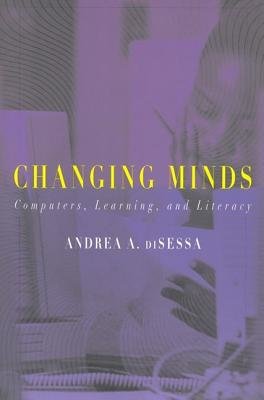
Changing Minds: Computers, Learning, and Literacy
An impassioned guide to how computers can fundamentally change how we learn and think.Andrea diSessa's career as a scholar, technologist, and teacher has b
(iterate think thoughts): Painting with Gaussians
Dmitri's blog about programming, Clojure, and software development
Learning to code is overrated: An accomplished programmer would rather his kids learn to read and reason
Mayor de Blasio is winning widespread praise for his recent promise that, within 10 years, all of New York City’s public schoolchildren will take computer science classes. But as a career programmer who founded two successful software…

Anatomy of an Enduring Gender Gap: The Evolution of Women’s Participation in Computer Science
Given growing interest in computing fields, as well as a longstanding gender gap in computer science, this study used nationwide survey data on college students during 4 decades to: (a) document tr...

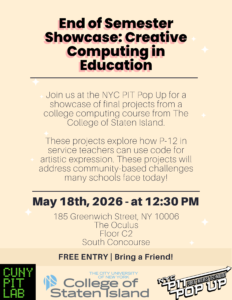
Creative Computing in Education Course Showcase
This event will showcase creative computing final projects from a College of Staten Island course that explores how P-12 in-service teachers can use code for artistic expression. These projects will […]
Konrad Hinsen's blog
Knowledge refinement is the ever ongoing process in science (and beyond it) that shepherds knowledge from lab notebooks into journal articles and then on to review articles, monographs, reference handbooks, university textbooks, and finally professional domain expertise and school education for a wider public. It has been going on for a few centuries, but we hardly talk about it. In fact, I made up the term because I couldn't find an established one. Computational knowledge has not yet found its place in the knowledge refinement process. Why not? And what can we do to make it happen?
About Us - Siegel Family Endowment
About Our Chairman “Computational thinking is more than just a way to approach problem solving. It’s a way of processing and understanding the world through […]

Learning to Learn: You, Too, Can Rewire Your Brain (Published 2017)
How an engineering professor who “flunked my way” through high school math and science went on to create the world’s most popular online course.

Bret Victor - The Future of Programming
I think this talk gives lots of food for thought. Are we too entrenched in our ways, to think in other/better ways?
