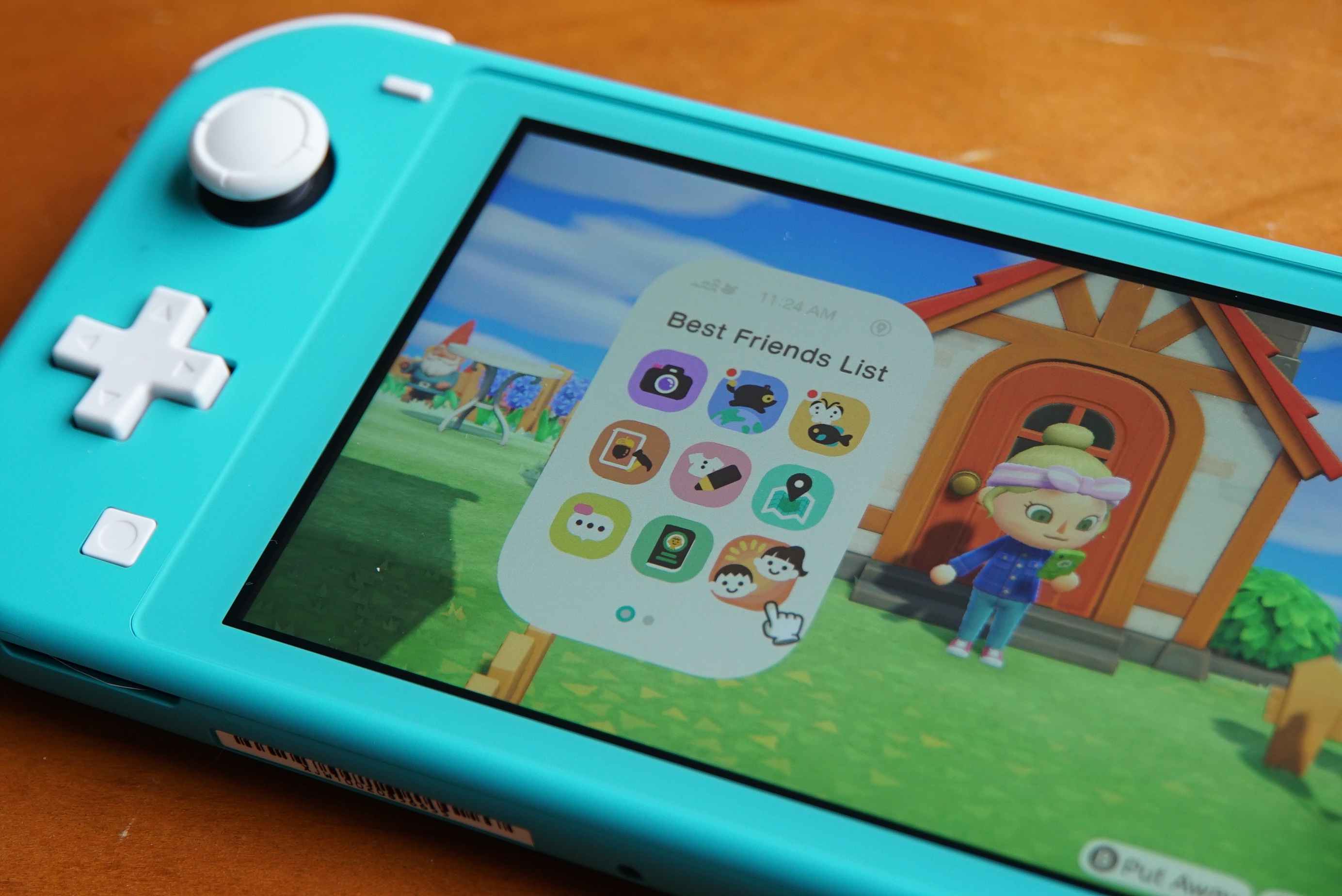
A novel digital universe with infinite possibilities. Whether you resonate with people around the world in a casual conversation, playing games and socializing. Or you riff off each other when creating anything from art to programming complex games, you'll find your place here.
Emergence: the connected lives of ants, brains, cities and software
In the tradition of Being Digital and The Tipping Point…

Thoughts on Cyberpositionality: The Construction of Digital Communities in Digital Spaces, Damien Patrick Williams
I found Rebecca Monteleone, Martin Perez Comisso, and Elma Hajric’s “Cyberpositionality: Sociotechnical Location in the Digital Age” (2024) to be an extremely timely and important article which can…

Creative Computing Group by @tgoerke.bsky.social — Grain
Let's start a group at CODIP to explore creative computing. Let's not start by defining creativity nor computing. It would be a trap. Let's collect artifacts instead. Images, text, thoughts,...
Saving Incremental Games | The Paper Pilot
The Paper Pilot's digital garden of thoughts on philosophy, politics, and sociology
Revisiting creative behaviour as an epistemic process: lessons from 12 computational artists and designers | Proceedings of the 35th Australian Computer-Human Interaction Conference
As part of the Digital Library's transition to Open Access, new features for researchers are available in the Premium Edition. Click here to learn more.

Recognizing Vibe Coded Games | The Paper Pilot
The Paper Pilot's digital garden of thoughts on philosophy, politics, and sociology
Digital Art Enters the Museum Age — Social Software
We explore code and systems as a medium for creating new forms of art. We consider "software" in an expanded sense, examining the ways that we are programmed by technology around us and the ways we can write software to make change in the world.
how do you a call a person who is interacting with digital media ?
We use tools from computer science, media design, and digital art to study massive cultural data sets. Directed by Dr. Lev Manovich.
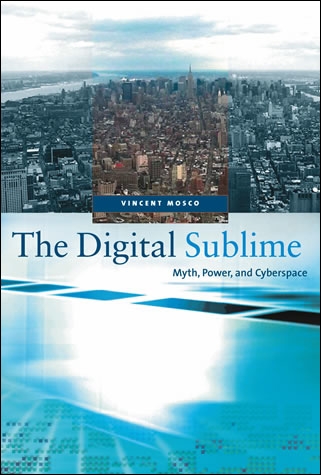
The Digital Sublime: Myth, Power, and Cyberspace
Interpreting the myths of the digital age: why we believed in the power of cyberspace to open up a new world.The digital era promises, as did many other te
Platform Studies
The Platform Studies book series has been established to promote the investigation of underlying computing systems and how they enable, constrain, shape and support the creative work that is done on them. The series investigates the foundations of digital media — the computing systems, both hardware and software, that developers and users depend upon for artistic, literary, and gaming development. Books in the series will certainly vary in their approaches, but they will all also share certain features: A focus on a single platform or a closely related family of platforms; Technical rigor and in-depth investigation of how computing technologies work; An awareness of and discussion of how computing platforms exist in a context of culture and society, being developed based on cultural concepts and then contributing to culture in a variety of ways — for instance, by affecting how people perceive computing.
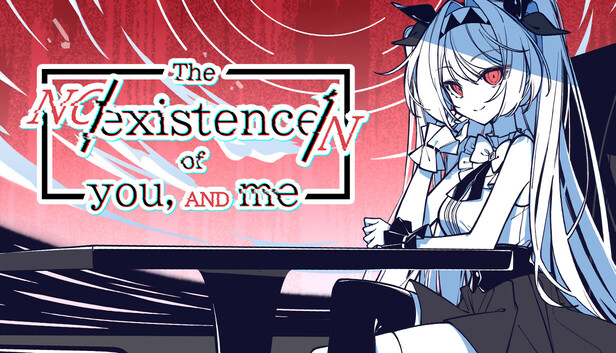
The NOexistenceN of you AND me
Use "game" as a medium to showcase the world of "you/girl". Explore the truth of "you/girl/world" through the form of a "visual novel".
Alexander Obenauer
Exploring new and renewed ideas for how personal computing and the interfaces we think with can better serve people’s lives – expanding opportunity, agency, curiosity, and creativity.
Feeling of Computing — Conversations
Everything is miscellaneous : the power of the new digital disorder
Includes bibliographical references (p. [235]-257) and index; Prologue : information in space -- The new order of order -- Alphabetization and its discontents -- The geography of knowledge -- Lumps and splits -- The laws of the jungle -- Smart leaves -- Social knowing -- What nothing says -- Messiness as a virtue -- The work of knowledge -- Coda : misc; Philosopher Weinberger shows how the digital revolution is radically changing the way we make sense of our lives. Human beings constantly collect, label, and organize data--but today, the shift from the physical to the digital is mixing, burning, and ripping our lives apart. In the past, everything had its one place--the physical world demanded it--but now everything has its places: multiple categories, multiple shelves. Everything is suddenly miscellaneous. Weinberger charts the new principles of digital order that are remaking business, education, politics, science, and culture. He examines how Rand McNally decides what information not to include in a physical map (and why Google Earth is winning that battle), how Staples stores emulate online shopping to increase sales, why your children's teachers will stop having them memorize facts, and how the shift to digital music stands as the model for the future.--From publisher description; From A to Z, Everything Is Miscellaneous will completely reshape the way you think - and what you know - about the world. Includes information on alphabetical order, Amaxon.com, animals, Aristotle, authority, Bettmann Archive, blogs (weblogs), books, broadcasting, British Broadcasting Corporation (BBC), business, card catalog, categories and categorization, clusters, companies, Colon Classification, conversation, Melvil Dewey, Dewey Decimal Classification system, Encyclopaedia Britannica, encyclopedia, essentialism, experts, faceted classification system, first order of order, Flickr.com, Google, Great Books of the Western World, ancient Greeks, health and medical information, identifiers, index, inventory tracking, knowledge, labels, leaf and leaves, libraries, Library of Congress, links, Carolus Linnaeus, lumping and splitting, maps and mapping, marketing, meaning, metadata, multiple listing services (MLS), names of people, neutrality or neutral point of view, New York Public Library, Online Computer Library Center (OCLC), order and organization, people, physical space, everything having place, Plato, race, S.R. Ranganathan, Eleanor Rosch, Joshua Schacter, science, second order of order, simplicity, social constructivism, social knowledge, social networks, sorting, species, standardization, tags, taxonomies, third order of roder, topical categorization, tree, Uniform Product Code (UPC), users, Jimmy Wales, web, Wikipedia, etc

Kyle Booten
Noöhacking1 is the title of my current research program. I use this term for ways that artists and everyday digital media users build and repurpose algorithmic tools in order to take care of their own minds/spirits, an especially challenging and important task amidst a digital milieu that seems designed to make us alienated, unintelligent, and miserable.
We need more video games that are social platforms first, games second | TechCrunch
During these long, mundane physically-distant days, stretching on into an uncertain future like an ever-lengthening beigeish corridor, it's impossible not