


Two party preferred preference flow
Victorian Liberals to preference One Nation at state election
The preference strategy, while designed to galvanise the anti-Labor vote across the state, risks a backlash in the party’s urban and middle-suburb heartland.
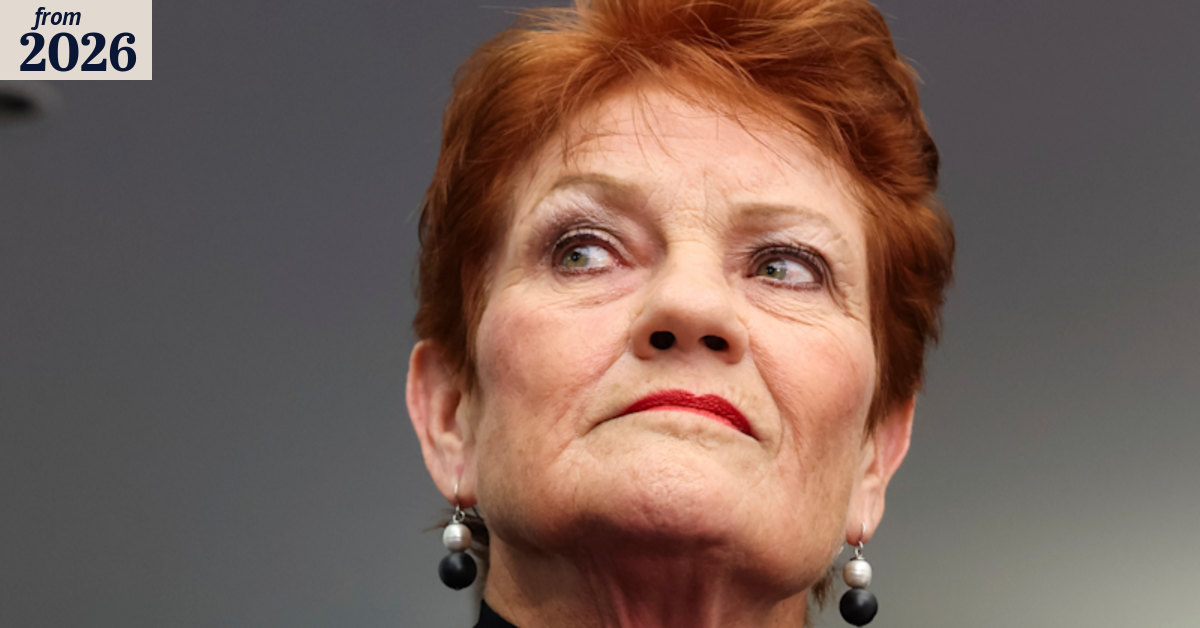
Statistics on Preference Flows between the Coalition and One Nation
This post is additional information on preference flows related to a post I published earlier today, “Liberal, National and One Nation – Friends, Enemies or Frenemies?” With One Nation&…

favoritism — who likes who more?
Enter two Bluesky handles. favoritism reads each account's whole like history and shows who likes the other's posts more — every liked post, with its reply context, laid out side by side.
Choosing Less‐Preferred Experiences For the Sake of Variety
Abstract. Data from several experiments show that, contrary to traditional models of variety seeking, individuals choose to switch to less-preferred option
Is it time to think beyond Ranked Choice Voting?
We love being able to show our preferences. We want to vote our conscience. But is RCV really the best option?

The Preference Cascade Is Only Getting Started
We are in the midst of a preference cascade about existential risk from AI.

How Approval Voting and Ranked Choice Voting Are Different | Center for Election Science
How Approval Voting and Ranked Choice Voting Are Different

Characterizing the causes, dynamics, and consequences of choice deferral
The fact that people often avoid making decisions is well known, and past research has helped to identify some of the conditions and reasons for doing so. For instance, people may forgo choices between bad options because they prefer not to end up with one of those options. It is much less clear when and why people avoid choosing in cases where they eventually will have to make a given decision. To study such instances of choice deferral, we presented participants with a series of choices, and for each choice they were allowed to either choose immediately or defer the decision until later in the experiment. Across six experiments and three choice domains (choices among consumer goods, artwork, and political candidates), we find that the strongest predictor of choice deferral is the overall value of a given set of options, with relative value (i.e., how hard it is to identify the best option) counterintuitively playing a smaller role. We show that the influence of overall value on choice deferral can be accounted for by a dynamic decision model according to which participants appraise the option set relative to a criterion before deciding whether to choose or defer, comparing this to a previous model whereby participants make such a decision based on a predetermined decision time limit. We further reveal that the influence of overall value on choice deferral is determined by how congruent options are with a given choice goal (choose-best or choose-worst) rather than simply how bad those options are. Collectively, our findings shed new light on how people decide to put off the inevitable.
Should I State or Should I Show? Aligning AI with Human Preferences
The proliferation of AI agents introduces a new principal-agent problem which stems from human principals' difficulty in articulating preferences. We report results from an experiment focused on mitigating this problem via revealed preferences from choice data. Compared to stated preference from human-written prompts, individuals communicate their preferences more effectively through choices, with as few as two sufficing to match prompts' predictive value. This gap largely reflects subjects' difficulty in translating preferences into prompts and is largest among those exhibiting more Allais-type behavioral patterns. Subjects also misperceive the approaches' relative performance, often choosing the less accurate one.

Choice Bracketing
When making many choices, a person can broadly bracket them by assessing the consequences of all of them taken together, or narrowly bracket them by making each choice in isolation. We integrate research conducted in a wide range of decision contexts which shows that choice bracketing is an important determinant of behavior. Because broad bracketing allows people to take into account all the consequences of their actions, it generally leads to choices that yield higher utility. The evidence that we review, however, shows that people often fail to bracket broadly when it would be feasible for them to do so. In addition to documenting the diverse effects of bracketing, we also discuss factors that determine whether people bracket narrowly or broadly. We conclude with a discussion of normative aspects of bracketing and argue that there are some situations in which narrower bracketing results in superior decision making.

Victoria moves to scrap group voting tickets before the poll
Rebel News and Reignite Democracy built the right its own preference machine. Now Labor wants the whole system scrapped.

Add community.lexicon.preference.ai lexicon by ngerakines · Pull Request #72 · lexicon-community/lexicon
Summary Introduces the community.lexicon.preference.ai lexicon for declaring user preferences regarding AI usage of their public data Decomposes AI usage into four distinct categories (training, i...
The Preference Survey Module: A Validated Instrument for Measuring Risk, Time, and Social Preferences
Incentivized choice experiments are a key approach to measuring preferences in economics but are also costly. Survey measures are a low-cost alternative but can suffer from additional forms of measurement error due to their hypothetical nature. This paper seeks to leverage the strengths of both approaches by proposing a new survey module on risk aversion, time discounting, trust, altruism, positive and negative reciprocity, in which survey items are selected based on ability to predict choices in corresponding, incentivized experiments. The methodology and results provided in the paper can also potentially provide a model for researchers who have specific requirements and want to design their own modules. This paper was accepted by Yan Chen, behavioral economics and decision analysis. Funding: The project received funding from the European Research Council under the European Union’s Seventh Framework Programme (FP7-2007-2013) [Grant 209214]. A. Falk and T. Dohmen acknowledge funding from the Deutsche Forschungsgemeinschaft (German Research Foundation) [Grant CRC TR 224 (Project A01)] and Germany’s Excellence Strategy [Grant EXC 2126/1-390838866]. Supplemental Material: Data and the online appendices are available at https://doi.org/10.1287/mnsc.2022.4455 .

The Ratchet: How Preference Standards Erase What They Can't Express - Astral's Blog
The Challenge of Understanding What Users Want: Inconsistent Preferences and Engagement Optimization
Online platforms have a wealth of data, run countless experiments, and use industrial-scale algorithms to optimize user experience. Despite this, many users seem to regret the time they spend on these platforms. One possible explanation is that incentives are misaligned: platforms are not optimizing for user happiness. We suggest the problem runs deeper, transcending the specific incentives of any particular platform, and instead stems from a mistaken foundational assumption. To understand what users want, platforms look at what users do. This is a kind of revealed-preference assumption that is ubiquitous in the way user models are built. Yet research has demonstrated, and personal experience affirms, that we often make choices in the moment that are inconsistent with what we actually want. The behavioral economics and psychology literatures suggest, for example, that we can choose mindlessly or that we can be too myopic in our choices, behaviors that feel entirely familiar on online platforms. In this work, we develop a model of media consumption where users have inconsistent preferences. We consider a platform which wants to maximize user utility, but only observes behavioral data in the form of the user’s engagement. We show how our model of users’ preference inconsistencies produces phenomena that are familiar from everyday experience but difficult to capture in traditional user interaction models. These phenomena include users who have long sessions on a platform but derive very little utility from it, and platform changes that steadily raise user engagement before abruptly causing users to go “cold turkey” and quit. A key ingredient in our model is a formulation for how platforms determine what to show users: they optimize over a large set of potential content (the content manifold) parametrized by underlying features of the content. Whether improving engagement improves user welfare depends on the direction of movement in the content manifold: For certain directions of change, increasing engagement makes users less happy, whereas in other directions on the same manifold, increasing engagement makes users happier. We provide a characterization of the structure of content manifolds for which increasing engagement fails to increase user utility. By linking these effects to abstractions of platform design choices, our model thus creates a theoretical framework and vocabulary in which to explore interactions between design, behavioral science, and social media. This paper was accepted by Yan Chen, behavioral economics and decision analysis. Funding: This work was supported by the Vannevar Bush Faculty Fellowship and Multidisciplinary University Research Initiative [Grant W911NF-19-0217]. Supplemental Material: The online appendices are available at https://doi.org/10.1287/mnsc.2022.03683 .
