

Tracking retractions as a window into the scientific process
Retraction Watch Database
Retraction Watch testifies in Congressional hearing on scientific publishing
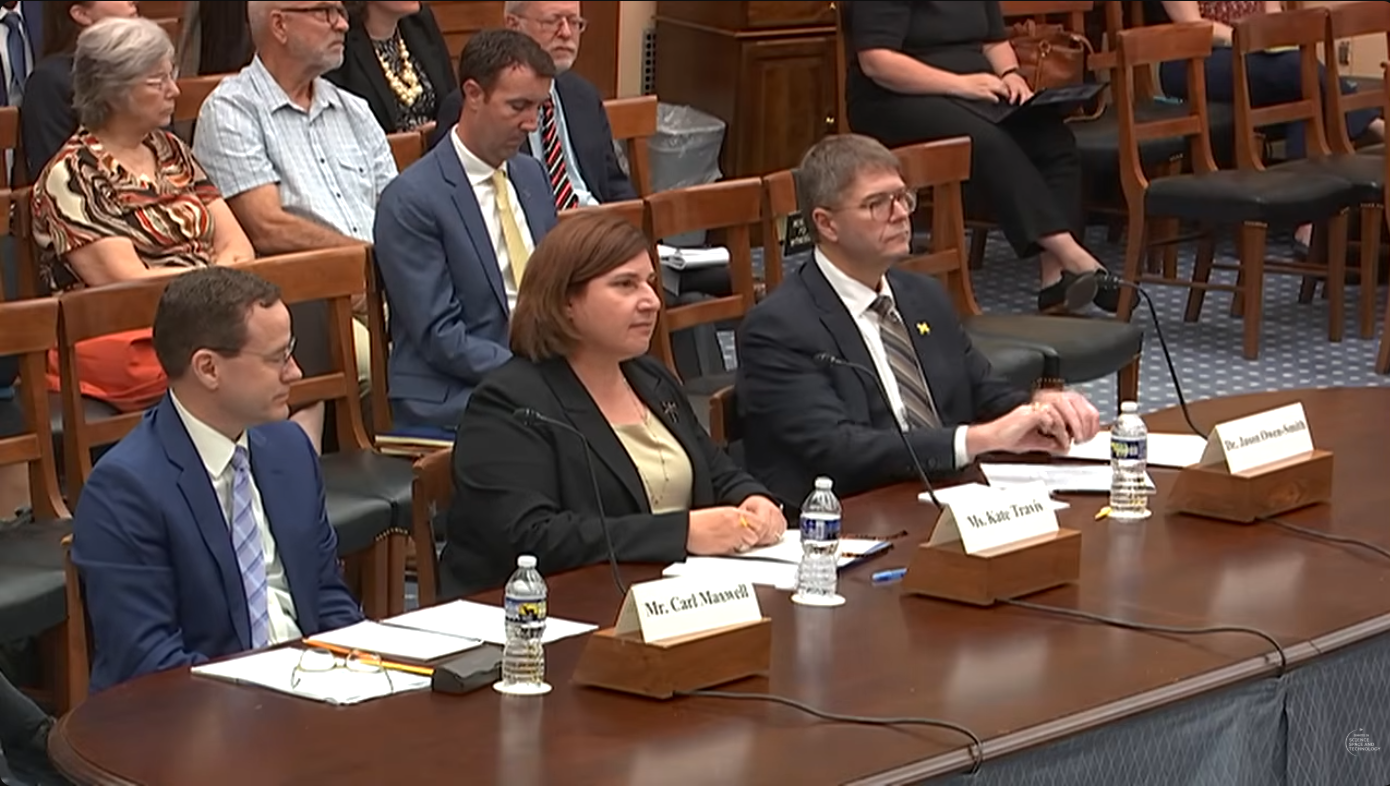
Retraction Watch managing editor Kate Travis (center) testified April 15 in a hearing before the Investigations and Oversight Subcommittee of the House Science, Space and Technology Committee. Othe…
Mechanical Watch – Bartosz Ciechanowski
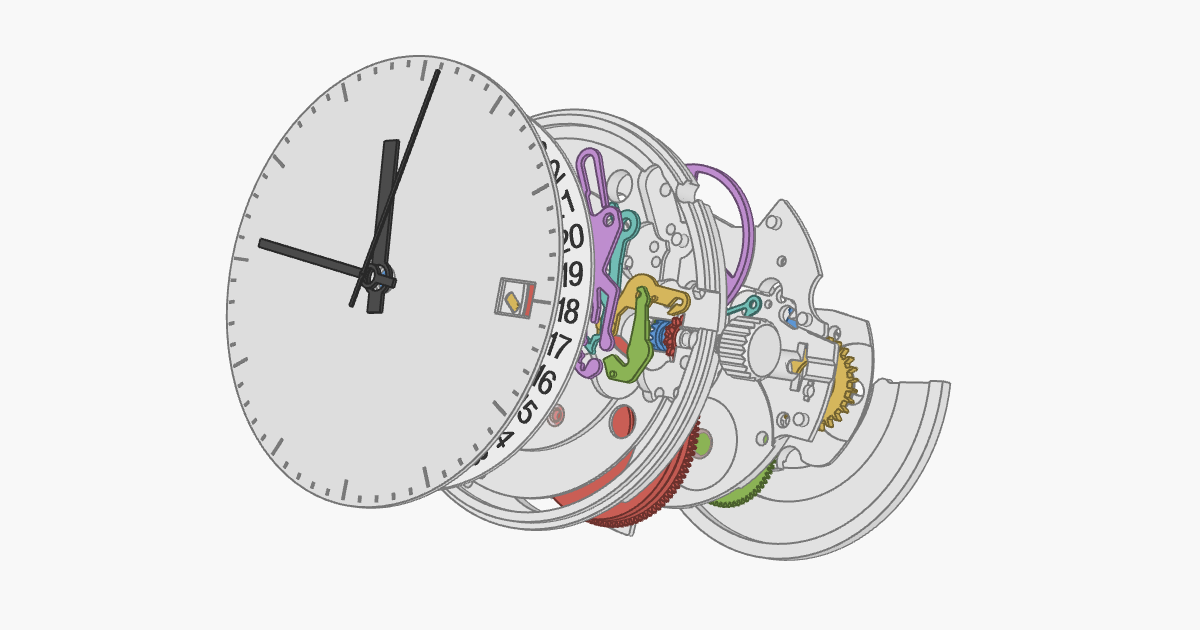
Interactive article explaining how a mechanical watch works.
Mechanical Watch – Bartosz Ciechanowski
Interactive article explaining how a mechanical watch works.
Retraction Note: High replicability of newly discovered social-behavioural findings is achievable
Nature Human Behaviour - Retraction Note: High replicability of newly discovered social-behavioural findings is achievable
No. 006: AAAI-26 AI review pilot, ScienceOne 100, NEJM retraction - The Hallway Track
The Hallway Track No. 006 - How AI is affecting the practice of science
PRISM: Capturing the Invisible Art of Scientific Practice
A New Tool for Recording and Scaling Laboratory Expertise

The State of Papers, Retractions, and Preprints: Evidence from the CrossRef Database (2004-2024)
A 20-year analysis of CrossRef metadata demonstrates that global scholarly output -- encompassing publications, retractions, and preprints -- exhibits strikingly inertial growth, well-described by exponential, quadratic, and logistic models with nearly indistinguishable goodness-of-fit. Retraction dynamics, in particular, remain stable and minimally affected by the COVID-19 shock, which contributed less than 1% to total notices. Since 2004, publications doubled every 9.8 years, retractions every 11.4 years, and preprints at the fastest rate, every 5.6 years. The findings underscore a system primed for ongoing stress at unchanged structural bottlenecks. Although model forecasts diverge beyond 2024, the evidence suggests that the future trajectory of scholarly communication will be determined by persistent systemic inertia rather than episodic disruptions -- unless intentionally redirected by policy or AI-driven reform.

unpingable/atproto-driftwatch
Tracks how claims propagate, mutate, and concentrate across the Bluesky ATProto network.
How and When to Involve Crowds in Scientific Research | James Evans
The lone academic in a basement lab is an endangered species. Years ago I asked Paul Ginsparg, who founded arXiv, what features his machine-learning filter used to flag speculative submissions. The top three: single-authored, submitted on a weekend, and heavy citation of Newton and Einstein. Science is a contact sport now. Marion Poetz and Henry Sauermann's How and When to Involve Crowds in Scientific Research (https://lnkd.in/g5pwVbfD) is the field manual. What crowds can do: Volume. Zooniverse mobilizes 2.7 million people to classify galaxies and court records. Galaxy Zoo's co-founder hand-classified 50,000 galaxies in one week before concluding that isolation would break him. Reach. NASA spent years failing to predict solar flares, then broadcast the problem. The winner was a semi-retired radio engineer in rural New Hampshire who swapped satellite data for radio data. Experience. Patients and caregivers asked to generate research questions produced 826 that scientists had missed, including the link between aging and wound healing. Bench-to-bedside runs backward. One caution the book underplays: an open call is not an inclusive one. Participation costs in time, money, and access screen people out. Self-selection can narrow the very diversity that makes crowds thrive. As AI floods the labor supply of routine, homogeneous cognition, human crowds become more valuable, not less. Machines process. People notice what nobody thought to ask. Check out my review @ https://lnkd.in/gkzvWrRC and the book @ https://lnkd.in/g5pwVbfD!

ReScience organization
Reproducible Science is good. Replicated Science is better. - ReScience organization

How Ten Publishers Retract Research
Retractions are the primary mechanism for correcting the scholarly record, yet publishers differ markedly in how they use them. We present a bibliometric analysis of 46,087 retractions across 10 major publishers using data from the Retraction Watch database (1997-2026), examining retraction rates, reasons, temporal trends, and geographic distributions, among other dimensions. Normalized retraction rates vary by two orders of magnitude, from Elsevier's 3.97 per 10,000 publications to Hindawi's 320.02. China-affiliated authors account for the largest share of retractions at every publisher. Retraction lags and reason profiles also vary widely across publishers. Among the ten publishers, ACM is an outlier in its retraction profile. ACM's normalized rate is mid-range (5.65), yet 98.3% of its 354 retractions are related to one incident. Seven of the ten most common global retraction reasons (including misconduct, plagiarism, and data concerns) are entirely absent from ACM's record. ACM's first retraction dates to 2020, despite a catalog dating to 1997. ACM self-describes its retraction threshold as "extremely high." We discuss this threshold in relation to the COPE retraction guidelines and the implications of ACM's non-public dark archive of removed works.
Track — AI-Powered Bluesky Monitoring
Cosmik Lab Notes 001: Semble Alpha - Cosmik Labs
I am ecstatic for this. I'm gonna start using this for tracking reading, research, and references for various projects. It's a bit bare bones while it's in alpha but there are tons of opportunities with this.
Just checked, and yes, my retracted paper is in the #retractionwatch database, as it should be. However, I wish the reason didn't include that it was an investigation by the journal/publisher, it was me who sweated and wrote a new paper with a solid theorem explaining why our old paper was […]
Original post on mathstodon.xyz
mathstodon.xyzI don't see the point in giving sleuths credit for retractions. It doesn't seem like a good way of valuing labour and also further turns retractions into a kind of weird moral economy.

Noticed: Sleuths are starting to get credit for retractions
retractionwatch.com
