


IOP Publishing has retracted nearly 100 papers from three of its conference proceedings after the articles were flagged for containing tortured phrases. Tortured phrases are rephrasings and s…
Five times AI hallucinations embarrassed governments
From the Trump administration’s “formatting errors” to South Africa’s historic policy withdrawal, AI confabulation is infiltrating official documents.

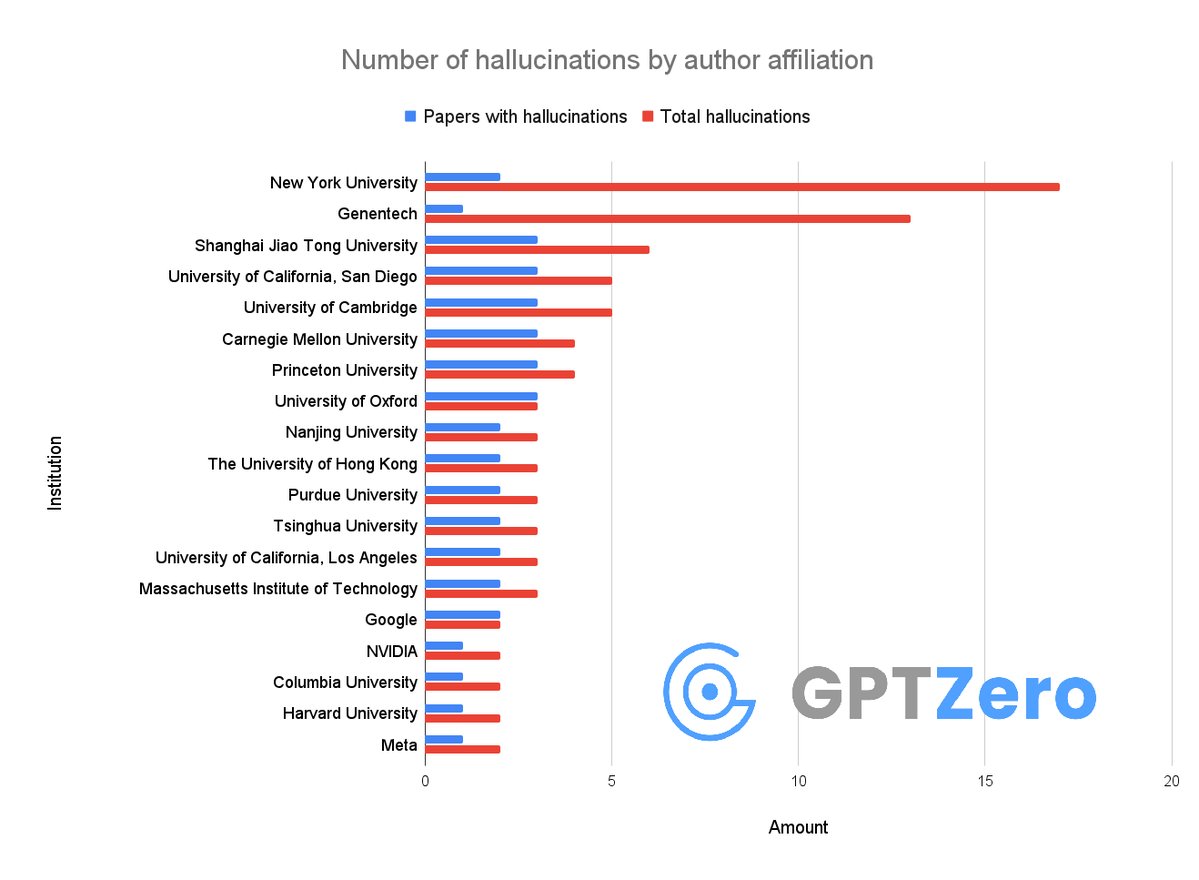
Okay so, we just found that over 50 papers published at @Neurips 2025 have AI hallucinations by @alexcdot(Alex Cui) | Twitter Thread Reader
Okay so, we just found that over 50 papers published at @Neurips 2025 have AI hallucinations I don't think people realize how bad the slop is right now It's not just that researchers from @GoogleDeepMind, @Meta, @MIT, @Cambridge_Uni are using AI - they allowed LLMs to generate hallucinations in their papers and didn't notice at all. It's insane that these made it through peer review👇
The New Wounded
This book addresses the issue of trauma and psychic wounds to stage a confrontation between psychoanalysis and contemporary neurobiology. In so doing, it reevaluates the brain as an organ that is not separated from psychic life but rather appears as its very locus. A philosophical approach of the “new wounded” (brain lesion patients) forms the matter of the confrontation.

Papers and peer reviews with evidence of ChatGPT writing
Retraction Watch readers have likely heard about papers showing evidence that they were written by ChatGPT, including one that went viral. We and others have reported on the phenomenon. Here’…

Editor’s Note: Retraction of article containing fabricated quotations
We are reinforcing our editorial standards following this incident.
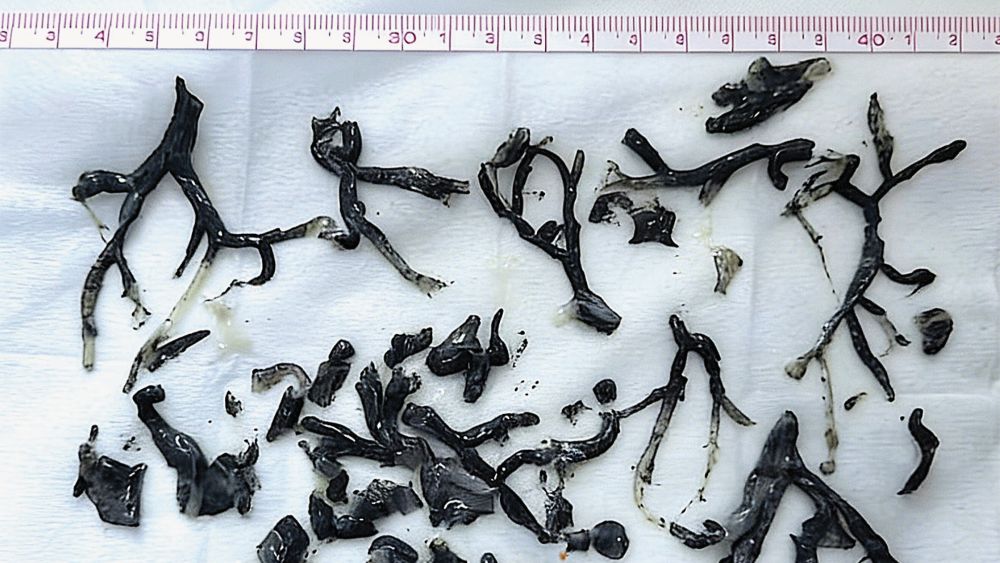
NEJM retracts case study for AI-manipulated imagery
An “Images in Clinical Medicine” item in the New England Journal of Medicine has been retracted after the authors acknowledged using AI to alter the photo. Y. Wang, X. Mu/© The New Engl…
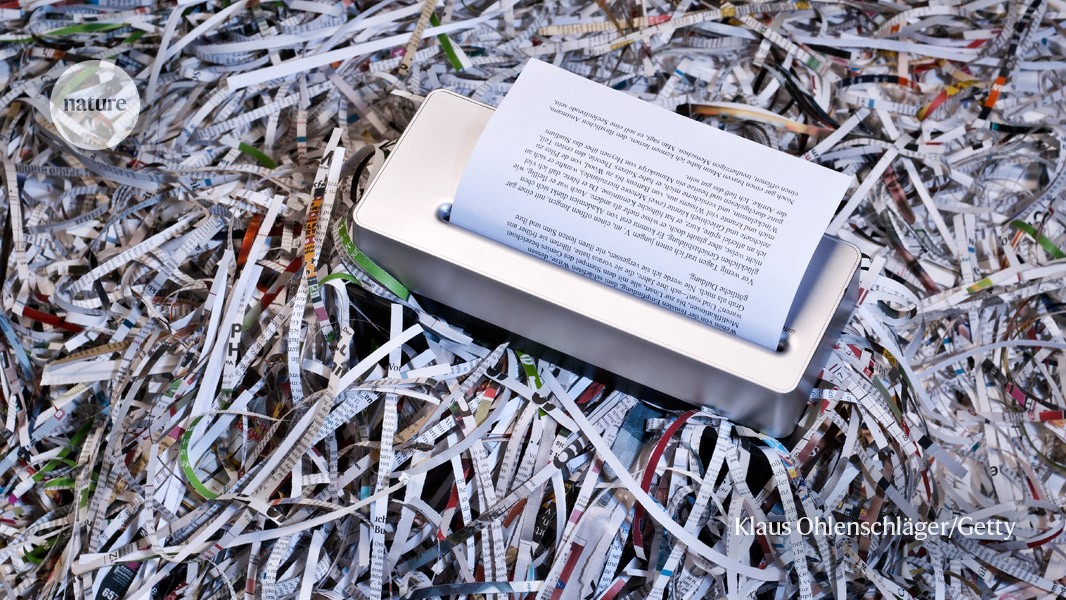
More than 10,000 research papers were retracted in 2023 — a new record
The number of articles being retracted rose sharply this year. Integrity experts say that this is only the tip of the iceberg.
More than 10,000 research papers were retracted in 2023 — a new record
The number of articles being retracted rose sharply this year. Integrity experts say that this is only the tip of the iceberg.
Science discussions of retracted articles on Bluesky: public scrutiny or misinformation spreading?
Post-publication peer review (PPPR) has emerged as an important supplement to traditional peer review, with social media playing a growing role in publicising potential problems in published research. However, it remains unclear whether social media discussions of retracted articles primarily reflect good practices, such as exposing flaws and acknowledging retraction status, or bad practices, such as overlooking retractions and continuing to disseminate scientific misinformation. In this study, we collected Bluesky posts referencing scholarly articles from Altmetric and retrieved metadata for the referenced articles using OpenAlex. The final dataset included 284 retracted articles with 79 pre-retraction posts and 857 post-retraction posts, 59 retraction notices with 186 posts, and 609,461 non-retracted articles with 1,344,756 posts. We manually coded Bluesky posts discussing retracted articles to identify instances of good and bad practice. The results show that posts demonstrating good practice (89.9%) substantially outnumbered those demonstrating bad practice (10.1%). Posts reflecting good practice also had more user engagement. In the pre-retraction phase, good practice posts constituted a slight minority (43.0%), whereas in the post-retraction phase they were dominant (94.2%). Most negative posts in the pre-retraction phase (90.0%) had good practice while only 17.3% positive posts in the post-retraction phase showed bad practice. Thus, sentiment analysis can be helpful to filter posts that could flag potential flaws before retraction, but it may struggle to accurately identify the spread of misinformation after retraction. More broadly, this study highlights the potential of Bluesky to support responsible scientific communication, public scrutiny, and research integrity.
New IOP Publishing tool detects duplicate peer reviews in push against reviewer fraud - IOP Publishing
IOP Publishing (IOPP) has developed a machine-learning powered tool to help detect duplicate peer review reports, addressing a growing threat to research integrity in scholarly publishing. Duplicate peer reviews (where the same reviewer report is sent for multiple submissions) are problematic because they fail to provide a unique and critical assessment of a manuscript, making the peer […]
Brainrot: Deskilling and Addiction are Overlooked AI Risks | Proceedings of the 2026 ACM Conference on Fairness, Accountability, and Transparency
As part of the Digital Library's transition to Open Access, new features for researchers are available in the Premium Edition. Click here to learn more.

Did Neuralink make the wrong bet?
The field of brain-computer interfaces is moving away from mind-controlled computer cursors to restoring speech.

Is the scientific paper due to be replaced?
AI is pushing scientific publishing to the brink. For neuroscience, the crisis may be an opportunity to finally connect findings across subfields.

In February 2024, I wrote Scientific Reports about a published meta-analysis claiming that mindfulness interventions affect neural plasticity, 'cementing the neuropsychological basis of mindfulness-based interventions'. The paper was retracted yesterday—here a little summary of the process.🧵
Article now retracted. Retraction notice focuses on data sharing, but doesn't mention - the ethics review body is the author's own company - the tech used to to collect the data by intercepting users' LLM prompts does not exist ht @grinschglsandra.bsky.social psycnet.apa.org/fulltext/2027-53135-001.html
APA PsycNet
psycnet.apa.org
Ian Hussey
Retractionwatch coverage of this article retractionwatch.com/2026/06/16/technology-mind-be… @grinschglsandra.bsky.social @malte.the100.ci @jamiecummins.bsky.social
