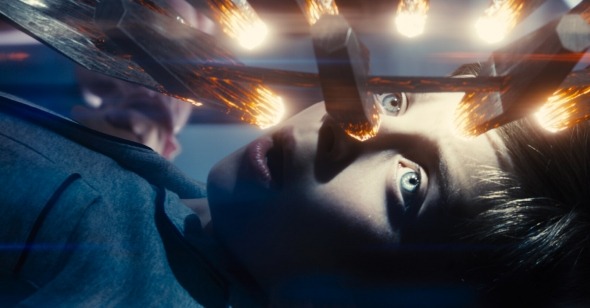
Across the films of Steven Spielberg, aliens have frequently been a vehicle to explore religiosity from a secular perspective. Institutions and dogma are elided in favor of dramatizing the ecstatic feeling of believing in something far beyond one�s station, and having that faith rewarded.
As UFOs go mainstream, the jury is out on what the existence of alien life might mean for religion
Steven Spielberg's new film “Disclosure Day” explores extraterrestrial life and its impact on religion. UFOs, now also called UAPs, are gaining mainstream attention.
Stephen Spielberg’s Reckless, Audacious “Disclosure Day”
“Disclosure Day,” a tale of aliens on Earth and the coverup of their presence, starring Emily Blunt and Josh O’Connor, is a catalogue of Steven Spielberg’s obsessions, and a deeply personal vision.

Steven Spielberg’s ‘Disclosure Day’ Turns Autofiction Into Thrilling Sci-Fi
The Hollywood maestro’s latest is filled with excitement and sentimentality.

Steven Spielberg Is Still Searching for Truth
With ‘Disclosure Day,’ the master director continues to understand the power of revelation, even if he doesn’t have much to disclose this time around
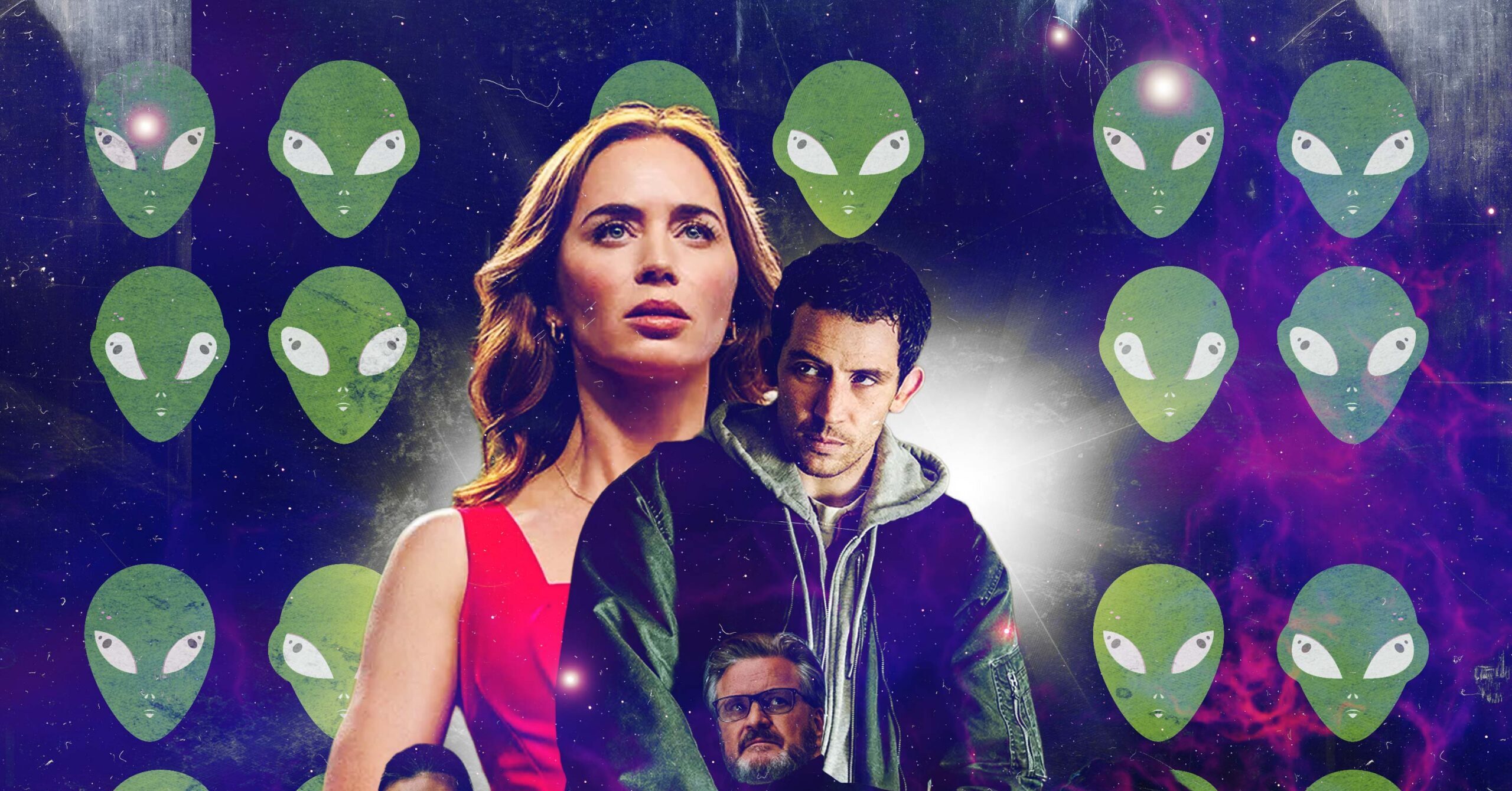
The Speculative Empathy & Radical Hope of Disclosure Day
For most of Spielberg’s career, science fiction has been the mechanism through which he learns and teaches empathy. But in Disclosure Day, empathy itself is the speculative leap

Twilight of the Spielberg Image
Steven Spielberg's career wrestles with the power and meaning of image-making, and his sci-fi "Disclosure Day" makes this its very subject.
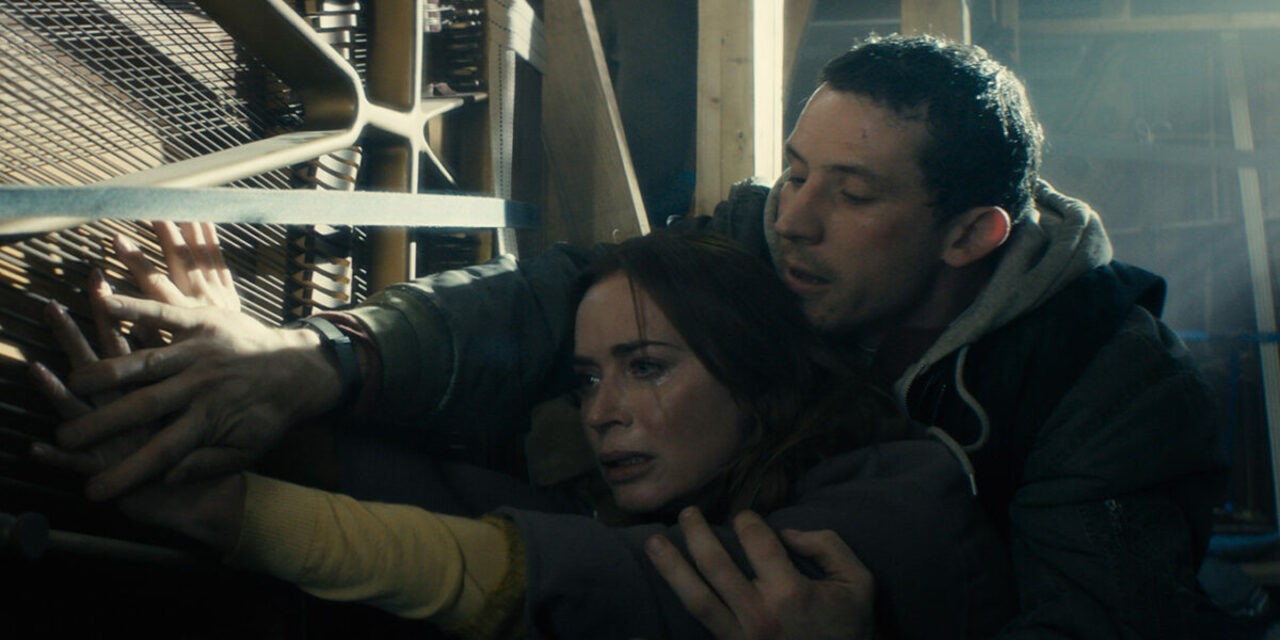
An auteurist’s delight: ‘Disclosure Day’
A film assembled from recognizable spare parts, Disclosure Day has more craft than most big budget American films. The 79-year-old Steven Spielberg’s virtuosity is neither humble nor conceale…

What OpenAI shares with Scientology
Strange beliefs, fights over money and bad science fiction

What OpenAI shares with Scientology
Strange beliefs, fights over money and bad science fiction
What Steven Spielberg Taught Me About Fear, Catharsis, and Being Human
Hollywood is struggling, but Spielberg insists that the big screen is still the best place to work out our collective dreams, joys and sorrows.

Belief, Values, Bias, and Agency: Development of and Entanglement with "Artificial Intelligence"
Contemporary research into the values, bias, and prejudices within "Artificial Intelligence" tends to operate in a crux of scholarship in computer science and engineering, sociology, philosophy, and science and technology studies (STS). Even so, getting the STEM fields to recognize and accept the importance of certain kinds of knowledge— the social, experiential kinds of knowledge— remains an ongoing struggle. Similarly, religious scholarship is still very often missing from these conversations because many in the STEM fields and the general public feel that religion and technoscientific investigations are and should be separate fields of inquiry. Here I demonstrate that experiential knowledge and religious, even occult beliefs are always already embedded within and crucial to understanding the sociotechnical imaginaries animating many technologies, particularly in the areas of "AI." In fact, it is precisely the unwillingness of many to confront these facts which allow for both the problems of prejudice embedded in algorithmic systems, and for the hype-laden marketing of the corporations and agencies developing them. This same hype then intentionally obfuscates the actions of both the systems and the people who create them, while confounding and oppressing those most often made subject to them. Further, I highlight a crucial continuity between bigotry and systemic social projects (eugenics, transhumanism, and "supercrip" narratives), revealing their foundation in white supremacist colonialist myths of whose and which kinds of lives count as "truly human." We will examine how these myths become embedded into the religious practices, technologies, and social frameworks in and out of which "AI" and algorithms are developed, employing a composite theoretical lens made from tools such as intersectionality, ritual theory, intersubjectivity, daemonology, postphenomenology, standpoint epistemology, and more. This theoretical apparatus recontextualizes our understanding of how mythologies and rituals of professionalization, disciplinarity, and dominant epistemological hierarchies animate concepts such as knowledge formation, expertise, and even what counts as knowledge. This recontextualization is then deployed to suggest remedies for research, public policy, and general paths forward in "AI." By engaging in both the magico-religious valences and the lived experiential expertise of marginalized people, these systems can be better understood, and their harms anticipated and curtailed.
Sayaka Murata’s Alien Eye
The author of “Convenience Store Woman” has gained a cult following by seeing the ordinary world as science fiction.

The X-Files and the Demon-Haunted World
Ari N. Schulman on why we want to believe
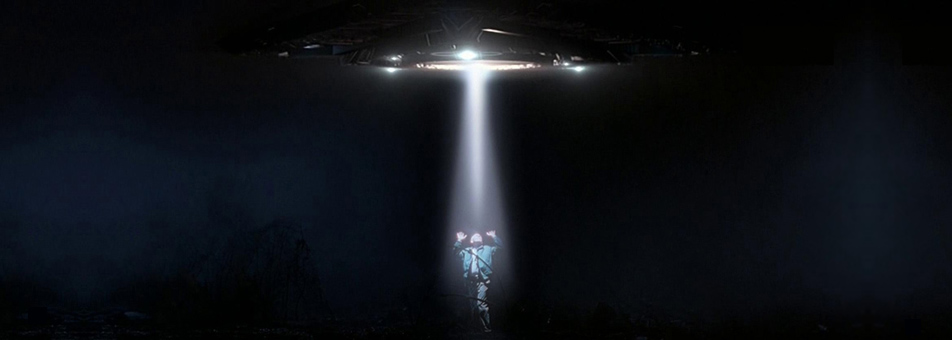
The UFO craze was created by government nepotism and incompetent journalism
Blame Harry Reid, Skinwalker Ranch, "dino-beavers," and The New York Times

(Working Paper) Good Faith Design: Religion as a Resource for Technologists
Previous work has found a lack of research in HCI on religion, partly driven by misunderstandings of values and practices between religious and technical communities. To bridge this divide in an empirically rigorous way, we conducted an interview study with 48 religious people and/or experts from 11 faiths, and we document how religious people experience, understand, and imagine technologies. We show that religious stakeholders find non-neutral secular embeddings in technologies and the firms and people that design them, and how these manifest in unintended harms for religious and nonreligious users. Our findings reveal how users navigate technoreligious practices with religiously informed mental models and what they desire from technologies. Informed by this, we distill six design values -- wonder, humility, space, embodiedness, community, and eternity -- to guide technologists in considering and leveraging religion as an additional, valid sociocultural resource when designing for a holistic user. We further spell out directions for future research.

First They Built a Secular Apocalypse Belief System. Now They Want Religious Authority.
Over the weekend, a clip about “Anthropic thinks it’s building God” started making the rounds.