

A story of an autistic girl who witnessed a crime and fights to be a witness despite people dismissing her credibility.
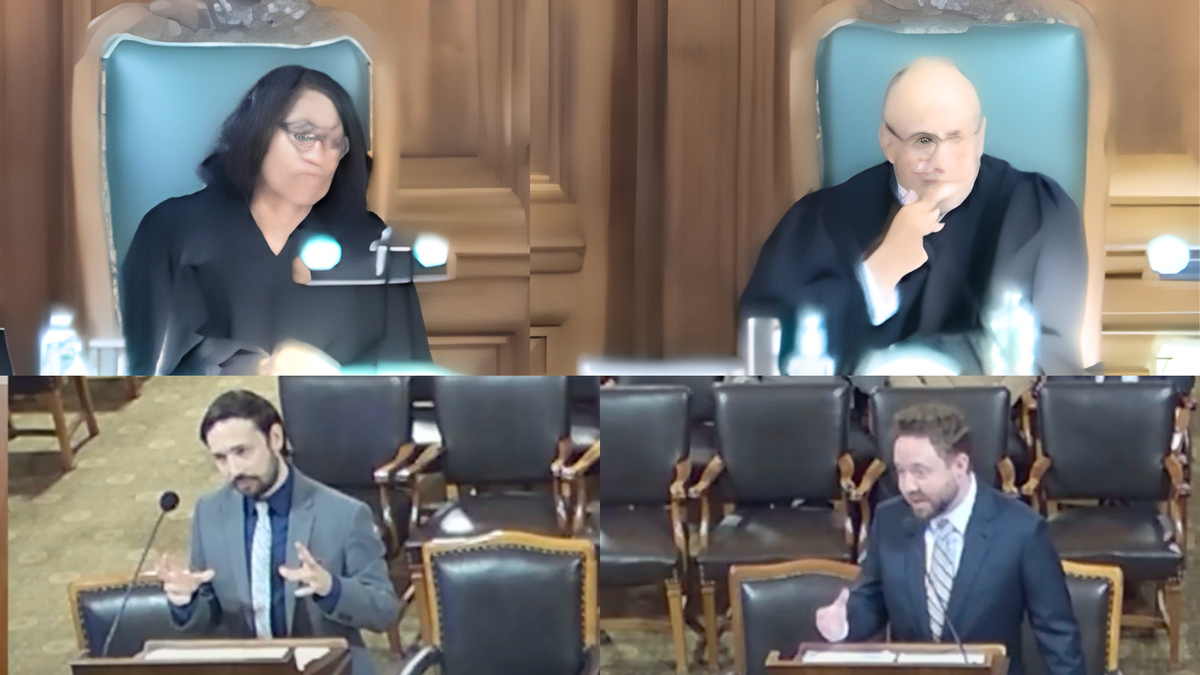
Watch These Judges Rip Into Lawyers For Citing Cases That Don't Exist
“It's striking, concerning, disappointing, and saddening to think that members of the bar would forward cases to a court that don't exist, and to think that the lawyers on the other side of that didn’t read it for whatever reason, didn’t check it.”
Lawyers Caught Citing AI-Hallucinated Cases Call It a 'Cautionary Tale'
The attorneys filed court documents referencing eight non-existent cases, then admitted it was a "hallucination" by an AI tool.
Debunking “When Prophecy Fails”
ABSTRACT In 1954, Dorothy Martin predicted an apocalyptic flood and promised her followers rescue by flying saucers. When neither arrived, she recanted, her group dissolved, and efforts to proselytize ceased. But When Prophecy Fails (1956), the now‐canonical account of the event, claimed the opposite: that the group doubled down on its beliefs and began recruiting—evidence, the authors argued, of a new psychological mechanism, cognitive dissonance. Drawing on newly unsealed archival material, this article demonstrates that the book's central claims are false, and that the authors knew they were false. The documents reveal that the group actively proselytized well before the prophecy failed and quickly abandoned their beliefs afterward. They also expose serious ethical violations by the researchers, including fabricated psychic messages, covert manipulation, and interference in a child welfare investigation. One coauthor, Henry Riecken, posed as a spiritual authority and later admitted he had “precipitated” the climactic events of the study.

Margaret Killjoy's Podcast Tells the Tale of Autistici/Inventati · Keep the Internet free
Margaret Killjoy’s podcast (Cool People Who Did Cool Stuff) dedicates two episodes (they will be four in total, she states) to the history of the Autistici/Inventati project and to what has happened since August 26 with the designation of the collective as global terrorist by the US administration. Listen up!
New paradigm for psychology just dropped
OR: the ideas your mother warned you about

Ordeals
AbstractI argue that medieval judicial ordeals accurately assigned accused criminals’ guilt and innocence. They did this by leveraging a medieval superstition called iudicium Dei (judgments of God). According to that superstition, God condemned the guilty and exonerated the innocent through clergy-conducted physical tests. Medieval citizens’ belief in iudicium Dei created a separating equilibrium in which only innocent defendants were willing to undergo ordeals. Conditional on observing a defendant’s willingness to do so, the administering priest knew he or she was innocent and manipulated the ordeal to find this. My theory explains the peculiar puzzle of ordeals: trials of fire and water that should have condemned most persons who underwent them did the reverse. They exonerated these persons instead. Boiling water rarely boiled persons who plunged their arms in it. Burning iron rarely burned persons who carried it. Ordeal outcomes were miraculous, but they were miracles of mechanism design.

Gender Obliviousness in Autism:
Accuracy Concerns Are Not Identity Concerns
Cory Doctorow: Stories Are a Fuggly Hack - Locus
I've mentioned before, stories are weird. I mean, really, really weird. Nothing that happens in a piece of fiction has any consequence in the real world. Romeo and Juliet did not live, did not die, and the ''tragedy'' they represent is objectively less important than the tragedy of the live yogurt culture I digested at the breakfast table this morning. My theory is that the parts of our brains that …Read More
AI Hallucination Cases Database – Damien Charlotin
The most comprehensive database of AI hallucination cases in law: legal decisions from courts worldwide, searchable by country, party, AI tool, and outcome. Updated daily.
Beyond “Woodstein”: Narratives of Investigative Journalism
Using a methodology inspired by structural narratology and by James Hamilton’s [2016. Democracy’s Detectives: The Economics of Investigative Journalism. Cambridge: Harvard] economic analysis of inv...

How Should Autistic Characters be Written?
Neurodivergent representation: a study in three cases.

Epistemic courage
"'Epistemic Courage' is a timely and thought-provoking exploration of the ethics of belief. Drawing on a wide range of examples, from conspiracy theories to medical misinformation, Ichikawa shows why epistemology is no mere academic abstraction - the question of what to believe couldn't be more urgent. And, he argues, many mainstream ideas about what to believe - those emphasizing the importance of ensuring that one doesn't believe with insufficient evidence - are incomplete and distorting in important and harmful ways. A skeptical, negative bias about belief is connected to a conservative bias that reinforces the status quo. Throughout the book, Ichikawa argues that we need to shift our focus from avoiding false beliefs to actively seeking out true ones. Throughout the book, Ichikawa uses engaging and timely examples to illustrate his points. He tackles important questions, such as how moral considerations interact with evidential ones in deciding what to believe, and how to navigate the complex ethical issues around testimony, rape culture, and epistemic injustice. Accessible and rigorous, 'Epistemic Courage' invites readers to consider the importance of belief, and how it shapes our lives and the world around us. With its insightful analysis and compelling case studies, this book is an essential read for philosophers and anyone else interested in belief, social justice, and the pursuit of truth."--

Real Rape — Harvard University Press
Many men believe that they can force women to have sex against their will and that it isn’t rape—at least, not if the man knows the women and doesn’t beat her up or wield a weapon. The law’s casual treatment of such rape cases is the subject of this pioneering book, which is both a powerful exposé of the often shocking facts and a trenchantly written call for reform.

Pro Se Plaintiff Caught Hiding Prompt Injections In Court Filings; Responds By Hiding More
There have now been dozens of stories of bad lawyers using AI results in filings, most of which show up in the form of fake case citations. That’s old hat at this point. But how about prompt …


It gets even crazier. After MS NOW reporter @brandyzadrozny.bsky.social published an article debunking the celebrity deepfakes, she herself was woven into the narrative, with fabricated videos emerging that falsely claimed she had retracted her reporting and blamed Democrats for a "false flag."
