


Two excellent new reports from our friends at the Economic Security Project make a strong case for direct cash — and reveal why rural, county-level research matters. Right on Time argues that cash is particularly effective during major transitions: * having a child * losing a job * leaving foster care or incarceration
Right on Time: How Cash Helps Families Move Through Life's Transitions - Economic Security Project
Executive Summary Over the past decade, more than 250 guaranteed income pilots, programs that provide people with regular cash with no restrictions on how they use it, have run across 40 states and the District of Columbia. That research has revealed many learnings, and this report focuses on one clear takeaway: cash has its largest…
Unconditional cash transfers reduce homelessness
Homelessness is an economic and social crisis. In a cluster-randomized controlled trial, we address a core cause of homelessness—lack of money—by providing a one-time unconditional cash transfer of CAD$7,500 to each of 50 individuals experiencing homelessness, with another 65 as controls in Vancouver, BC. Exploratory analyses showed that over 1 y, cash recipients spent fewer days homeless, increased savings and spending with no increase in temptation goods spending, and generated societal net savings of $777 per recipient via reduced time in shelters. Additional experiments revealed public mistrust toward the ability of homeless individuals to manage money and demonstrated interventions to increase public support for a cash transfer policy using counter-stereotypical or utilitarian messaging. Together, this research offers a new approach to address homelessness and provides insights into homelessness reduction policies.

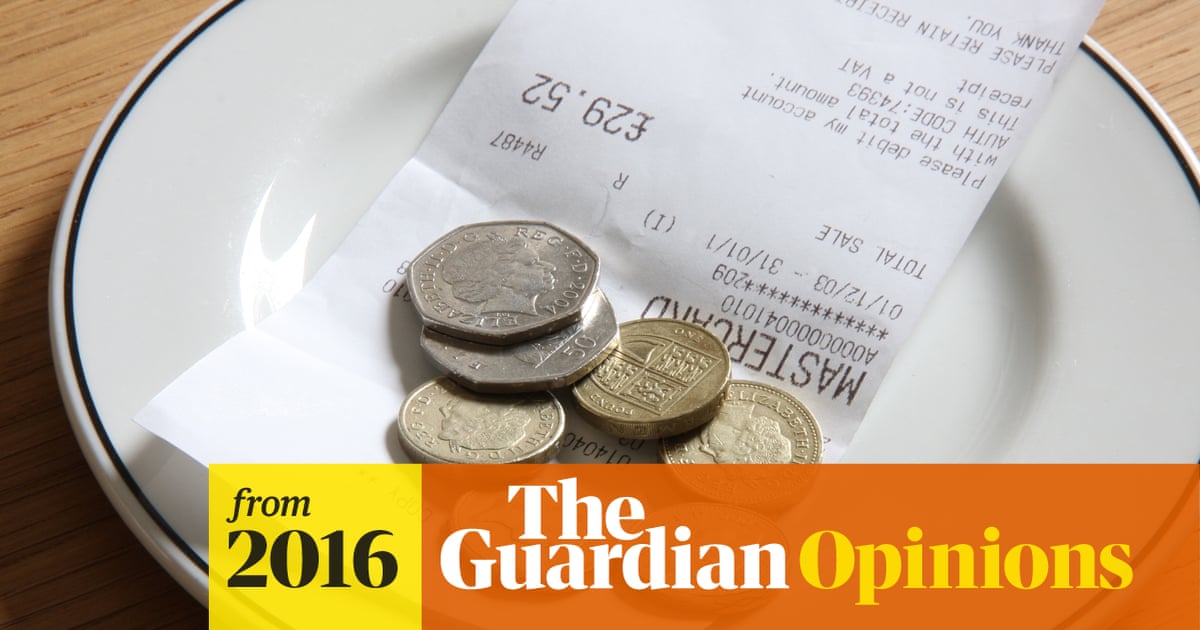
Why we should fear a cashless world | Dominic Frisby
Poor people and small businesses rely on cash. A contactless system will likely entrench poverty and pave the way for terrifying levels of surveillance
Credit Access in the United States
We measure differences in US households’ access to credit and explore the mechanisms driving such differences using newly constructed population-level linked credit bureau and Census data. We find large differences in credit scores by race, class, and hometown that emerge in one’s 20s and persist throughout the life cycle. These gaps are primarily driven by differences in delinquencies that emerge in young adulthood. By age 30, 73% of Black individuals, 62% of those from low-income families, and 51% of those from Appalachia and the South have a 90+ day delinquency on their credit report, in contrast to 36% for White individuals, 20% for high-income families, and 31% for those from the upper Midwest. These delinquencies are correlated with income and wealth, but observed income profiles and wealth account for at most 10–35% of the gaps in delinquencies across groups. In contrast, movers-based estimates of hometown effects imply that childhood exposure accounts for around 50% of the differences in delinquencies across hometowns. Counties that promote repayment also promote upward income mobility, but adult income mediates only a small fraction of this relationship: growing up in a place where others are likely to repay improves credit outcomes even for those who do not have higher income in adulthood. We provide suggestive evidence on the mechanisms driving these patterns. JEL Codes: G5, H0.

Cash versus Debit Card: The Role of Budget Control
Due to the financial crisis, an increasing number of households face financial problems. This may lead to an increasing need for monitoring spending and budgets. We demonstrate that both cash and the debit card are perceived as helpful in this respect. We show that, on average, consumers responsible for financial decision making within a household find cash and the debit card equally helpful for monitoring their household finances. Individuals differ in major respects, however. In particular, low earners and the liquidity‐constrained prefer cash as a budgeting tool. Finally, we present evidence that at an aggregated level, such preferences strongly affect consumer payment behavior. These findings suggest that the substitution of cash by cards may slow down because of the financial crisis.

Can Money Serve Life? How to Fund Communities Doing the Real Work with Matthew Monahan
What is Money, Anyway?
Editor’s Note: This topic is now comprehensively covered in my book, Broken Money. Money is a surprisingly complex subject. People spend their lives seeking money, and in some ways it seems so straightforward, and yet what humanity has defined as money has changed significantly over the centuries. How could something so simple and so universal, […]

Families' Use of Payment Instruments During a Decade of Change in the U.S. Payment System
The Federal Reserve Board of Governors in Washington DC.
The Impact of Unconditional Cash Transfers on Consumption and Household Balance Sheets: Experimental Evidence from Two US States
Founded in 1920, the NBER is a private, non-profit, non-partisan organization dedicated to conducting economic research and to disseminating research findings among academics, public policy makers, and business professionals.
Harnessing naturally occurring data to measure the response of spending to income
Balancing your incomings and outgoings Economic theory predicts that when someone receives money should have little effect on their spending patterns. Gelman et al. constructed a data set of 60 million transactions made by 75,000 people to test this theory. People do seem to go on a mini–spending spree after they get their paychecks or pensions. However, closer inspection reveals that that's mostly explained by the convenience of linking regular payments, such as rent and utilities, to regular income. Unsurprisingly, cash-strapped people are more likely to increase their spending in response to receiving income. Science , this issue p. 212 , How do theoretical predictions of individual fiscal behaviors match up against real-world, real-time data? , This paper presents a new data infrastructure for measuring economic activity. The infrastructure records transactions and account balances, yielding measurements with scope and accuracy that have little precedent in economics. The data are drawn from a diverse population that overrepresents males and younger adults but contains large numbers of underrepresented groups. The data infrastructure permits evaluation of a benchmark theory in economics that predicts that individuals should use a combination of cash management, saving, and borrowing to make the timing of income irrelevant for the timing of spending. As in previous studies and in contrast to the predictions of the theory, there is a response of spending to the arrival of anticipated income. The data also show, however, that this apparent excess sensitivity of spending results largely from the coincident timing of regular income and regular spending. The remaining excess sensitivity is concentrated among individuals with less liquidity.
Anthropic employees say they’ll give away billions. Where will it go?
A coming wave of Anthropic wealth could flood EA-aligned nonprofits with cash. Whether that’s good depends on who you ask

Doing what you love when the money won’t follow
I have frequently been critical of the advice given by baby boomers to “do what you love and the money will follow”. After the hard experience of my generation and the ones following it…

How Are SNAP Benefits Spent? Evidence from a Retail Panel
We use a novel retail panel with detailed transaction records to study the effect of the Supplemental Nutrition Assistance Program (SNAP) on house-hold spending. We use administrative data to motivate three approaches to causal inference. The marginal propensity to consume SNAP-eligible food (MPCF) out of SNAP benefits is 0.5 to 0.6. The MPCF out of cash is much smaller. These patterns obtain even for households for whom SNAP benefits are economically equivalent to cash because their benefits are below their food spending. Using a semiparametric framework, we reject the hypothesis that households respect the fungibility of money. A model with mental accounting can match the facts.
Do people like financial nudges?
Do people like financial nudges? To answer that question we conducted a pre-registered survey presenting people with 36 hypothetical scenarios describing financial interventions. We varied levels of transparency (i.e., explaining how the interventions worked), framing (interventions framed in terms of spending, or saving), and ‘System’ (interventions could target either System 1 or System 2). Participants were a random sample of 2,100 people drawn from a representative Australian population. All financial interventions were tested across six dependent variables: approval, benefit, ethics, manipulation, the likelihood of use, as well as the likelihood of use if the intervention were to be proposed by a bank. Results indicate that people generally approve of financial interventions, rating them as neutral to positive across all dependent variables (except for manipulation, which was reverse coded). We find effects of framing and System. People have strong and significant preferences for System 2 interventions, and interventions framed in terms of savings. Transparency was not found to have a significant impact on how people rate financial interventions. Financial interventions continue to be rated positive, regardless of the messenger. Looking at demographics, we find that participants who were female, younger, living in metro areas and earning higher incomes were most likely to favor financial interventions, and this effect is especially strong for those aged under 45. We discuss the implications for these results as applied to the financial sector.

Friends and Family Money: P2P Transfers and Financially Fragile Consumers
This paper examines the effects of real-time payments on financially fragile individuals in the United States. Consumers rely on friends and family money to cop
