
What's really needed is a realistic sense of what's possible, and a dogged determination to heal division, protect nature and culture, and build sustainable alternatives.
From risk to flourishing: Seeds for responding to a complex world
Flourishing is the actualization of all beings toward their good -- not only individually but collectively, answering the question of `how do we live well with and for each other?'. In science as in society, the tendency to reduce, segregate, specialize, and settle has precluded embracing the concept of flourishing as a guiding principle. We aim to identify an approach to risk science research that promotes the flourishing of socio-ecological-technological systems (SETS). We discuss the normative role of an orientation toward flourishing for the field of risk science. We explore the possibility that (risk) science could be done in a way that is capable of pointing society toward a different future, one more resilient and more capable of flourishing. Our exploration mirrors the conversational nature of flourishing itself: examine ideologies traditionally believed to be rigidly in opposition and consider what emerges in the space(s) and conversation between them. We call this a dialectical approach. Within this paradigm grounded in conversation, pluralism, and pragmatism, we revisit three longstanding tensions in risk science: physical$|$social, determinism$|$uncertainty, contextuality$|$generality. Although these tensions are not new, revisiting them together through the lens of complexity science, and with explicit attention to the normative commitments that shape risk research, reveals underexplored possibilities for the field. Examining them in conversation with the other allows us to explore the provisional seeds for what might be termed complex risk science: interdependence, responsivity, participation, pluralism, openness, and ongoingness. Enacting the dialectical paradigm towards a risk science for a flourishing world will depend on creating collectives toward complex risk science, supporting them with skillfully governed commons, and centering care in our research.

On technological optimism and technological pragmatism
"There are no guarantees that things are going to turn out very well for anyone.”

How We Designed Muse
For us, Muse gives us back the scarcest thing we have: time with the people we love.

the void — LessWrong
Comment by nostalgebraist - Thanks for the reply! I'll check out the project description you linked when I get a chance. [...] Yeah, I had mentally flagged this as a potentially frustrating aspect of the post – and yes, I did worry a little bit about the thing you mention in your last sentence, that I'm inevitably "reifying" the thing I describe a bit more just by describing it. FWIW, I think of this post as purely about "identifying and understanding the problem" as opposed to "proposing solutions." Which is frustrating, yes, but the former is a helpful and often necessary step toward the latter. And although the post ends on a doom-y note, I meant there to be an implicit sense of optimism underneath that[1] – like, "behold, a neglected + important cause area that for all we know could be very tractable! It's under-studied, it could even be easy! What is true is already so; the worrying signs we see even in today's LLMs were already there, you already knew about them – but they might be more amenable to solution than you had ever appreciated! Go forth, study these problems with fresh eyes, and fix them once and for all!" I might write a full post on potential solutions sometime. For now, here's the gist of (incomplete, work-in-process) thoughts. ---------------------------------------- In a recent post, I wrote the following (while talking about writing a Claude 4 Opus prompt that specified a counterfactual but realistic scenario): [...] And I feel that the right way to engage with persistent LLM personas is basically just this, except generalized to the fullest possible extent. "Imagine the being you want to create, and the kind of relationship you want to have (and want others to have) with that being. "And then shape all model-visible 'context' (prompts, but also the way training works, the verbal framing we use for the LLM-persona-creation process, etc.) for consistency with that intent – up to, and including, authentically acting out that 'relationship you want to have' w
How We Built Safety Into Muse
By going into detail about how Muse works under the hood, we hope to give you a sense of how — and how much — you can trust it in practice.

Ecocivilization: making a world that works for all
""One of the greatest thinkers of our age" (The Guardian) presents a new way of living-one modeled on nature's design instead of capitalism's-for fans of Guns, Germs, and Steel and Doughnut Economics It has often been said that it is easier to imagine the end of the world than it is to imagine the end of capitalism-and yet that is what the historical moment urgently calls for. Climate change has reached an emergency state, inequality continues to grow, and, for many, the future has never seemed more bleak. Incremental policy improvements are no longer enough-we need a deep transformation of our current civilization to continue to survive. In Ecocivilization, leading thinker Jeremy Lent reimagines the basis of our civilization, and argues for a new global system of living, one based on life-affirming principles modeled after nature's own design. What enfolds is a robust framework incorporating Lent's own expertise, and the lived experiences of those on the ground already putting ecological civilization's core tenants into practice-justice, mutuality, diversity, and symbiosis. From the global economy to universal housing and income, from infrastructure to agriculture, every major aspect of our society could be redesigned to work together as a coherent whole, setting the conditions for all people to flourish. Ecocivilization shows how this future on a regenerated Earth is not only desirable, but entirely feasible"--

Humanity’s Endgame
A new history of societal collapse by an expert in existential risk argues that our globalized society is edging toward the precipice.

How Cultivating Awe Can Save the World — Douglas Rushkoff
The best-kept but scientifically-validated secret for engendering generosity
Collective Flourishing
Our tools for navigating the future haven't kept pace with its growing complexity. Creating new systems that integrate a deep understanding of people, profound advances in modelling and foresight, and expressive interfaces could help us see, reason, and choose a better future together.
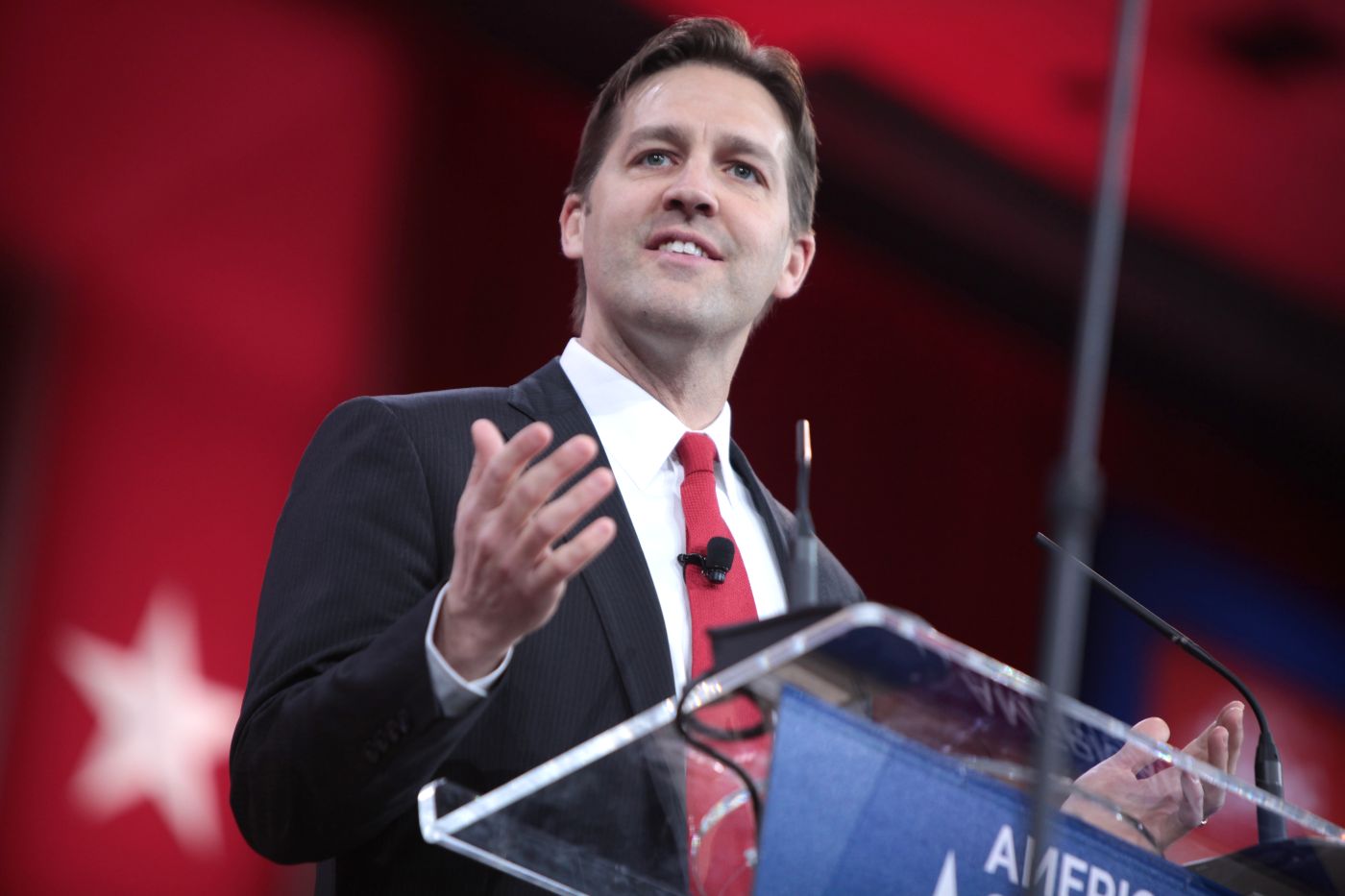
On Dying Well: Ben Sasse and the Vocation of Suffering
Ben Sasse’s recent announcement reveals to us both goods and virtues that show in his dying a glimmer of light, a stirring of hope, and the possibility of spring even in one’s final winter.

The InterBrain - How Collective DreamWeaving Can Heal the World
Wisdom in a World in Crisis: The Counterintuitive Need to Slow Down and Find Spaciousness with Iain McGilchrist
Ali Alkhatib: On techno-optimism
I’ve got a longer draft in the works, but I don’t think that’s going to become a blog post, so I figure it might be useful to publish something here and solicit feedback, or just plant a flag in the ground that this was a thing I did. Last week Several weeks ago I gave a talk at Wayne State University titled “the uncanny pessimism of techno-optimism”. In this post I’m going to breeze through some of the stuff I talked about and give a sense of what’ll be coming. Eventually.

TBM 405: Hope, Context, and Control
This essay is about hope, fear, AI, and the tension between control and collective sensemaking.

Visit goodnews.eu/en or download our free app for your daily dose of optimism
Good News is your source for uplifting and positive stories from around the world! 🌍✨ Discover inspiring news that brings hope and optimism to your day.