

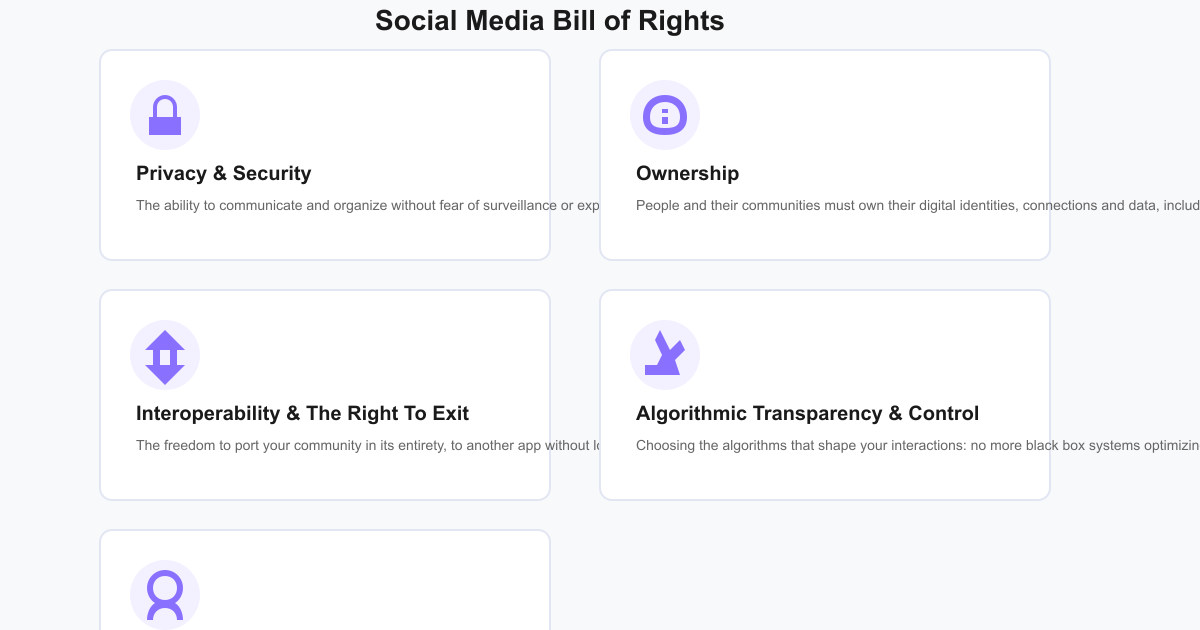
Five fundamental rights we need for a free, open, and humane social media ecosystem
We Deserve Better: A New Social Media Bill of Rights
Earlier this year, I was a part of a CNN documentary, Twitter: Breaking the Bird, which gave me much pause for reflection about the state of social media and how we got here. This year alone weR…

Framing to Grow the Open Social Web and Serve Democratic Freedoms – Position Paper / Richard Reisman
Framing to Grow the Open Social Web and Serve Democratic Freedoms – Position Paper Richard Reisman (Discussion Draft 2/13/26) For FediForum Un-Workshop March 2, 2026 Growing the usage and functionality of the social web to meet the needs of humanity requires a broadened framing of the task and ...

W-Social: What does sovereignty mean for social media? – Open Future
The European Commission’s move to W-Social frames it as a European alternative to X, but its closed-source code and reliance on Bluesky’s infrastructure show that sovereign social media requires open infrastructure—not European ownership alone.
Platform Wars (part 4): A Public Option for Social Media
Welcome to StateBook.
Donate to #FreeOurFeeds - help secure the future of social media, organized by Free Our Feeds
Free Our Feeds | A campaign to keep social media open, people-po… Free Our Feeds needs your support for #FreeOurFeeds - help secure the future of social media
Social Media Is Now Parasocial Media
When practitioners used the term “social media” to describe the internet tools that emerged in the mid-aughts, they were giving a name to the kinds of platforms and protocols that allowed people to socialize with friends and communities of interest by using digital technologies. Twenty years later, users of social media are far more likely to scroll than post – and the content that they consume is often strategically produced and algorithmically curated. In this essay, I argue that the very essence of social media has changed. To more effectively interrogate what we are witnessing, we need to stop presuming that these tools are “social media” and begin recognizing that they are now “parasocial media.” Doing so raises new questions about digitally mediated sociality, not to mention the politics and governance of these platforms.

Do social media threaten democracy?
Facebook, Google and Twitter were supposed to save politics as good information drove out prejudice and falsehood. Something has gone very wrong

The Internet and the Third Estate
Mark Zuckerberg suggested that social media is a “Fifth Estate”; in fact, social media is a means by which the Third Estate — commoners — can seize political power. Here history matters…
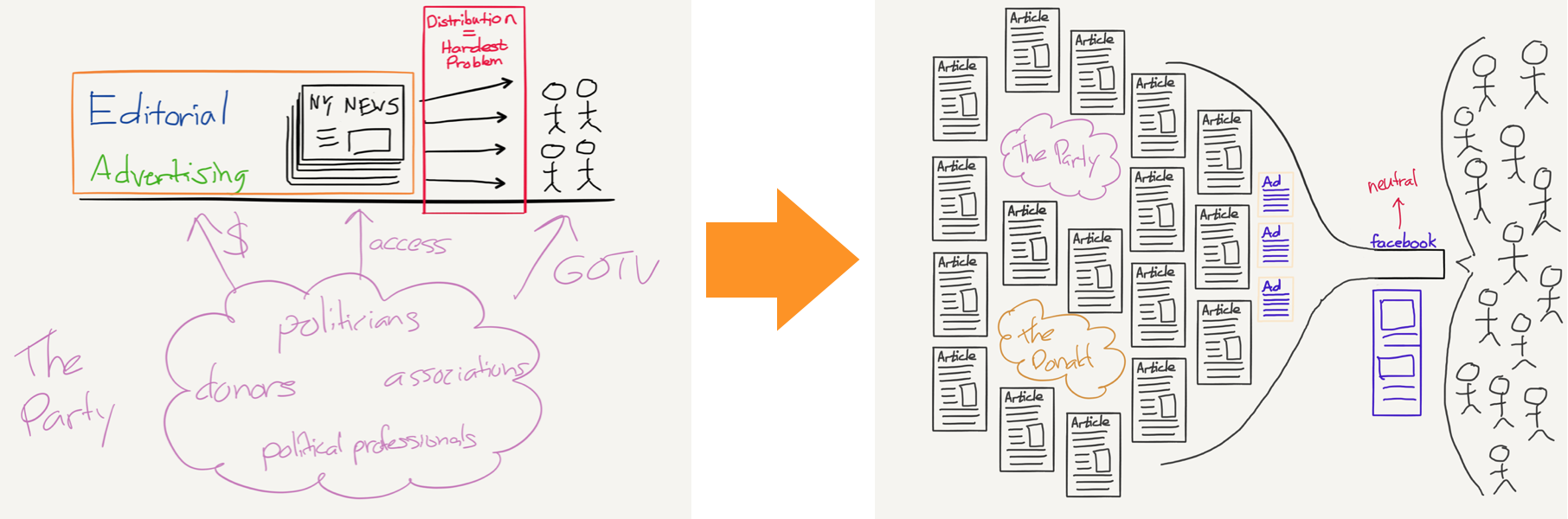
Note for the file New social media platform diversification of our presence redacted document 5.pdf
This is an HTML version of an attachment to the Freedom of Information request 'Decision to join W social network'.
Medsky
Decentralized social media built for community power, culture, and collective freedom.
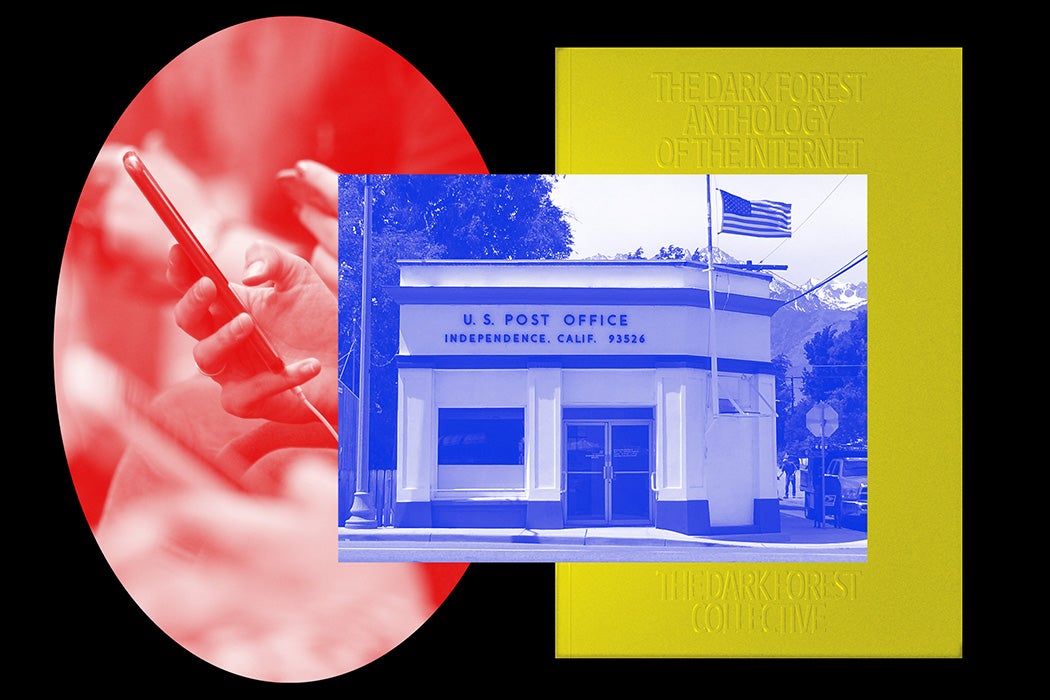
The Case for a Public Social Media Platform - JSTOR Daily
Artist and writer Joshua Citarella explores why corporate platforms corrode democracy—and what a postal-service-style digital commons could do differently.
Improving social media for democratic discourse
Social media have expanded opportunities for communication and political participation, but today's dominant platforms are optimized primarily for engagement and advertising revenue, contributing...

America Must Regulate Social Media
America invented social media. Now, it must invent regulations that protect users and free speech, argues John Wihbey.
Building A Prosocial Media Ecosystem | NOEMA
There’s never been a better time to make social media what it always should have been: a tool to strengthen rather than strip-mine the social fabric.

Free Our Feeds
Social media is broken: controlled by a handful of billionaires who shape what people see, say, and believe. These platforms profit from division, exploit user data, and lock people into closed systems.