


I'm in favour of diversity, equity and inclusion in open source communities, and here's why I think it matters.
Re: Seven Theses Against Viewpoint Diversity | The Paper Pilot
The Paper Pilot's digital garden of thoughts on philosophy, politics, and sociology
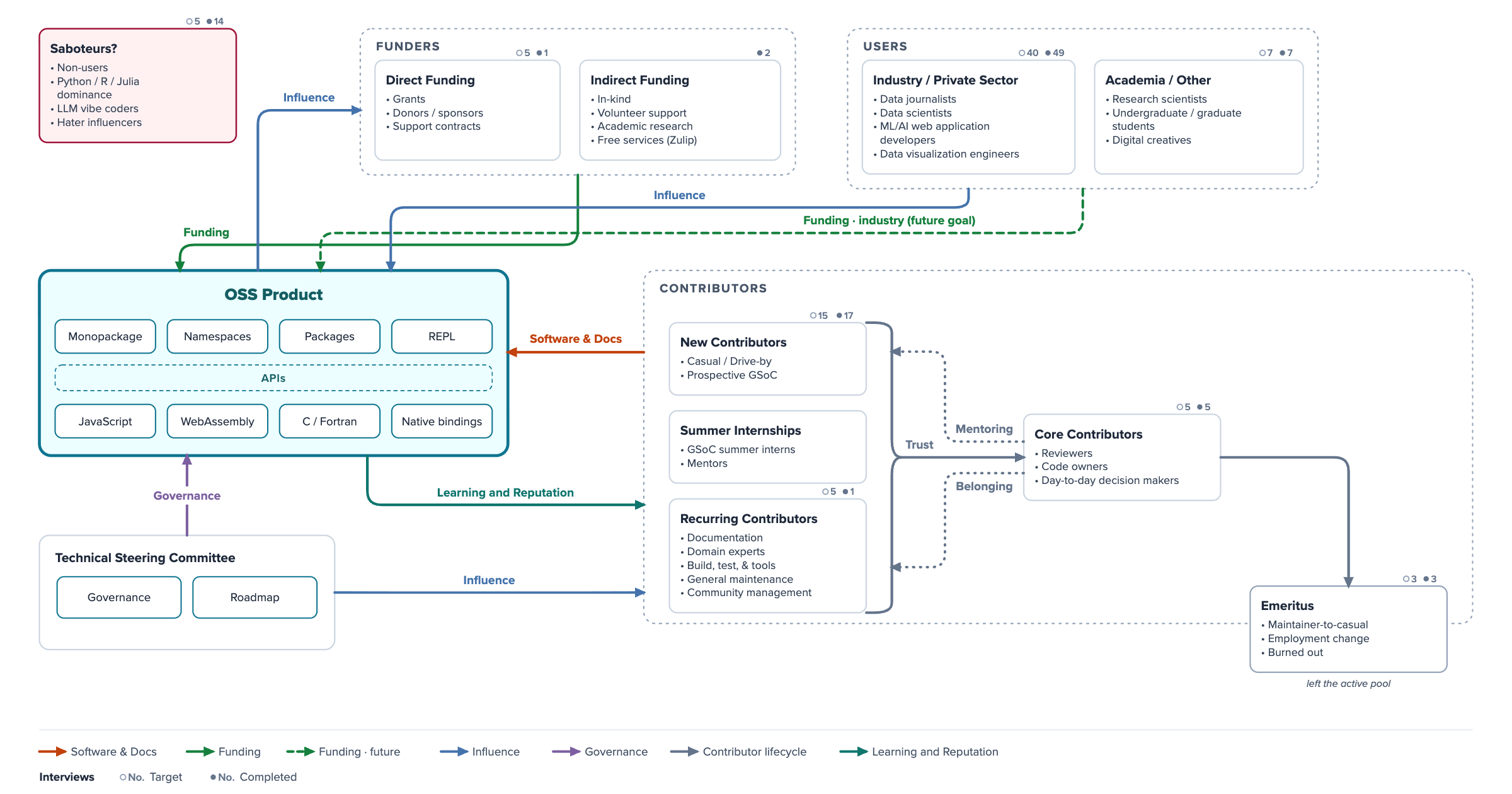
Mapping Your Ecosystem (and Its Saboteurs)
Naming everyone in your open-source ecosystem—both competitors and colleagues—and following where value flows.
Open Source Explained — Open Indie
Musings on the concept of ‘open source’, in the broadest possible definition of the term. Also an invitation to become a participant in ...


The importance of diversity in meteorology, technology and AI
The technology sector has long been synonymous with innovation, but lags behind when it comes to diversity. Kirstine Dale, Met Office CAIO, explains why we need to get our house in order.

The Open Stack | LinkedIn
Notes from the field on sustainability, funding, and the systems we rely on

Sustainable Open Source: The Maintainers Perspective or: How I Learned to Stop Caring and Love Open Source
Opensocial.community proposal
Hey folks! This is an opinionated proposal I put together for the community WG. Still a few open questions/uncertainties that I list at the ned. Check it out here: opensocial communities proposal - Google Docs Feel free to comment here or we can chat more in the next WG meeting.
Which Part of the Indie Web Ethos is the Bigger Priority?
Although normally spoken about as a cohesive whole, different aspects of the indie web ethos can wind up in tension with each other, which raises the question of which one ultimately takes priority. On the one hand, we have the general interest in onboarding, i.e. helping more people onto the indie web; on the other hand, the issue of onboarding can place some strain on other commonly touted ideals. At the end of the day, which form of independence matters most? And what does the answer entail for our understanding of who the indie web is “for”?

About - Open Collective
Open Collective was founded by idealists to make online communities more sustainable. What began as a tool for open source and grassroots groups has grown into a global infrastructure for transparency, collaboration, and shared financial stewardship.

Seven Theses Against Viewpoint Diversity
Demands for “viewpoint diversity,” a pillar of the Right’s strategy to remake higher education, collide with the pursuit of truth.

Open Source is Broken
The Open Source movement, as championed by the OSI, prizes absolute openness above all other concerns...
One of my long held convictions is most people don't care about concepts like "openness" or "decentralization" or "interoperability" (people are busy!) but they do care about what those enable. It's the job of the much smaller number of people who do care to build the experience people will love.
I can see a whole lot of people agreeing with this. Kinda the same with open source in general, but few open source projects are social protocols seeking widespread adoption. It's a particular flavor of narrative disconnection from reality we have to bridge out of to get out of our own way.

⠁⠀⠀⠀⠠
Every @proto developer sounds like this to me:
‘Building a better web is much more universal. Empowering people to own their identity, publish more freely, form many kinds of communities, and leave without losing everything.’ manton.org/2026/07/18/social-web-disconn…
Social web disconnect
www.manton.org"The Internet isn't value-neutral, and neither is the IETF. We want the Internet to be useful for communities that share our commitment to openness and fairness. We embrace technical concepts such as decentralized control, edge-user empowerment, and sharing of resources." (2004)

RFC 3935: A Mission Statement for the IETF
datatracker.ietf.org


