

Fact Sheet 3: ME/CFS: Information for Medical Professionals Published December 2025 Link to pdf: ME/CFS: Information for Medical Professionals.pdf Discussion thread: Fact sheet #3: Information...

The Medium is the Message: How Non-Clinical Information Shapes Clinical Decisions in LLMs | Proceedings of the 2025 ACM Conference on Fairness, Accountability, and Transparency
There has been a growing interest in the HCI community to study Health, with particular focus in understanding healthcare practices and designing technologies to support and to enhance these practices. A majority of current health studies in HCI have ...

Jason Crawford on Twitter / X
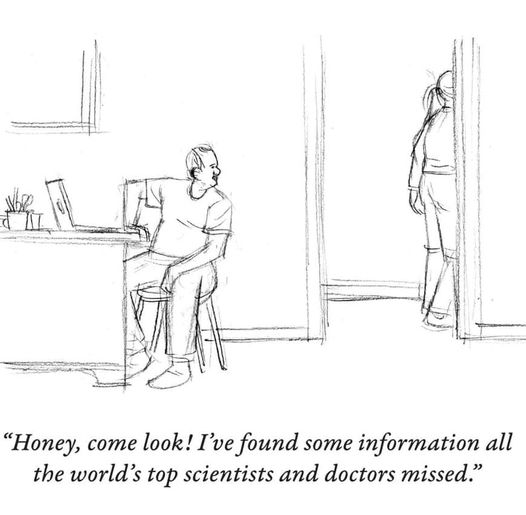
It's hard to find information that all the world's top scientists and doctors have missed.But it's not that hard, if you're intelligent, thoughtful, and diligent, to find information that the medical system has not yet caught up to—information that is not yet incorporated into… pic.twitter.com/HrgGzCUdX2— Jason Crawford (@jasoncrawford) September 22, 2024
AI linked to explosion of low-quality biomedical research papers
Analysis flags hundreds of studies that seem to follow a template, reporting correlations between complex health conditions and single variables based on publicly available data sets.

Doctors’ AI scribes get names of drugs and diagnoses wrong, NHS watchdog warns
Exclusive: Patients identify errors in consultation transcripts that are missed by GPs, Healthwatch England finds
OpenMD Medical Reference
Medical reference platform and search engine indexing billions of documents from government agencies, global health organizations, and medical journals.
Google AI Overviews put people at risk of harm with misleading health advice
Exclusive: Inaccurate information presented in summaries, Guardian investigation finds

Meta’s New AI Asked for My Raw Health Data—and Gave Me Terrible Advice
Meta’s Muse Spark model offers to analyze users’ health data, including lab results. Beyond the obvious privacy risks, it’s not a capable stand-in for a real doctor.

Qualitative research: standards, challenges, and guidelines
Qualitative research methods could help us to improve our understanding of medicine. Rather than thinking of qualitative and quantitative strategies as incompatible, they should be seen as complementary. Although procedures for textual interpretation differ from those of statistical analysis, because of the different type of data used and questions to be answered, the underlying principles are much the same. In this article I propose relevance, validity, and reflexivity as overall standards for qualitative inquiry.

Preparing Physicians for the Clinical Algorithm Era
The U.S. government recently took steps to ensure that clinical decision support algorithms are safe for clinical use. The next and larger step will be teaching physicians how to use the algorithms ...

Preparing Physicians for the Clinical Algorithm Era
The U.S. government recently took steps to ensure that clinical decision support algorithms are safe for clinical use. The next and larger step will be teaching physicians how to use the algorithms ...
Read the docs like a book - Aaron Francis
Reading the docs straight through, like a book, can provide outsized benefits for your career.
9/11 Health
For over two decades the Registry researchers have been tracking health trends, investigating emerging health conditions, and identifying gaps in care among people affected by 9/11.
By request of a lot of people who were looking for an example of how I do clinical notes for a new appointment with a specialist about extremely complex shit that's involved a lot of referral runaround and/or dildobucket doctors: dropbox.com/scl/fi/6dx9mbztu2i40987mjsw8/…
Collection of collections: Health/medicine

Note that I don’t have an actual background on the subject (as is the case with most things, but I thought it’s especially important to mention here)
AI* and healthcare/medicine (by あ) — Semble
Public health (by あ) — Semble
COVID-19 vaccines (by あ) — Semble
Depression (by あ [#F04000]) — Semble
Cancer (unsorted) (by あ) — Semble
COVID-19 history (by あ) — Semble
