


SaccadeJS estimates where a participant is looking, from an ordinary webcam, in the browser. It provides a jsPsych extension, plugins for camera setup, calibration, validation and timing, and a core library that runs without jsPsych.
Event Cameras: a New Way of Sensing - Davide Scaramuzza - ICCP 2024 Keynote
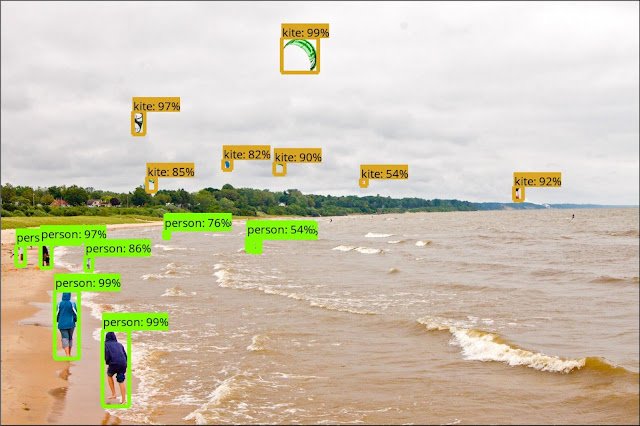
Supercharge your Computer Vision models with the TensorFlow Object Detection API
Posted by Jonathan Huang, Research Scientist and Vivek Rathod, Software Engineer (Cross-posted on the Google Open Source Blog) At Google, we develo...
Francois Laberge on Twitter / X
Gesture recognition using the Decisions API by @OpenAIDevs. Thanks to it's vision understanding it is way more accurate than my previous Jev-based demo. It was also faster. cc @thsottiaux @jxnlco @pvncher @tldraw @steveruizok https://t.co/lFumGoduzw pic.twitter.com/3P2iKffdWW— Francois Laberge (@seflless) October 7, 2026

Video.js: The Documentary | Official Trailer
Assisting blind people with AI and audio using smart glasses: system design with YOLOv8 variants comparisons
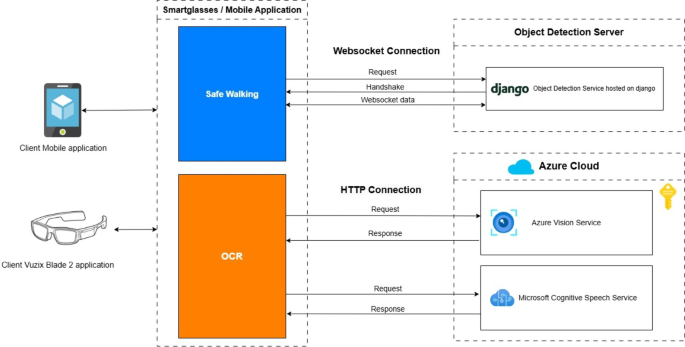
This paper introduces a novel system design leveraging Vuzix Blade 2 smart glasses to enhance the mobility and independence of visually impaired individuals. The study critically examines existing assistive navigation and object detection technologies, identifying their limitations and gaps. The designed system integrates real-time object detection, distance estimation, and OCR functionalities, providing auditory feedback through a robust and efficient pipeline. The designed application enhances the independence and safety of visually impaired individuals, particularly in navigating university campuses. A dataset comprising 15,951 annotated images from the university campus was used for training and evaluation. A comparative analysis of three YOLOv8 models (YOLOv8-N, YOLOv8-S, and YOLOv8-M) was conducted, balancing accuracy and computational efficiency to optimise system performance. The pipeline also offers a comprehensive framework for developers and researchers to build inclusive systems combining AR, computer vision, and AI. Results show high object detection accuracy (precision: 0.90, recall: 0.83) and reliable distance estimation with a minor error of 0.33 m. Results demonstrate the system’s capability to detect obstacles within one meter, provide precise distance estimation, and convert textual information into speech, validating its potential for real-world applications. This study emphasises the significant role of AI-driven solutions in advancing assistive technologies, paving the way for more accessible and inclusive navigation systems. Compared with recent assistive systems such as Smart Cane (He in CCF Trans. Pervasive Comput. Interact. 5:382–395, 2023), OrCam MyEye (Amore in J. Med. Syst. 47:11, 2023), and IrisVision (Gopalakrishnan in Comparison of visual function analysis of people with low vision using three different models of augmented reality devices, 2024), the proposed system demonstrates superior integration of detection, text recognition, and real-time feedback within a lightweight wearable device.
Tracking Motion using Blender
A lot of people who does TypeSetting use Mocha to do that!But because I’m on Linux, this solution is not the best for me. Here a tutorial to do that on Blender, a free and open-source software. You can use it on Windows too!
Everything you need to know about: Svelte
Everything you need to know about the world’s most loved JS framework
The Dawn of Robot Surveillance | American Civil Liberties Union
Imagine a surveillance camera in a typical convenience store in the 1980s. That camera was big and expensive, and connected by a wire running through the wall to a VCR sitting in a back room. There have been significant advances in camera technology in the ensuing decades — in resolution, digitization, storage, and wireless transmission — and cameras have become cheaper and far more prevalent. Still, for all those advances, the social implications of being recorded have not changed: when we walk into a store, we generally expect that the presence of cameras won’t affect us. We expect that our movements will be recorded, and we might feel self-conscious if we notice a camera, especially if we’re doing anything that we feel might attract attention. But unless something dramatic occurs, we generally understand that the videos in which we appear are unlikely to be scrutinized or monitored. All that is about to change. Today’s capture-and-store video systems are starting to be augmented with active monitoring technology known variously as “video analytics,” “intelligent video analytics,” or “video content analysis.” The goal of this technology is to allow computers not just to record but also to understand the objects and actions that a camera is capturing. This can be used to alert the authorities when something or someone deemed “suspicious” is detected, or to collect detailed information about video subjects for security or marketing purposes. Behind all the dumb video camera “eyes” that record us will increasingly lie ever-smarter “brains” that will be monitoring us. As we will see, technologists are working on teaching computers to do that monitoring in remarkable ways across a broad variety of dimensions.
Driver.js - Product Tours & Highlights in Vanilla JS
Driver.js is a lightweight, no-dependency JavaScript library for building product tours, feature highlights, hints and contextual help. It is just ~5kb and MIT licensed.

Where are the Eyes?
Where are the Eyes is a program for detecting and mapping surveillance cameras. Users mark cameras on their phone as they walk past them, and build a shared global map of surveillance.
How to Test Your Webcam Online: Resolution and Frame Rate
Test your webcam in the browser with a live preview, the real resolution and frame rate it delivers, snapshots, and fixes for black screens and blurry video.

Wasmer JS SDK - WebAssembly In The Browser
Programming book reviews, programming tutorials,programming news, C#, Ruby, Python,C, C++, PHP, Visual Basic, Computer book reviews, computer history, programming history, joomla, theory, spreadsheets and more.
ESLint Joins The jQuery Foundation - ESLint - Pluggable JavaScript Linter
A pluggable and configurable linter tool for identifying and reporting on patterns in JavaScript. Maintain your code quality with ease.

WebVR - virtual reality in your browsers
Slides for my Talk about WebVR. Presented at BED-Con in Berlin 2016 (http://bed-con.org/2016/)

Speaking of events in the PNW, @cascadiajs.com is coming up! You'll hear from amazing speakers, connect with 500+ fellow devs, and explore the latest in web and AI technologies with top companies in the industry. Use the promo code ATPROTO for $50 off. Grab your ticket! cascadiajs.com/2026

CascadiaJS 2026 | June 1 - 2 | Seattle, WA
cascadiajs.com