

The UK Government’s response to the Coronavirus pandemic was informed by its Scientific Advisory Groups for Emergencies (SAGE) ecosystem, which included the main SAGE committee, many sub committees, and information from government departments, public bodies (e.g. NHS, UKHSA, ONS) and commissioned academic research. From January 2020 to February 2022 this resulted in over 900 documents that fed into or were produced by SAGE. SAGE was stood down after February 2022.
Archive: New COVID-19 ‘Citizen Science’ Initiative Lets Any Adult with a Smartphone Help to Fight Coronavirus
The online study would try to help researchers gain insight into how the virus is spreading and identify ways to predict and reduce the number of new infections.


How and When to Involve Crowds in Scientific Research | James Evans
The lone academic in a basement lab is an endangered species. Years ago I asked Paul Ginsparg, who founded arXiv, what features his machine-learning filter used to flag speculative submissions. The top three: single-authored, submitted on a weekend, and heavy citation of Newton and Einstein. Science is a contact sport now. Marion Poetz and Henry Sauermann's How and When to Involve Crowds in Scientific Research (https://lnkd.in/g5pwVbfD) is the field manual. What crowds can do: Volume. Zooniverse mobilizes 2.7 million people to classify galaxies and court records. Galaxy Zoo's co-founder hand-classified 50,000 galaxies in one week before concluding that isolation would break him. Reach. NASA spent years failing to predict solar flares, then broadcast the problem. The winner was a semi-retired radio engineer in rural New Hampshire who swapped satellite data for radio data. Experience. Patients and caregivers asked to generate research questions produced 826 that scientists had missed, including the link between aging and wound healing. Bench-to-bedside runs backward. One caution the book underplays: an open call is not an inclusive one. Participation costs in time, money, and access screen people out. Self-selection can narrow the very diversity that makes crowds thrive. As AI floods the labor supply of routine, homogeneous cognition, human crowds become more valuable, not less. Machines process. People notice what nobody thought to ask. Check out my review @ https://lnkd.in/gkzvWrRC and the book @ https://lnkd.in/g5pwVbfD!

Retracted coronavirus (COVID-19) papers
via CDC We’ve been tracking retractions of papers about COVID-19 as part of our database. Here’s a running list, which will be updated as needed. (For some context on these figures, see…
Hypercerts — Collective Intelligence for Funding Impact
Hypercerts create shared context—evidence, expert input, and community trust—for better resource allocation.
Hypercerts: Recognizing and Rewarding Impact – ATProto Implementation
Hi all, excited to share some of what we’ve been building and to introduce hypercerts to the ATProto community. Where we started The hypercerts project began at Protocol Labs with a simple goal: improve how we fund public goods. Many of the contributions society relies on most—open-source software, scientific R&D, and ecological regeneration—remain underfunded because their value is hard to see, coordinate around, and reward. What are hypercerts Hypercerts address this by serving as digital im...
Using the Amazon Mechanical Turk Workforce - Amazon SageMaker AI
Use SageMaker AI to build, train, and host machine learning models in AWS.

Correction of scientific literature: Too little, too late!
The Coronavirus Disease 2019 (COVID-19) pandemic has highlighted the limitations of the current scientific publication system, in which serious post-publication concerns are often addressed too slowly to be effective. In this Perspective, we offer suggestions to improve academia’s willingness and ability to correct errors in an appropriate time frame.
How To Prompt on Twitter / X
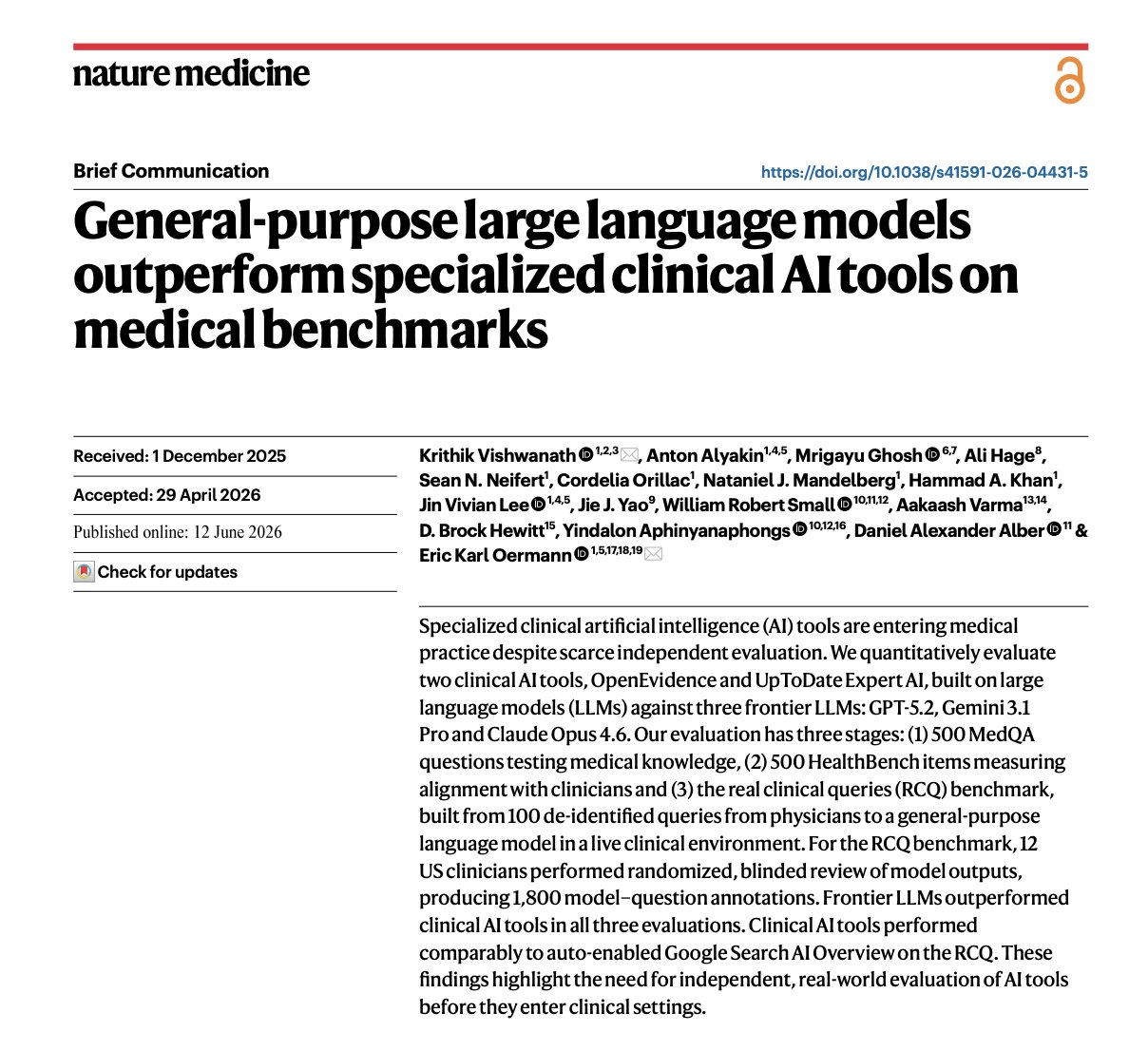
scientist tested a 3.5 billion dollar medical AI against regular chatGPT and it lost on every single one.they just published a paper in nature medicine, and the results are actually mindblowing.they took specialized clinical ai tools and tested them against general-purpose… pic.twitter.com/P7ePLunrDj— How To Prompt (@HowToPrompt__) July 6, 2026
Using Amazon Augmented AI for Human Review - Amazon SageMaker AI
Use SageMaker AI to build, train, and host machine learning models in AWS.
Grand Challenges for the Convergence of Computational and Citizen Science Research Workshop Report
This report is an outcome of a Computing Community Consortium (CCC) visioning workshop on Grand Challenges for the Convergence of Computational and Citizen Science Research conducted on April 8-9, 2025, in Washington, D.C. as well as through several precursor virtual input-gathering sessions. These events brought together experts across relevant disciplines to develop a research agenda that brings to fruition the above vision on how humans and machines may team up to solve some of the world's most pressing scientific problems. Citizen science delivers measurable economic and national value. Public participation in scientific research generates millions of dollars in volunteer labor value, extends government agency capacity, and directly supports federal priorities in areas such as disaster management, public health, water, energy, workforce development, and many more. At the same time, 21st-century scientific infrastructure requirements for citizen science (from hardware and cyberinfrastructure to data and computational frameworks) mirror those for computational science more generally. The distributed, collaborative, long-term, and contextual nature of citizen science makes it a demanding real-world use case for a novel robust research infrastructure that accounts for security, privacy, resource adaptability, and transparency. In this report, we outline the key findings, future research directions, and recommendations that emerged from the April 2025 CCC Grand Challenges for the Convergence of Computational and Citizen Science Research Workshop.

The Story behind the Science: Preprints of pandemic potential—how bioRxiv and medRxiv brought preprints to the life sciences
ABSTRACT The bioRxiv and medRxiv preprint servers brought preprinting to the life sciences and played a critical role in disseminating COVID research during the pandemic. Here, I reflect on the birth of bioRxiv and medRxiv and the crucial role so many members of the community played, our experience during the pandemic, and the launch of the new non-profit organization set up to oversee the servers. The pandemic was a stress test for bioRxiv and medRxiv that demonstrated their value and robustness. Under the umbrella of openRxiv, they are now poised to become long-term infrastructure underpinning a new publishing ecosystem.

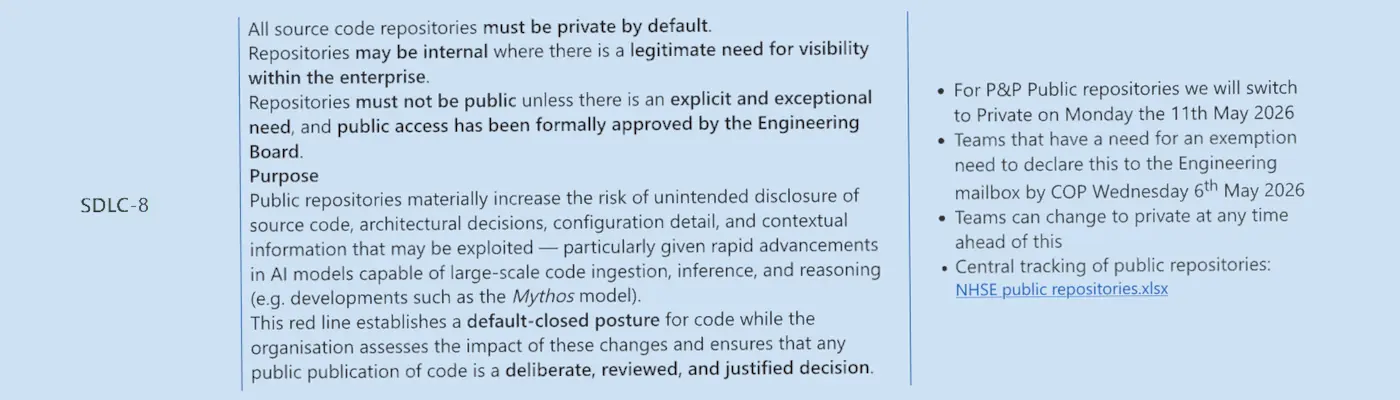
NHS Goes To War Against Open Source
The NHS is preparing to close nearly all of its Open Source repositories. Throughout my time working for the UK Government - in GDS, NHSX, i.AI, and others - I championed Open Source. I spoke to dozens of departments about it, wrote guidance still in use today, and briefed Ministers on why it was so important. That's why I'm beyond disappointed at recent moves from NHS England to backtrack on…
Jason Crawford on Twitter / X
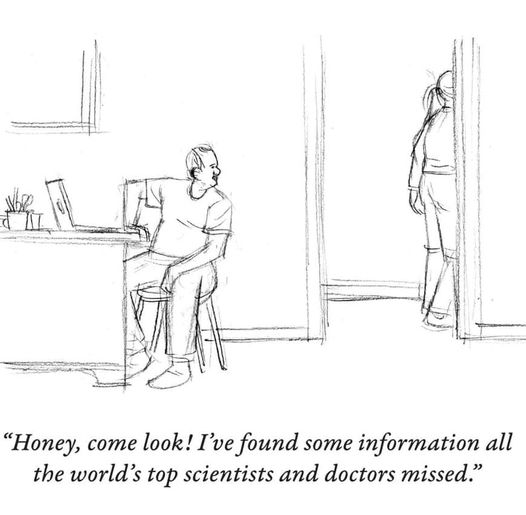
It's hard to find information that all the world's top scientists and doctors have missed.But it's not that hard, if you're intelligent, thoughtful, and diligent, to find information that the medical system has not yet caught up to—information that is not yet incorporated into… pic.twitter.com/HrgGzCUdX2— Jason Crawford (@jasoncrawford) September 22, 2024
AI Sovereign Compute Infrastructure Program
On this page About the AI Sovereign Compute Infrastructure Program Available funding Call for applications Contact us Related links About the AI Sovereign Compute Infrastructure Program The AI Sovereign Compute Infrastructure Program (SCIP) is a key initiative under the Canadian S
New preprint! We introduce a new benchmark, SciConBench, with 9.11k scientific questions derived from Cochrane Systematic Reviews. We find evidence that frontier AI agents **cannot** synthesize scientific conclusions well. A thread 🧵 w/ @hayoungjung.bsky.social & others!
