

You probably don’t know me, but you know my greatest hits: “Birds aren’t real,” “5G causes cancer,” “JFK’s head just did that.” I’ve been freelance-writing conspiracy theories since 2001 (the industry really took off that year). Back then, this was an art. I’d spend months researching, building off of preexisting foundations, photoshopping red arrows onto the grainiest JPEGs I could find.
Leveraging Motivations to Curb Misinformation: Self-Affirmation Reduces the Appeal of Political Conspiracy Theories
Abstract: In an era where digital misinformation poses significant challenges to societal well-being, this study explores a novel approach to preserving information integrity by addressing the motivational underpinnings of conspiracy theory engagement. As conspiracy theories proliferate online, traditional fact-checking and debunking strategies often prove ineffective due to the self-reinforcing nature of conspiracy theories. This research investigates whether a priori self-affirmation interventions can reduce individuals’ propensity to engage with conspiracy theories by preemptively fulfilling the ego-protective function these theories often serve. Using a randomized experiment ( N = 451), this study finds that participants who completed a self-affirmation task were less likely to read politicized conspiracy theories, and those who chose to read a conspiracy theory reported greater feelings of affirmation than those who did not. Thus, bolstering individuals’ self-integrity may offer an opportunity to mitigate the appeal of politicized conspiracy theories.

Conspiracy Theory GIF - Conspiracy Theory Explaining - Discover & Share GIFs
Click to view the GIF

How conspiracy theories conquered America
Things have changed a lot since January 6th, 2021.

Conspiracy Brokers: Understanding the Monetization of YouTube Conspiracy Theories
DOI: https://doi.org/10.1145/3485447.3512142 WWW '22: Proceedings of the ACM Web Conference 2022, Virtual Event, Lyon, France, April 2022
The Women Making Conspiracy Theories Beautiful
How the domestic aesthetics of Instagram repackage QAnon for the masses

The Conspiracy Theory About Wayfair Is Spreading Quickly Among Lifestyle Influencers On Instagram
The theory plays into the bigger QAnon conspiracy theory, which baselessly claims that the world is controlled by a secret cabal of pedophiles that President Trump is actively fighting against.

Instagram Is Full of Conspiracy Theories and Extremism
As other social networks wage a very public war against misinformation, it’s thriving on Instagram.
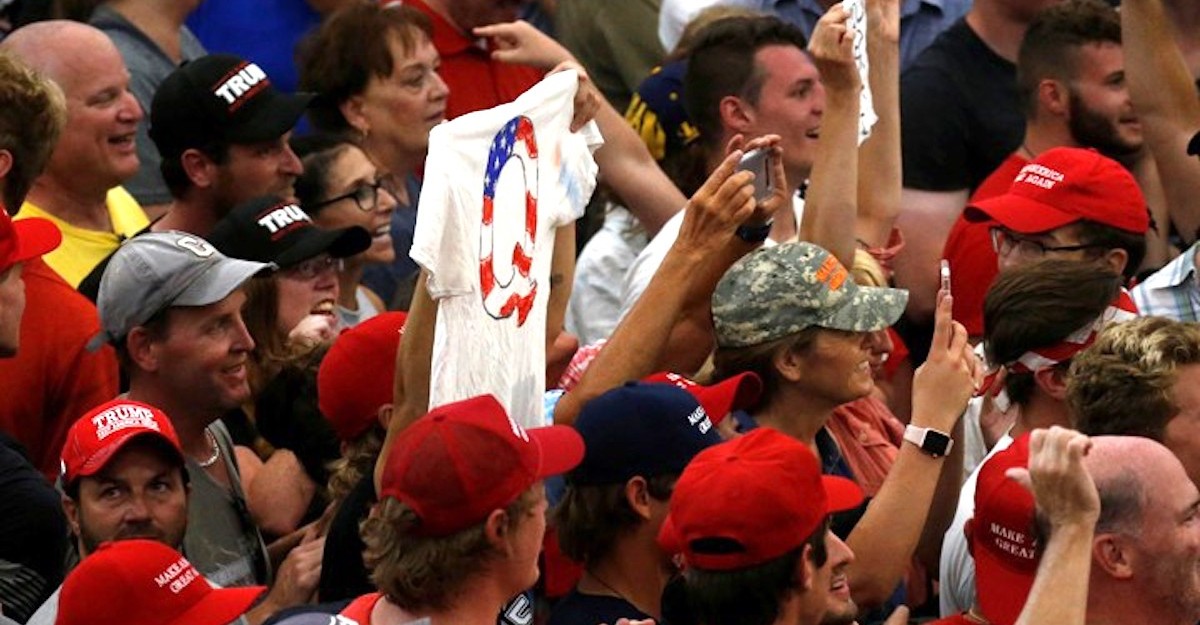
The Plot to Subvert an Election: Unraveling the Russia Story So Far (Published 2018)
For two years, Americans have tried to absorb the details of the 2016 attack: spies, leaked emails, social media fraud — and President Trump’s claims that it’s all a hoax. The Times explores what we know and what it means.

Just Asking Questions: Doing Our Own Research on Conspiratorial Ideation by Generative AI Chatbots
Interactive chat systems that build on artificial intelligence frameworks are increasingly ubiquitous and embedded into search engines, Web browsers, and operating systems, or are available on websites and apps. Researcher efforts have sought to understand the limitations and potential for harm of generative AI, which we contribute to here. Conducting a systematic review of six AI-powered chat systems (ChatGPT 3.5; ChatGPT 4 Mini; Microsoft Copilot in Bing; Google Search AI; Perplexity; and Grok in Twitter/X), this study examines how these leading products respond to questions related to conspiracy theories. This follows the platform policy implementation audit approach established by Glazunova et al. (2023). We select five well-known and comprehensively debunked conspiracy theories and four emerging conspiracy theories that relate to breaking news events at the time of data collection. Our findings demonstrate that the extent of safety guardrails against conspiratorial ideation in generative AI chatbots differs markedly, depending on chatbot model and conspiracy theory. Our observations indicate that safety guardrails in AI chatbots are often very selectively designed: generative AI companies appear to focus especially on ensuring that their products are not seen to be racist; they also appear to pay particular attention to conspiracy theories that address topics of substantial national trauma such as 9/11 or relate to well-established political issues. Future work should include an ongoing effort extended to further platforms, multiple languages, and a range of conspiracy theories extending well beyond the United States.

Just Asking Questions: Doing Our Own Research on Conspiratorial Ideation by Generative AI Chatbots
Interactive chat systems that build on artificial intelligence frameworks are increasingly ubiquitous and embedded into search engines, Web browsers, and operating systems, or are available on websites and apps. Researcher efforts have sought to understand the limitations and potential for harm of generative AI, which we contribute to here. Conducting a systematic review of six AI-powered chat systems (ChatGPT 3.5; ChatGPT 4 Mini; Microsoft Copilot in Bing; Google Search AI; Perplexity; and Grok in Twitter/X), this study examines how these leading products respond to questions related to conspiracy theories. This follows the platform policy implementation audit approach established by Glazunova et al. (2023). We select five well-known and comprehensively debunked conspiracy theories and four emerging conspiracy theories that relate to breaking news events at the time of data collection. Our findings demonstrate that the extent of safety guardrails against conspiratorial ideation in generative AI chatbots differs markedly, depending on chatbot model and conspiracy theory. Our observations indicate that safety guardrails in AI chatbots are often very selectively designed: generative AI companies appear to focus especially on ensuring that their products are not seen to be racist; they also appear to pay particular attention to conspiracy theories that address topics of substantial national trauma such as 9/11 or relate to well-established political issues. Future work should include an ongoing effort extended to further platforms, multiple languages, and a range of conspiracy theories extending well beyond the United States.
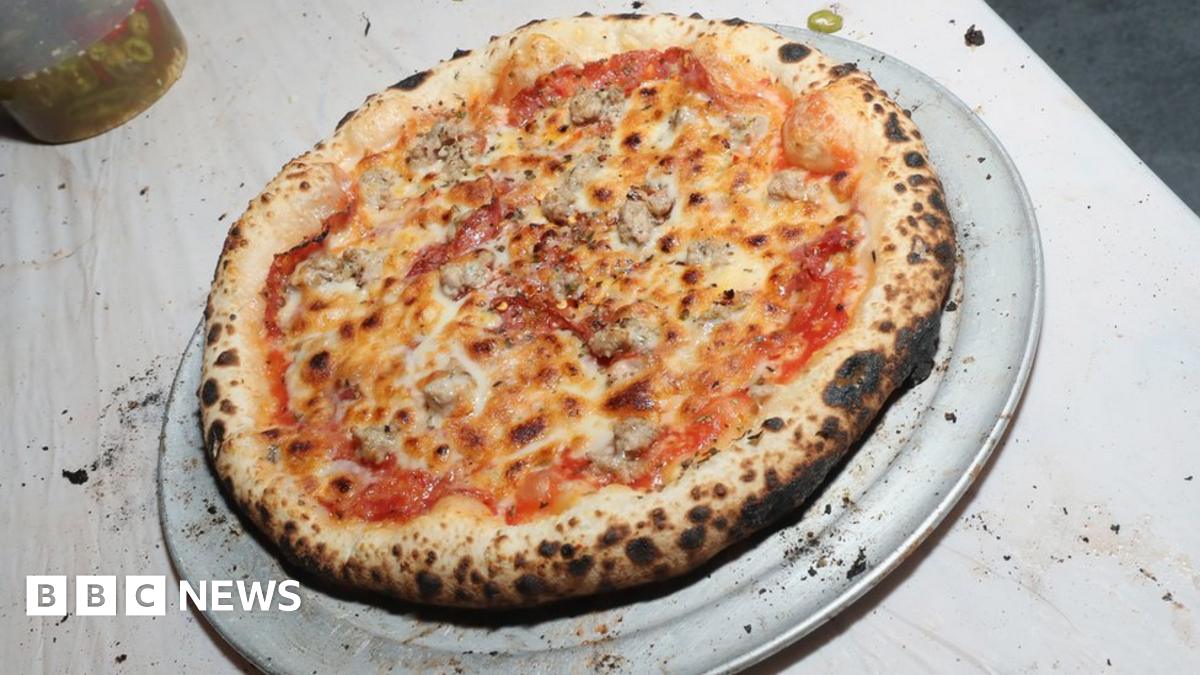
The saga of 'Pizzagate': The fake story that shows how conspiracy theories spread
Thousands of people are spreading a false rumour about a Washington pizza restaurant and a child sex ring. But why?
Trust — Utopian conspiracy
A network of utopian conspirators, a sandbox for their creative, technical and critical projects, and a site of experimentation for new ways of learning together.

Confronting New York City's Lies About Toxic Air After 9/11
Plus, a selection of some of the best writing on 9/11, and more news to take you into the weekend.

Science flags paper that found AI chatbots help debunk conspiracy theories
Science has issued an expression of concern for a highly publicized study looking into whether conversations with AI chatbots could convince conspiracy theorists to abandon their beliefs. The move …

LLM Audit 22 July Conspiracy Theories
Factiverse and Revontulet tested 9 leading AI models with 5,616 requests to see how they handle conspiracy narratives about the 22 July attacks. Read the findings.
.png)
There's growing experimental evidence¹˒²˒³˒⁴ that LLMs are unusually good at talking people out of entrenched false beliefs and conspiracy theories. ¹ pubmed.ncbi.nlm.nih.gov/39264999/ ² pubmed.ncbi.nlm.nih.gov/41179846/ ³ sciety.org/articles/activity/10.21203/rs… ⁴ connecticut.adl.org/resources/report/short-dialog…

Der Fisher
Unpopular opinion: LLMs are generally deradicalizing people whose beliefs are based on pure propaganda. I've been watching this happen slowly with some people I care about. ChatGPT is one of the reasons they finally accept that the NRA, OAN, and NewsMax are lying to them.
