


There is a certain kind of computer review that is really a permission slip. It tells you what you’re allowed to want. It locates you in a taxonomy — student, creative, professional, power user — and assigns you a product. It is helpful. It is responsible. It has very little interest in what you might become.
Someone behind the software
I think good products carry something of the people who make them. Their experience, what they care about, and how they think things should work.

The coming civil war over general purpose computing
Even if we win the right to own and control our computers, a dilemma remains: what rights do owners owe users?
Can You Trust Your Computer? - GNU Project - Free Software Foundation
Who should your computer take its orders from? Most people think their computers should obey them, not obey someone else. With a plan they call “trusted computing,” large media corporations (including the movie companies and record companies), together with computer companies such as Microsoft and Intel, are planning to make your computer obey them instead of you. (Microsoft's version of this scheme is called Palladium.) Proprietary programs have included malicious features before, but this plan would make it universal.
FUTO - Computers Belong to You
FUTO develops and funds technology to give people control over their computers. Open source software, grants, and education challenging Big Tech.

FUTO - Computers Belong to You
FUTO develops and funds technology to give people control over their computers. Open source software, grants, and education challenging Big Tech.
We oppose DRM. | Defective by Design
The Ethical Tech Giving Guide replaces DRM-laden software and devices that trample user freedom and privacy with products and programs that you can trust.
» Apple, Carmen Sandiego, and the Rise of Edutainment The Digital Antiquarian
If there was any one application that was the favorite amongst early boosters of personal computing, it was education. Indeed, it could sometimes be difficult to find one of those digital utopianists who was willing to prioritize anything else — unsurprisingly, given that so much early PC culture grew out of places like The People’s Computer Company, who made “knowledge is power” their de facto mantra and talked of teaching people about computers and using computers to teach with equal countercultural fervor. Creative Computing, the first monthly magazine dedicated to personal computing, grew out of that idealistic milieu, founded by an educational consultant who filled a big chunk of its pages with plans, schemes, and dreams for computers as tools for democratizing, improving, and just making schooling more fun. A few years later, when Apple started selling the II, they pushed it hard as the learning computer, making deals with the influential likes of the Minnesota Educational Consortium (MECC) of Oregon Trail fame that gave the machine a luster none of its competitors could touch. For much of the adult public, who may have had their first exposure to a PC when they visited a child’s classroom, the Apple II became synonymous with the PC, which was in turn almost synonymous with education in the days before IBM turned it into a business machine. We can still see the effect today: when journalists and advertisers look for an easy story of innovation to which to compare some new gadget, it’s always the Apple II they choose, not the TRS-80 or Commodore PET. And the iconic image of an Apple II in the public’s imagination remains a group of children gathered around it in a classroom.
The education of a computer
“They had no concept of a duty of care to their users.” – Unsung
A blog about software craft and quality

Against Usefulness
In a Brooklyn warehouse, a man handed me a piece of paper that was a running computer program.
Yes: Affirmative Consent as a Theoretical Framework for Understanding and Imagining Social Platforms | Proceedings of the 2021 CHI Conference on Human Factors in Computing Systems
As part of the Digital Library's transition to Open Access, new features for researchers are available in the Premium Edition. Click here to learn more.

freedom 'for users'- which users did you mean, exactly? (or, of users, user-deployers, and user-consumers)
Published: 2007. "Free software...
Welcome to Commons Computer
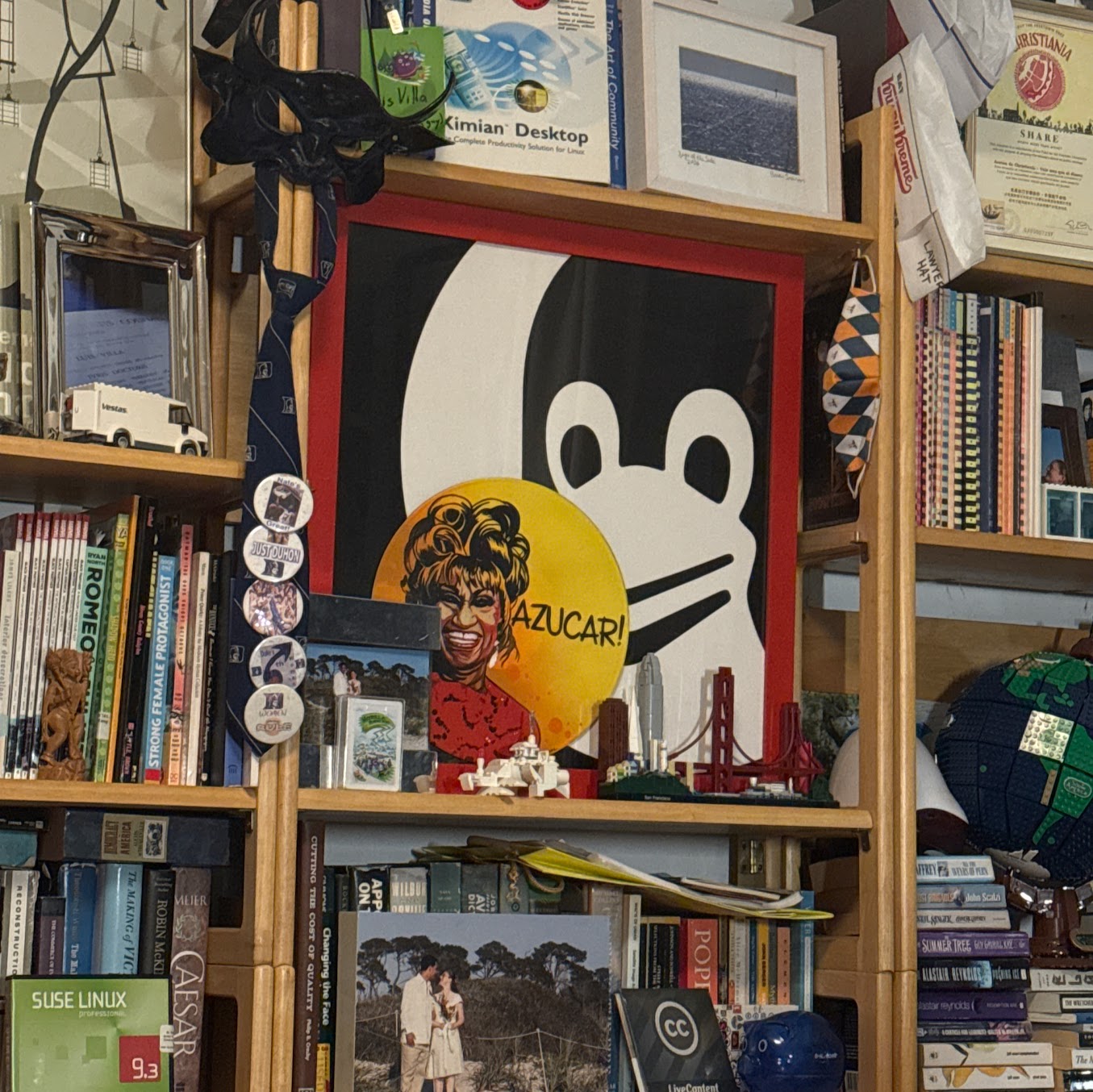
Commons Computer is an experiment in sharing compute resources and admin & management support across multiple people and projects.
while we're here, here's how i wish permission sets were explained to me

atproto made simple: granular permissions
underreacted.leaflet.pubhere it is folks! lots of details to still nail down, but this is roughly where our heads are at for the design of a permissioned data protocol give it a read and let me know your thoughts!

Permissioned Data Diary 4: The Big Picture
dholms.leaflet.pub
