


How Targeted Killings Are Reshaping Modern Warfare
The Forgotten Hate-Fueled Shootings in the Wake of 9/11
Several shootings driven by Islamophobia were obscured in the aftermath of that day. In a new analysis by The Trace, we revisit what happened.

In Ukraine, a New Arsenal of Killer A.I. Drones Is Being Born
As the war grinds on, sophisticated Russian defenses have pushed Ukraine to develop a frightening new weapon: semiautonomous killing machines.

Drugs as weapons against us: the CIA's murderous targeting of SDS, Panthers, Hendrix, Lennon, Cobain, Tupac, and other activists
Drugs as Weapons Against Us meticulously details how a …

History Illustrated: Death from above: Drones take aim at gangs in Haiti
The use of ‘kamikaze’ drones to target gang members in crowded Haitian slums being called ‘ineffective’.

The shifting battlefield: technology, tactics, and the risk of blurring lines in warfare - Humanitarian Law & Policy Blog
The accelerating integration of emerging technologies into armed conflict is transforming not only the tools of war, but its tactics, geography, participants and impact. Technological developments – from commercial drones to artificial intelligence, electronic warfare to the military use of civilian infrastructure – risk undermining boundaries between military and civilian domains. These changes challenge long-held...
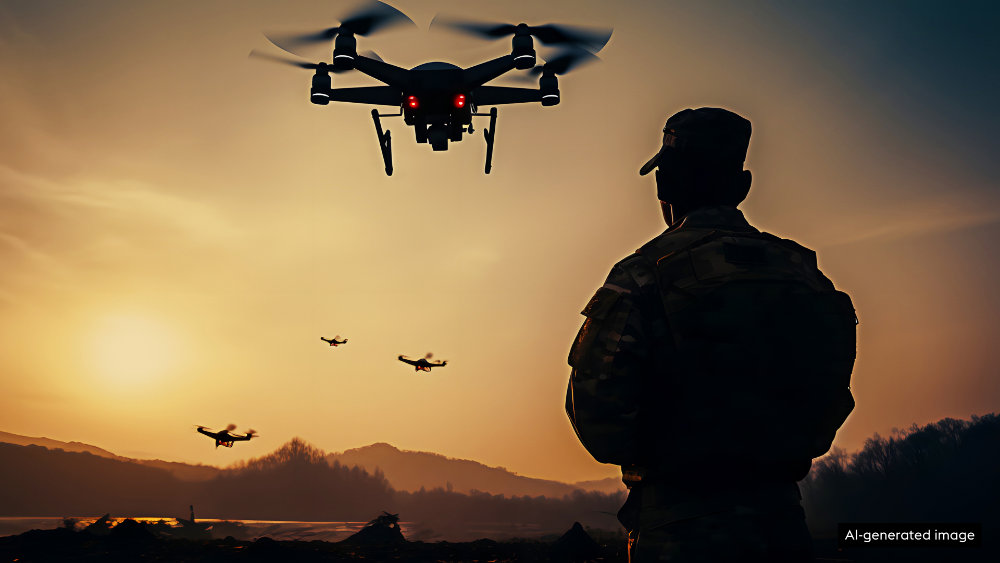
On Western Terrorism: From Hiroshima to Drone Warfare
In On Western Terrorism Noam Chomsky, world renowned dissident intellectual, discusses Western power and propaganda with filmmaker and investigative journalist Andre Vltchek. The discussion weaves together a historical narrative with the two men's personal experiences which led them to a life of activism. The discussion includes personal memories, such as the New York newsstand where Chomsky began his political education, and broadens out to look at the shifting forms of imperial control and the Western propaganda apparatus. Along the way the discussion touches on many countries of which the authors have personal experience, from Nicaragua and Cuba, to China, Chile, Turkey and many more. A blast of fresh air which blows away the cobwebs of propaganda and deception, On Western Terrorism is a powerful critique of the West's role in the world which will inspire all those who read it to think independently and critically.
United States: Year of Extrajudicial Killings at Sea
Today marks one year since the United States began an unlawful campaign of lethal military strikes targeting vessels in the Caribbean Sea and Pacific Ocean, claiming 227 lives. US officials should be urgently held to account for these killings, Human Rights Watch said today.

When is Political Violence Justified
What the Liberal Tradition Says on the Subject

Junta’s Massacres from Sky and Ground: Civilian Protection at Risk in Myanmar - Progressive Voice
The Myanmar military junta has systematically and deliberately carried out mass atrocities against civilians through coordinated aerial bombardments and ground assaults across the country since the attempted coup in February 2021. These acts amount to war crimes[...]

Autonomous Weapons Systems for Policing – A Jewish Ethical Perspective
Autonomous Weapons Systems (AWS) are being developed around the world to improve national security both externally and internally. But allowing machines – incapable of recognizing the inherent wort...


Today We Must Finally Remember What The 9/11 Commemorations Ignore
Righteous victimhood fueled the War on Terror. 25 years later, we also have to remember all of those slain under its banner

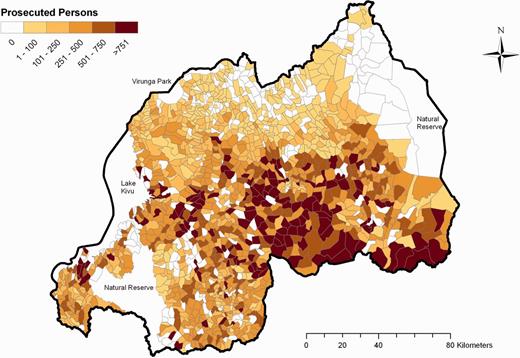
Propaganda and Conflict: Evidence from the Rwandan Genocide *
Abstract This article investigates the role of mass media in times of conflict and state-sponsored mass violence against civilians. We use a unique village-level data set from the Rwandan genocide to estimate the impact of a popular radio station that encouraged violence against the Tutsi minority population. The results show that the broadcasts had a significant effect on participation in killings by both militia groups and ordinary civilians. An estimated 51,000 perpetrators, or approximately 10% of the overall violence, can be attributed to the station. The broadcasts increased militia violence not only directly by influencing behavior in villages with radio reception but also indirectly by increasing participation in neighboring villages. In fact, spillovers are estimated to have caused more militia violence than the direct effects. Thus, the article provides evidence that mass media can affect participation in violence directly due to exposure and indirectly due to social interactions.
Briefing note - Killing “Narco-Terrorists” at Sea: The Legality of Military Attacks on Criminal Groups and Drug Trafficking under International Human Rights Law and Other Applicable International Law September 2026
Special Rapporteur on the promotion and protection of human rights and fundamental freedoms while countering terrorism

Russia’s FPV drone campaign in Ukraine institutionalizes intentional civilian harm as a tool of war
Russia's use of FPV drones to strike civilian targets in Ukraine indicates a culture seeking to weaponize civilian harm as a tool of war.
War in the age of intelligent machines
271 pages : 24 cm; In the aftermath of the methodical destruction of Iraq during the Persian Gulf War, the power and efficiency of new computerized weapons and suveillance technology has become chillingly apparent. This new weaponry has a significance that goes far beyond military applications; it represents a profound historical shift in the relation of human beings both to machines and to information. Details the mutating history of information analysis and machinic organization from the mobile siege artillery of the Renaissance, the clockwork armies of the Thirty Years War, the Napoleonic campaigns, and the Nazi blitzkrieg up to present-day cybernetic battle-management systems and satellite reconnaissance network, and provides a philosophical and historical reflection on the changing forms through which human bodies and materials are combined, organized, deployed and made effective. [back cover]; Includes bibliographical references (pages 233-266) and index; Introduction -- Collision course -- Bloodless transfusion -- Policing the spectrum
