


In 2001, as a university undergraduate, a friend and I were lucky enough to get the opportunity to meet the physicist Stephen Hawking at a small private reception after he gave a public lecture in Cambridge.
Thoughts about the Leiden Declaration
Last September I went to a workshop at the Lorentz Centre in Leiden to discuss mathematics and AI with historians, philosophers, computer scientists, AI researchers, and mathematicians of several d…

Brandon Yates on Twitter / X
I wrote a cosmology paper that's under peer review.I can't post it to arXiv because I don't have a university affiliation.If any of you happen to have published in astro-ph. CO, gr-qc, or hep-ph and can endorse me, I'd owe you one.#AcademicTwitter #PhysicsTwitter #Cosmology…— Brandon Yates (@bmichaelyates) March 13, 2026
Future of Scientific Publishing: Interview with Mathïs Fédérico - Writing Scientist
It started as a week-long writing bootcamp, with participants writing together on a video call. The week was a great success and everyone wanted to continue, so they did another week — and are continuing ever since.

steve hsu on Twitter / X
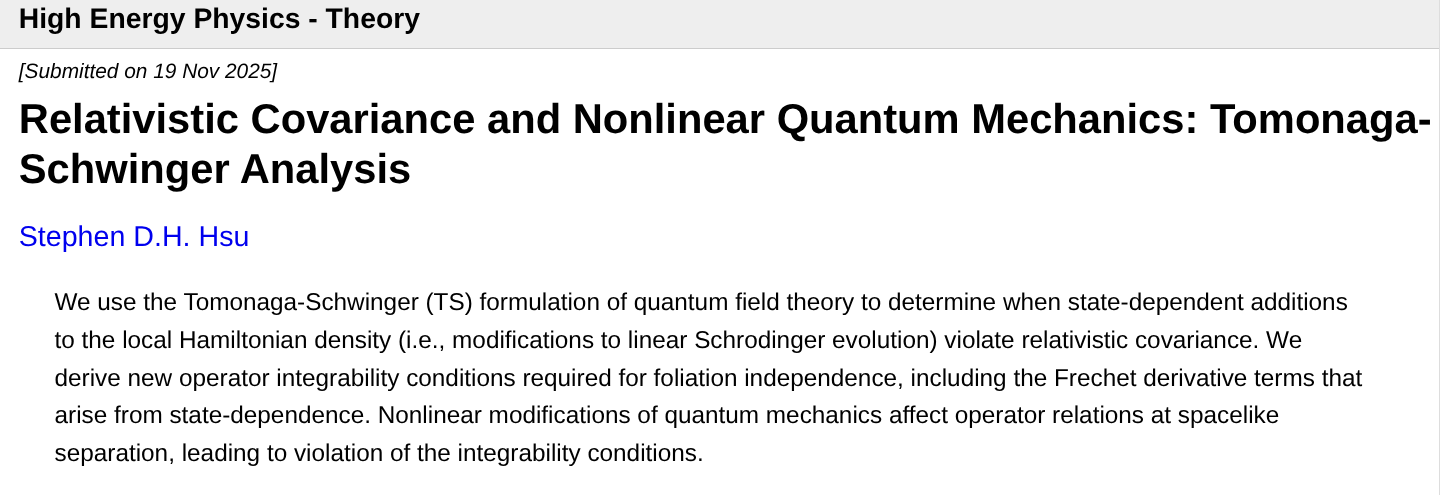
I think I’ve published the first research article in theoretical physics in which the main idea came from an AI - GPT5 in this case. The physics research paper itself (on QFT and state-dependent quantum mechanics) has been published in Physics Letters B.I've written an… pic.twitter.com/6IYDTS2JAt— steve hsu (@hsu_steve) December 3, 2025
Jermolene — learning to program since 1978
In April 2024 I gave the opening keynote at the software industry conference “QCon London” under the title "The Home Computer That Roared: How the BBC Micro Shaped Our World".
Out of Nowhere: The Emergence of Spacetime in Quantum Theories of Gravity
Out of Nowhere is the monograph co-authored by Nick Huggett and Christian Wüthrich, which appeared in 2025 from Oxford University Press. Selected chapters are posted here. (Our publication agreemen…
Write You a Haskell ( Stephen Diehl )
When compilers surprise you — Matt Godbolt’s blog
Sometimes compilers can surprise and delight even a jaded old engineer like me
Thomas Wolf on Twitter / X
wtf is this way to handle mathematicians work and scientific communicationTLDR: Leven and Tristan worked over several months on one of the Millenium Prize Problems with various AIs to reach final interesting results. OpenAI apparently heard about it in the last days and… https://t.co/zNozwkFcFO pic.twitter.com/XcefJ17AQe— Thomas Wolf (@Thom_Wolf) September 8, 2026

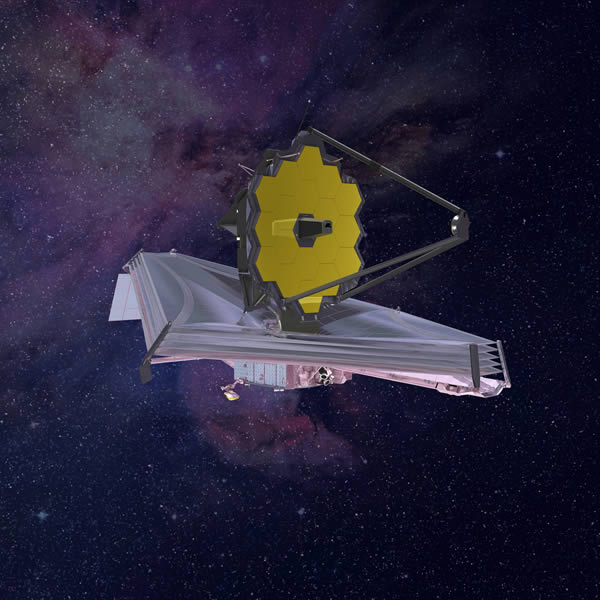
Webb Telescope & The Big Bang - NASA Science
The concept of the Big Bang is both simple and easy to misunderstand. Dr. John Mather, Nobel Laureate and James Webb Space Telescope Senior Project Scientist,
Ian Preston (@ianopolous.bsky.social)
Mathematician/particle physicist turned privacy researcher. Java Rockstar #Oxford Building a better web - private, self-sovereign identity, p2p, social - with @peergos.org. Public social media undermines democracy. #covidisairborne #maskswork #cleantheair

Joanna Russ- SF and Technology as Mystification
Talk about technology, long familiar to science-fiction readers and writers, is getting popular in Academia too. Particularly interesting to humanists is the connection between technology and whatever their own particular subject happens to be; I've attended three such formal symposia in the last five years, six including SF conventions, and including informal discussions among students, in writing classes, SF classes, and elsewhere, somewhere between fifty and sixty.
Thomas Ricci - Home
I'm a college student and software engineer currently pursuing a Bachelor's degree in Computer Science at WPI.

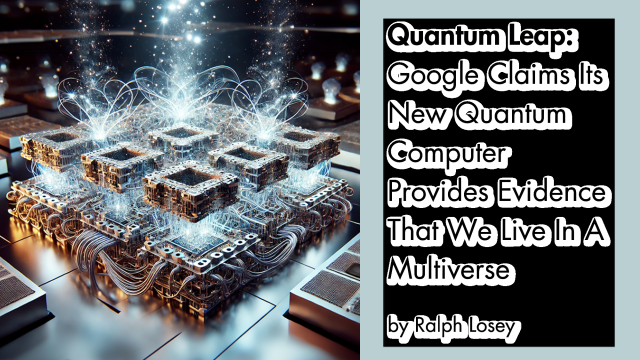
Quantum Leap: Google Claims Its New Quantum Computer Provides Evidence That We Live In A Multiverse
Google's quantum computer, Willow, suggests evidence for a multiverse by leveraging computations across parallel universes.
Paul Feyerabend
Paul Feyerabend (b.1924, d.1994), having studied science at theUniversity of Vienna, moved into philosophy for his doctoral thesis,made a name for himself both as an expositor and (later) as a critic ofKarl Popper's “critical rationalism”, and went on to becomeone of the twentieth century's most famous philosophers of science. Animaginative maverick, he became a critic of philosophy of scienceitself, particularly of “rationalist” attempts to lay downor discover rules of scientific method.
Thoughtful and relevant outside math. A partial summary: Gowers thinks it’s important to sustain a human mathematical culture, but is unconvinced by the Leiden Declaration’s attempt to do that by reaffirming human ownership of specific *discoveries*.

tachikoma
an interesting blog post by Timothy Gowers on the Leiden declaration (on AI and Math), on why he didn't sign. it gets to a subtler aspect of control over AI and our future.
