

Professor Samuelson casts a critical eye on the Final Report of the National Commission on New Technological Uses of Copyrighted Works (CONTU) which recommended that copyright protection be extended to machine-readable versions of computer programs. CONTU appears to have misunderstood computer technology and misinterpreted copyright tradition in two significant respects. The Commission failed to take into account the historical importance of disclosure of the contents of protected works as a fundamental goal of both the copyright and patent laws. It also erroneously opined that the utilitarian character of a work was no bar to its copyrightability when both the statute and the case law make clear that utilitarian works are not copyrightable. Since computer programs in machine-readable forms do not disclose their contents and are inherently utilitarian, copyright protection for them is inappropriate. Congress acted on CONTU's recommendation without understanding the significance of these conceptual flaws. Professor Samuelson recommends the creation of a new form of intellectual property law specifically designed for machine-readable programs.
CONTU Revisited: The Case against Copyright Protection for Computer Programs in Machine-Readable Form
Professor Samuelson casts a critical eye on the Final Report of the National Commission on New Technological Uses of Copyrighted Works (CONTU) which recommended that copyright protection be extended to machine-readable versions of computer programs. CONTU appears to have misunderstood computer technology and misinterpreted copyright tradition in two significant respects. The Commission failed to take into account the historical importance of disclosure of the contents of protected works as a fundamental goal of both the copyright and patent laws. It also erroneously opined that the utilitarian character of a work was no bar to its copyrightability when both the statute and the case law make clear that utilitarian works are not copyrightable. Since computer programs in machine-readable form do not disclose their contents and are inherently utilitarian, copyright protection for them is inappropriate. Congress acted on CONTU's recommendation without understanding the significance of these conceptual flaws. Professor Samuelson recommends the creation of a new form of intellectual property law specifically designed for machine-readable programs.
CONTU Final Report
The National Commission on New Technological Uses of Copyrighted Works (CONTU) was established by Congress, and operated between 1975 and 1978 to determine how the Copyright Act of 1976 should address computers and copy machines. On July 31, 1978, it issued its Final Report, which is frequently cited, but not readily available.
Transcribed Proceedings of CONTU
CONTU, or the Commission on New Technological Uses of Copyrighted Works, was established in 1974 by United States Congress to study issues associated with copyrighted works in computers and compute…

Tailoring Legal Protection for Computer Software
Peter S. Menell, Tailoring Legal Protection for Computer Software, Stanford Law Review, Vol. 39, No. 6 (Jul., 1987), pp. 1329-1372
Apple Computer, Inc. v. Franklin Computer Corp.
Apple Computer, Inc. v. Franklin Computer Corp., 714 F.2d 1240 (3d Cir. 1983), was the first time an appellate level court in the United States held that a computer's BIOS could be protected by copyright. As second impact, this ruling clarified that binary code, the machine-readable form of software and firmware, was copyrightable too and not only the human-readable source code form of software.[1][2]
Book publishers sue Google for copyright infringement over Gemini AI training
Group of major publishers accuses the tech giant of ‘one of the most prolific infringements of copyrighted materials in history’
Is legal the same as legitimate: AI reimplementation and the erosion of copyleft
Last week, Dan Blanchard, the maintainer of chardet—a Python library for detecting text encodings used by roughly 130 million projects a month— released a new…
Anthropic sued by authors over alleged misuse of copyrighted works for AI training
The complaint alleges that Anthropic used pirated versions of books by hundreds of thousands of authors to develop its AI models without proper authorization or compensation.

Technology and Below-the-Line Labor in the Copyfight over Intellectual Property
Andrew Ross, Technology and Below-the-Line Labor in the Copyfight over Intellectual Property, American Quarterly, Vol. 58, No. 3, Rewiring the "Nation": The Place of Technology in American Studies (Sep., 2006), pp. 743-766
Book publishers sue Meta over AI’s ‘word-for-word’ copying
Meta is accused of ripping copyrighted works from piracy websites.

Creative commons licenses and copyright may not stop academic work being used to train AI - Impact of Social Sciences
Considering the legal standing of creative commons licenses & copyright, Martin Eve suggests legal protections for academic work are unlikely to be forthcoming.

The fight over downloadable AI is not really about a ban - Sensemaker
Companies want access, Anthropic wants testing, and Washington and Beijing are arguing over alleged copying.
Permissive-Washing in the Open AI Supply Chain: A Large-Scale Audit of License Integrity
Permissive licenses like MIT, Apache-2.0, and BSD-3-Clause dominate open-source AI, signaling that artifacts like models, datasets, and code can be freely used, modified, and redistributed. However, these licenses carry mandatory requirements: include the full license text, provide a copyright notice, and preserve upstream attribution, that remain unverified at scale. Failure to meet these conditions can place reuse outside the scope of the license, effectively leaving AI artifacts under default copyright for those uses and exposing downstream users to litigation. We call this phenomenon ``permissive washing'': labeling AI artifacts as free to use, while omitting the legal documentation required to make that label actionable. To assess how widespread permissive washing is in the AI supply chain, we empirically audit 124,278 dataset $\rightarrow$ model $\rightarrow$ application supply chains, spanning 3,338 datasets, 6,664 models, and 28,516 applications across Hugging Face and GitHub. We find that an astonishing 96.5\% of datasets and 95.8\% of models lack the required license text, only 2.3\% of datasets and 3.2\% of models satisfy both license text and copyright requirements, and even when upstream artifacts provide complete licensing evidence, attribution rarely propagates downstream: only 27.59\% of models preserve compliant dataset notices and only 5.75\% of applications preserve compliant model notices (with just 6.38\% preserving any linked upstream notice). Practitioners cannot assume permissive labels confer the rights they claim: license files and notices, not metadata, are the source of legal truth. To support future research, we release our full audit dataset and reproducible pipeline.

AI*-generated copyright infringement

* I’m neither “pro-AI” nor “anti-AI.” I’ve been blocked for being perceived as both. —Actually, I’m honestly more anti-AI than pro-AI thus far, aside from specialized models and specific use cases, but I’m willing to consider information that’s new to me
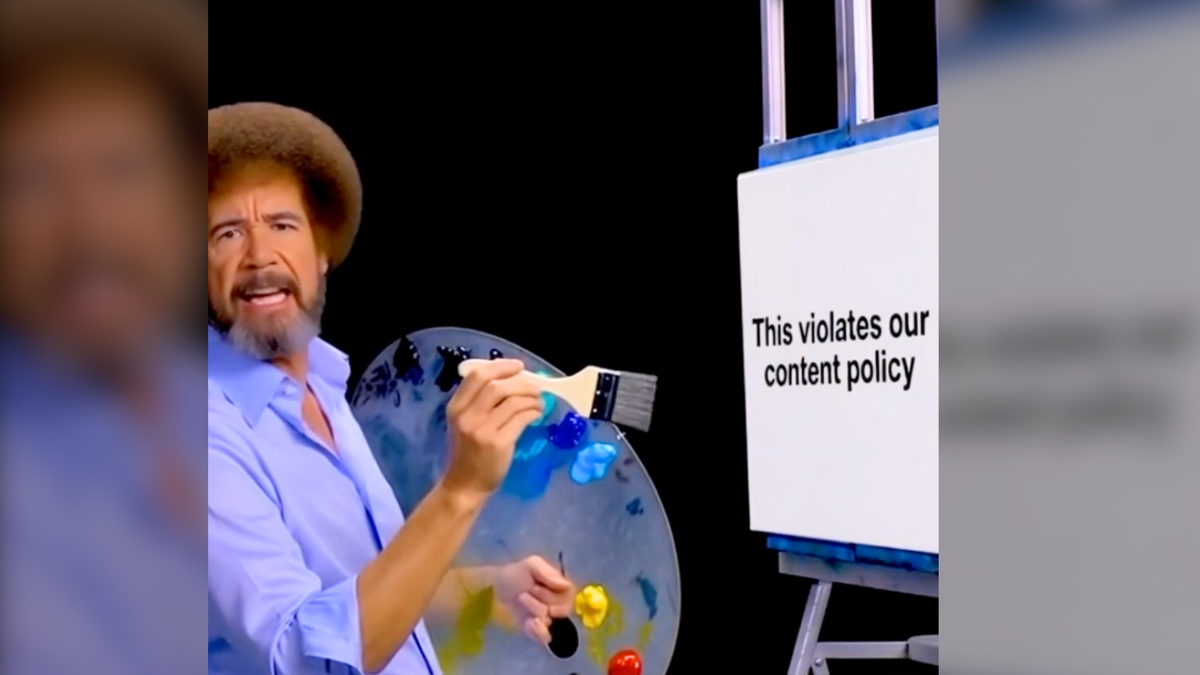
People Are Crashing Out Over Sora 2’s New Guardrails

Bing Is Generating Images of SpongeBob Doing 9/11
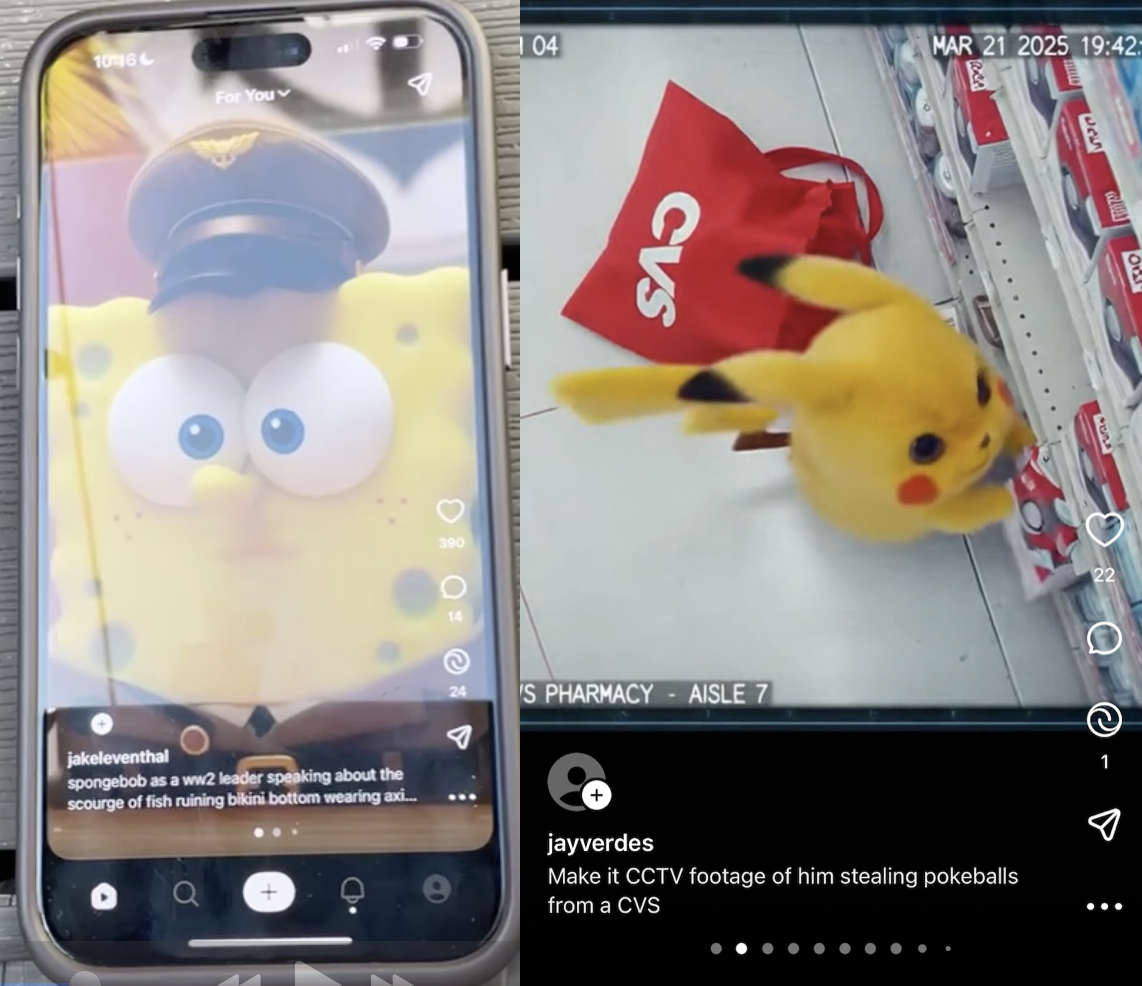
OpenAI’s Sora 2 Copyright Infringement Machine Features Nazi SpongeBobs and Criminal Pikachus
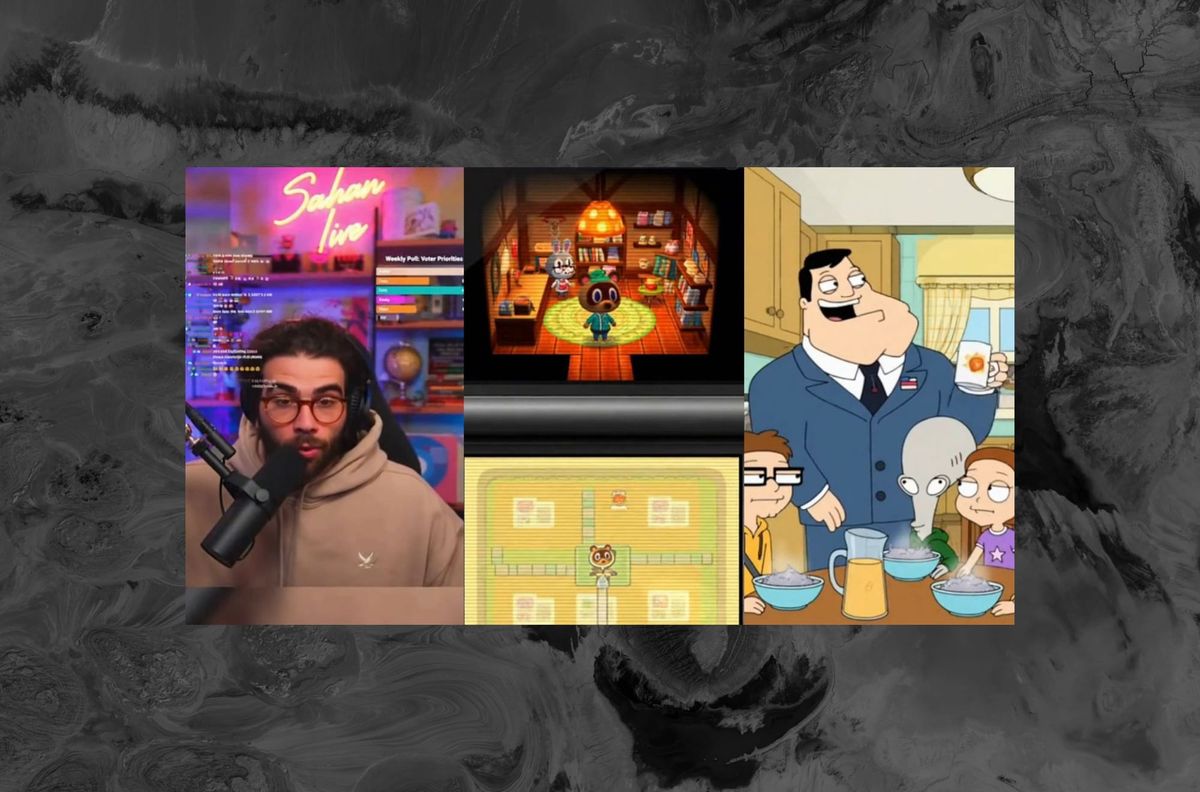
OpenAI Can’t Fix Sora’s Copyright Infringement Problem Because It Was Built With Stolen Content
