

From the earliest days of digital communities, online abuse has been connected to anonymity. While concerns around the impact of anonymity, particularly for women, people of color and LGBTQ folks, is legitimate, this paper argues that a flat rejection of digital anonymity is problematic, foreclosing certain forms of queer and feminist praxis. To make this case, I turn to the platform politics of Craigslist. Using Craigslist as a case study, I discuss the persistent stigma attached to online anonymity, before addressing specific tactics of online anonymity associated with queer and feminist values of privacy and mutual aid. Drawing on accounts of Craigslist users who saw anonymity as a protective form of control over their personal information, I outline ways in which anonymity is not solely an enabler for misogyny and homophobia, and can instead (or rather, also) be a subversive tool for self-expression and intimacy.
A Queer and Feminist Defense of Being Anonymous Online
From the earliest days of digital communities, online abuse has been connected to anonymity. While concerns around the impact of anonymity, particularly for women, people of color and LGBTQ folks, is legitimate, this paper argues that a flat rejection of digital anonymity is problematic, foreclosing certain forms of queer and feminist praxis. To make this case, I turn to the platform politics of Craigslist. Using Craigslist as a case study, I discuss the persistent stigma attached to online anonymity, before addressing specific tactics of online anonymity associated with queer and feminist values of privacy and mutual aid. Drawing on accounts of Craigslist users who saw anonymity as a protective form of control over their personal information, I outline ways in which anonymity is not solely an enabler for misogyny and homophobia, and can instead (or rather, also) be a subversive tool for self-expression and intimacy.
Anonymity, pseudonymity, and the agency of online identity: Examining the social practices of r/Gonewild
A debate is currently raging regarding the value of anonymity online. On one side of the debate is Facebook, the world’s largest social network site. Facebook demands that people use their real names and is one of the leading forces behind the push towards a “real name” Internet. On the other side of the debate are scholars such as danah boyd and Bernie Hogan and sites such as 4chan and Reddit that view anonymity and pseudonymity as important to how people construct identity online. While much has been written about the benefits of anonymity and pseudonymity, there is a lack of published research examining specific practices enabled by pseudonyms. This paper provides a detailed account of the behaviors enabled through pseudonymous identity construction through a case study of the subreddit r/gonewild. The main contribution of the article is to provide a specific account of the costs of a totalizing embrace of the “real name” Internet.
Anonymity, pseudonymity, and the agency of online identity: Examining the social practices of r/Gonewild
A debate is currently raging regarding the value of anonymity online. On one side of the debate is Facebook, the world’s largest social network site. Facebook demands that people use their real names and is one of the leading forces behind the push towards a “real name” Internet. On the other side of the debate are scholars such as danah boyd and Bernie Hogan and sites such as 4chan and Reddit that view anonymity and pseudonymity as important to how people construct identity online. While much has been written about the benefits of anonymity and pseudonymity, there is a lack of published research examining specific practices enabled by pseudonyms. This paper provides a detailed account of the behaviors enabled through pseudonymous identity construction through a case study of the subreddit r/gonewild. The main contribution of the article is to provide a specific account of the costs of a totalizing embrace of the “real name” Internet.
Constructing and enforcing "authentic" identity online: Facebook, real names, and non-normative identities
Despite the participatory and democratic promises of Web 2.0, many marginalized individuals with fluid or non-normative identities continue to struggle to represent themselves online. Facebook users, in particular, are told to use “authentic identities,” an idea reinforced throughout the site’s documentation, “real name” and other policies, and in public statements by company representatives. Facebook’s conception of authenticity and real names, however, has created problems for certain users, as demonstrated by the systematic deactivation of many accounts belonging to transgender and gender variant users, drag queens, Native Americans, abuse survivors, and others. In view of the struggles of marginalized users, Facebook policy appears paradoxical: the site simultaneously demands authenticity yet proscribes certain people from authentic self-presentation. In this work, we examine Facebook’s construction of “authenticity” and show how it excludes multifaceted, fluid, or non-normative identities. Using content analysis and close reading, we analyze site documentation and data from The Zuckerberg Files (an online archive of Facebook founder and CEO Mark Zuckerberg’s public remarks) to understand the platform’s mechanisms for enforcing authenticity. We find that Facebook positions itself as a type of administrative identity registrar, raising vital questions regarding the ethics and consequences of identity enforcement online today.
Constructing and enforcing "authentic" identity online: Facebook, real names, and non-normative identities
Despite the participatory and democratic promises of Web 2.0, many marginalized individuals with fluid or non-normative identities continue to struggle to represent themselves online. Facebook users, in particular, are told to use “authentic identities,” an idea reinforced throughout the site’s documentation, “real name” and other policies, and in public statements by company representatives. Facebook’s conception of authenticity and real names, however, has created problems for certain users, as demonstrated by the systematic deactivation of many accounts belonging to transgender and gender variant users, drag queens, Native Americans, abuse survivors, and others. In view of the struggles of marginalized users, Facebook policy appears paradoxical: the site simultaneously demands authenticity yet proscribes certain people from authentic self-presentation. In this work, we examine Facebook’s construction of “authenticity” and show how it excludes multifaceted, fluid, or non-normative identities. Using content analysis and close reading, we analyze site documentation and data from The Zuckerberg Files (an online archive of Facebook founder and CEO Mark Zuckerberg’s public remarks) to understand the platform’s mechanisms for enforcing authenticity. We find that Facebook positions itself as a type of administrative identity registrar, raising vital questions regarding the ethics and consequences of identity enforcement online today.
Empowering Users, Not Overlords: Overcoming Digital Helplessness
Disclosure: I’m on the board of Bluesky, so feel free to take as many grains of salt as you want in reading it, though all of it applies equally to other decentralized social media ecosys…

You Can Form a Part of Yourself Online: The Influence of New Media on Identity Development and Coming Out for LGBTQ Youth
Internet-based new media are increasingly utilized by lesbian, gay, bisexual, transgender, and queer (LGBTQ) youth, yet little is known about the ways in which it influences their identity developm...
You Can Form a Part of Yourself Online: The Influence of New Media on Identity Development and Coming Out for LGBTQ Youth
Internet-based new media are increasingly utilized by lesbian, gay, bisexual, transgender, and queer (LGBTQ) youth, yet little is known about the ways in which it influences their identity developm...
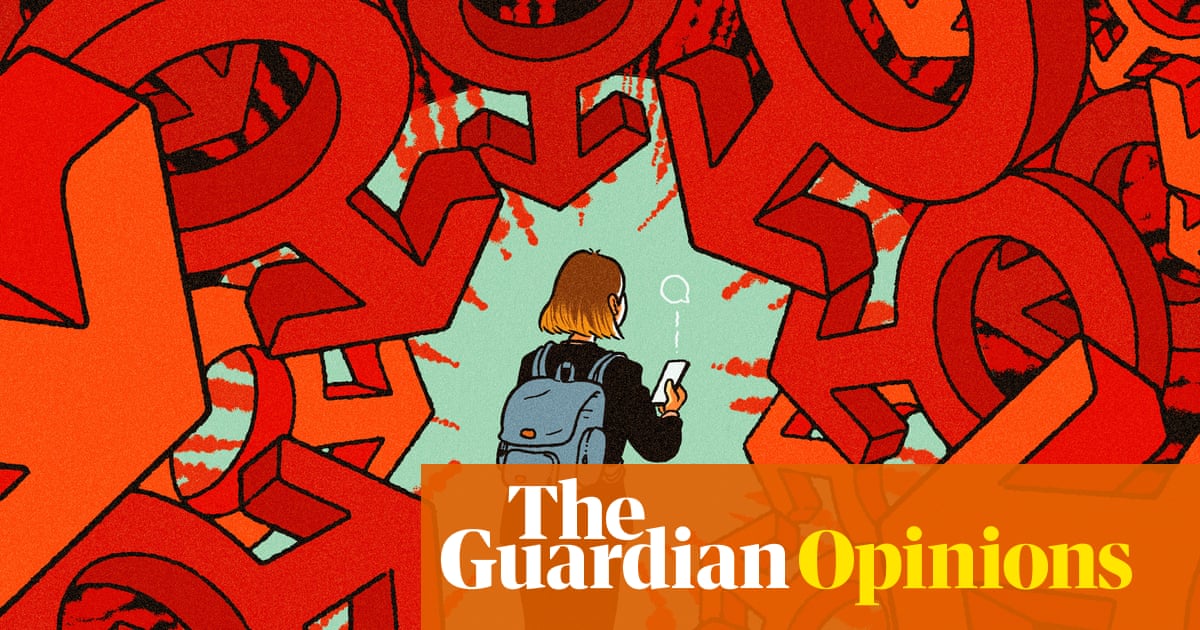
I am a 15-year-old girl. Let me show you the vile misogyny that confronts me on social media every day | Anonymous
Objectification, hate, rape threats: the politicians debating online abuse mean well, but to truly understand, they need to see what I see
Harm Through the “#RizzCam”: Smart Glasses, Ambient Capture and Invisible Harassment
In online safety research, harassment is commonly understood as involving overt and unwanted acts that create a hostile environment for individuals or groups. Smart glasses, or wearable digital devices that are often indistinguishable from ordinary eyewear but can record video, audio and location data in real time, enable new forms of online harassment and gender-based harms that may not be recognised by current online safety or platform governance frameworks. Drawing on an interpretive content analysis of 350 point-of-view Instagram videos posted by individuals self-associated with the pick-up artistry (PUA) community, we examine how smart glasses can be used to harass women through what we call ambient capture. Ambient capture includes clandestine recording of people and social interactions within public, semi-private and private spaces. We argue this can constitute harassment when it is targeted at women and shared online without their consent. In our study, we found videos using ambient capture practices to harass women that had gone undetected by Instagram’s content moderation systems. These findings suggest online safety regimes and content moderation approaches should be assessed to ensure they account for the more invisible forms of harassment introduced by smart glasses and other wearable technologies.
Social media scam commodifies women's sexuality to swindle followers | CBC News
Women’s names and photos are being used in duplicate accounts to advertise adult content and trick site visitors into providing their credit card information.

From Non-consensual Pornography to Image-based Sexual Abuse: Charting the Course of a Problem with Many Names
Every day, people’s most intimate moments are recorded, uploaded and circulated online without their consent. This gross invasion of privacy – commonly known as ‘revenge pornography’ – has become p...

From Non-consensual Pornography to Image-based Sexual Abuse: Charting the Course of a Problem with Many Names
Every day, people’s most intimate moments are recorded, uploaded and circulated online without their consent. This gross invasion of privacy – commonly known as ‘revenge pornography’ – has become p...
Your Body, Your Feed – Creating a bridge between consent and self-expression - What’s Happening on My Feed?
Recently, we’ve seen an increase in discussion around how adult content currently shows up on our platform. By adult content, we mean content that is usually labeled as pornography, non-sexual nudity, or sexually suggestive content. Labeling adult content (both text- and image-based) is an example of how we empower community members to share more of themselves with folks, without creating a non-consensual experience for other members that do not wish to engage with adult content. To solve this, we want to present you with options and invite you, as a member of our community, to decide how adult content shows up on Blacksky.
Age-Verification Laws Seek to Erase LGBTQ+ Identity from the Internet
Age-verification laws are weaponized to censor LGBTQ+ and abortion-related content online under the guise of protecting children from porn.

The forced global adoption of puritanistic American cultural norms vis sexuality and nudity via app store/payment processor rules is one of the least-discussed free speech issues of the last decade and this lack of attention is going to hurt online expression so much in the years to come.

♍ Bee 🐝
I think also we cannot ignore the potential social and cultural ramifications of normalizing the demonification of anything adult or sexual The whole system is stacked against any sort of movement in the other direction and it's not something the porn industry can handle alone at this point
