

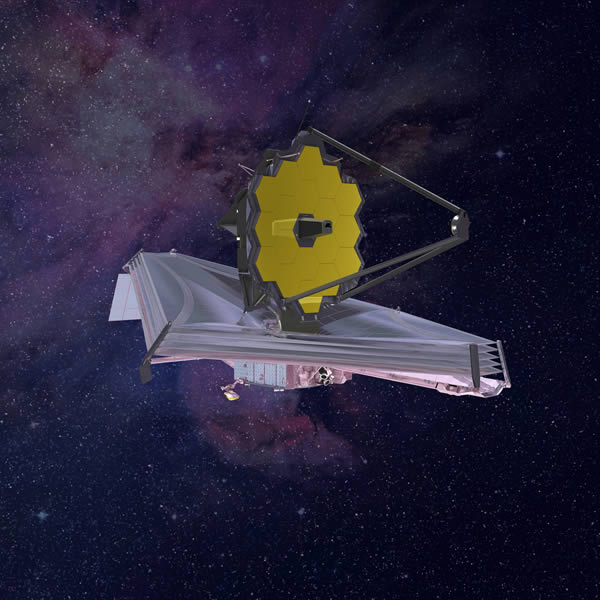
The concept of the Big Bang is both simple and easy to misunderstand. Dr. John Mather, Nobel Laureate and James Webb Space Telescope Senior Project Scientist,

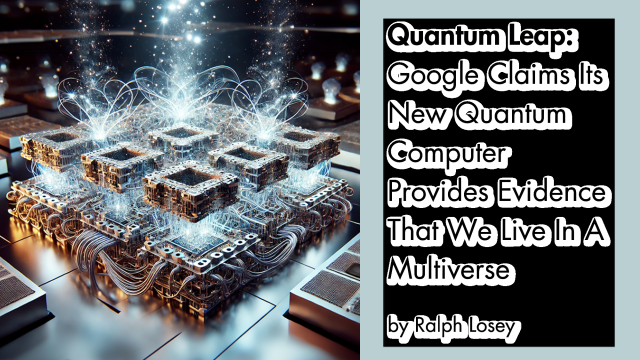
Quantum Leap: Google Claims Its New Quantum Computer Provides Evidence That We Live In A Multiverse
Google's quantum computer, Willow, suggests evidence for a multiverse by leveraging computations across parallel universes.
NASA
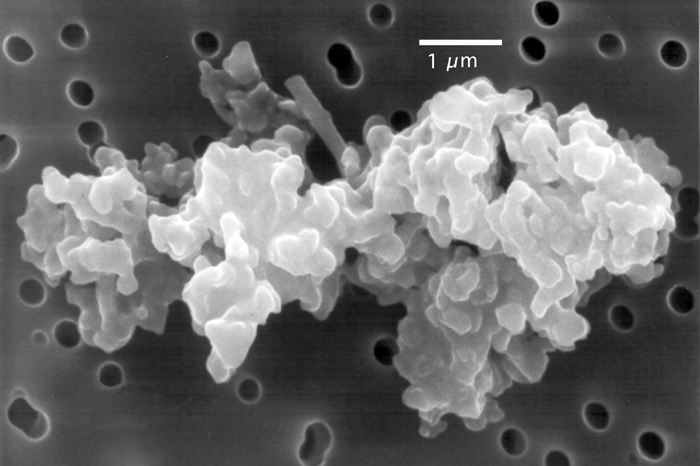
Cosmic dust
Cosmic dust – also called extraterrestrial dust, space dust, or star dust – is dust that occurs in outer space or has fallen onto Earth. Most cosmic dust particles measure between a few molecules and 0.1 mm (100 μm), such as micrometeoroids and meteoroids. Cosmic dust can be further distinguished by its astronomical location: intergalactic dust, interstellar dust, interplanetary dust, and circumplanetary dust. There are several methods to obtain space dust measurement.
Brandon Yates on Twitter / X
I wrote a cosmology paper that's under peer review.I can't post it to arXiv because I don't have a university affiliation.If any of you happen to have published in astro-ph. CO, gr-qc, or hep-ph and can endorse me, I'd owe you one.#AcademicTwitter #PhysicsTwitter #Cosmology…— Brandon Yates (@bmichaelyates) March 13, 2026
The Astrosky Ecosystem
We're building social media tools for the astronomy & space science communities. From feeds to hosting, we're billionaire-proofing scientific discussion for good.
computational product market fit
‘computer science is no more about computers than astronomy is about telescopes.’ — edsger dijkstra
Dark matter
In astronomy and cosmology, dark matter is an invisible and hypothetical form of matter that does not interact with light or other electromagnetic radiation. Dark matter is implied by gravitational effects that cannot be explained by general relativity unless more matter is present than can be observed. Such effects occur in the context of formation and evolution of galaxies, gravitational lensing, the observable universe's current structure, mass position in galactic collisions, the motion of galaxies within galaxy clusters, and cosmic microwave background anisotropies. Dark matter is thought to serve as gravitational scaffolding for cosmic structures. After the Big Bang, dark matter clumped into blobs along narrow filaments with superclusters of galaxies forming a cosmic web at scales on which entire galaxies appear like tiny particles.

The Astrosky Ecosystem: An independent online platform for science communication and social networking
While almost everything that astronomers study occurs in the vacuum of space, astronomy itself does not `happen in a vacuum'. Interactions between scientists, as well as outreach to members of the public, improve extensively from access to good communication tools. Social media has become a key tool for communication in astronomy, being widely used by individuals and organizations alike for networking, outreach, and more. However, traditional social media is reliant on benevolent corporations providing a free service without compromising on quality, and the recent takeover and decline of Twitter has shown how vulnerable these platforms can be. In this proceeding, we present The Astrosky Ecosystem, which is an initiative to develop open-source tools and integrations for social media, principally the Bluesky social network. We explain how our project enables the astronomy community to operate its own social media infrastructure, independent of for-profit corporations. We also discuss some of the project's technical aspects, including its use of the AT Protocol for social networking, before concluding with ideas for the future.

The dark forest theory of the internet
In his sci-fi trilogy The Three Body Problem, author Liu Cixin presents the dark forest theory of the universe. When we look out into space, the theory goes, we’re struck by its silence. It seems like we’re the only ones here. After all, if other forms of

Meet the Big if True Science Accelerator Americas Cohort — Renaissance Philanthropy – A brighter future for all through science, technology, and innovation
Renaissance Philanthropy’s Big if True Science (BiTS) Accelerator has launched our Americas cohort, with support from Coefficient Giving . After a highly competitive international selection process, we're delighted to introduce the 14 exceptional scientists and innovators in this cohort. Selecte

Reinventing Discovery: The New Era of Networked Science
In Reinventing Discovery, Michael Nielsen argues that w…


