Circadian precision medicine may supplement genetic precision to improve drug action
How fasting can improve overall health
Researchers found evidence that fasting affects circadian clocks in the liver and skeletal muscle, causing them to rewire their metabolism, which can ultimately lead to improved health and protection against aging-associated diseases.

When We Eat, or Don’t Eat, May Be Critical for Health (Published 2018)
A growing body of research suggests that our bodies function optimally when we align our eating patterns with our circadian rhythms.

Your Body's Best Time for Everything
A growing body of research suggests that the body clock can help pinpoint the best times of day to perform specific tasks, from solving work problems to playing racquetball.

Personal night light exposure predicts incidence of cardiovascular diseases in >88,000 individuals
Importance Light at night causes circadian disruption, which is a known risk factor for adverse cardiovascular outcomes. However, it is not well understood whether personal light exposure patterns predicts and individual’s risk of cardiovascular diseases. Objective To assess whether day and night light exposure predicts incidence of cardiovascular diseases, and whether relationships of light with cardiovascular diseases differ according to genetic susceptibility, sex, and age. Design Prospective cohort study. Setting United Kingdom. Participants N=88,905, age (M±SD) = 62.4±7.8 years, 56.9% female. Exposure Approximately 13 million hours of personal light exposure data, tracked by wrist-worn light sensors (one week each). Main Outcomes and Measures Incidence of coronary artery disease, myocardial infarction, heart failure, atrial fibrillation, and stroke, derived from UK National Health Service records, across a 9.5-year follow-up after light tracking. Results People with the brightest nights (90-100th percentiles) had significantly higher risks of developing coronary artery disease (adjusted-HR range: 1.23-1.32), myocardial infarction (aHRs: 1.42-1.47), heart failure (aHRs: 1.45-1.56), atrial fibrillation (aHRs: 1.28-1.32), and stroke (aHRs: 1.28-1.30), compared to people with dark nights (0-50th percentiles). These relationships were robust after adjusting for established risk factors for cardiovascular health, including physical activity, smoking, alcohol, diet, sleep duration, socioeconomic status, and polygenic risk. Relationships of night light with risk of heart failure and coronary artery disease were stronger for women, and relationships of night light with risk of heart failure and atrial fibrillation were stronger for younger individuals in this cohort. Conclusions and Relevance Night light exposure was a significant risk factor for developing cardiovascular diseases in this cohort. In addition to current preventative measures, avoiding light at night may be a useful strategy for reducing risks of cardiovascular diseases. Question Does personal light exposure predict incidence of cardiovascular diseases? Findings In this study of ∼89,000 adults aged >40 years, exposure to brighter light at night predicted higher incidence of coronary artery disease, myocardial infarction, heart failure, atrial fibrillation, and stroke, independent of established cardiovascular risk factors. Meaning Avoiding exposure to night light may lower risk for cardiovascular diseases. ### Competing Interest Statement Conflicts of Interest Disclosures: M.K.R. has consulted for Eli Lilly and has modest stock ownership in GSK. M.K.R. disclosures are not related to the current work. F.A.J.L.S. served on the Board of Directors for the Sleep Research Society and has received consulting fees from the University of Alabama at Birmingham and Morehouse School of Medicine. F.A.J.L.S. interests were reviewed and managed by Brigham and Women's Hospital and Partners HealthCare under their conflict-of-interest policies. F.A.J.L.S. consultancies are not related to the current work. S.W.C. has consulted for Dyson. A.J.K.P. and S.W.C. are co-founders and co-directors of Circadian Health Innovations PTY LTD. A.J.K.P. and S.W.C. have received research funding from Versalux and Delos. S.W.C. has received research funding from Beacon Lighting. D.P.W, A.C.B., J.M.L., and R.S. have no conflicts of interest to disclose. ### Funding Statement Funding/Support: D.P.W. was supported by the Australian Research Council (DP210102924 and DP220102812). J.M.L. was supported by National Institutes of Health (NIH) grants R35-GM146839 and R01-HG012810. F.A.J.L.S. partly supported by NIH grants R01-HL140574, R01-HL153969, R01-HL164454, and R01-HL167746. Role of the Funder/Sponsor: Funding sources did not play a role in the design and conduct of the study; collection, management, analysis, or interpretation of the data; preparation, review, or approval of the manuscript; or the final decision to submit the manuscript for publication. ### Author Declarations I confirm all relevant ethical guidelines have been followed, and any necessary IRB and/or ethics committee approvals have been obtained. Yes The details of the IRB/oversight body that provided approval or exemption for the research described are given below: This research was conducted using UK Biobank data (Project ID: 6818), and ethical approval was granted by the North West Multi-centre Research Ethics Committee. The Monash University Human Research Ethics Committee of Monash University also gave ethical approval for this work. I confirm that all necessary patient/participant consent has been obtained and the appropriate institutional forms have been archived, and that any patient/participant/sample identifiers included were not known to anyone (e.g., hospital staff, patients or participants themselves) outside the research group so cannot be used to identify individuals. Yes I understand that all clinical trials and any other prospective interventional studies must be registered with an ICMJE-approved registry, such as ClinicalTrials.gov. I confirm that any such study reported in the manuscript has been registered and the trial registration ID is provided (note: if posting a prospective study registered retrospectively, please provide a statement in the trial ID field explaining why the study was not registered in advance). Yes I have followed all appropriate research reporting guidelines, such as any relevant EQUATOR Network research reporting checklist(s) and other pertinent material, if applicable. Yes All data used in the present work are available upon application to the UK Biobank team. <https://biobank.ndph.ox.ac.uk/showcase/>
'Sleep should be prescribed': what those late nights out could be costing you
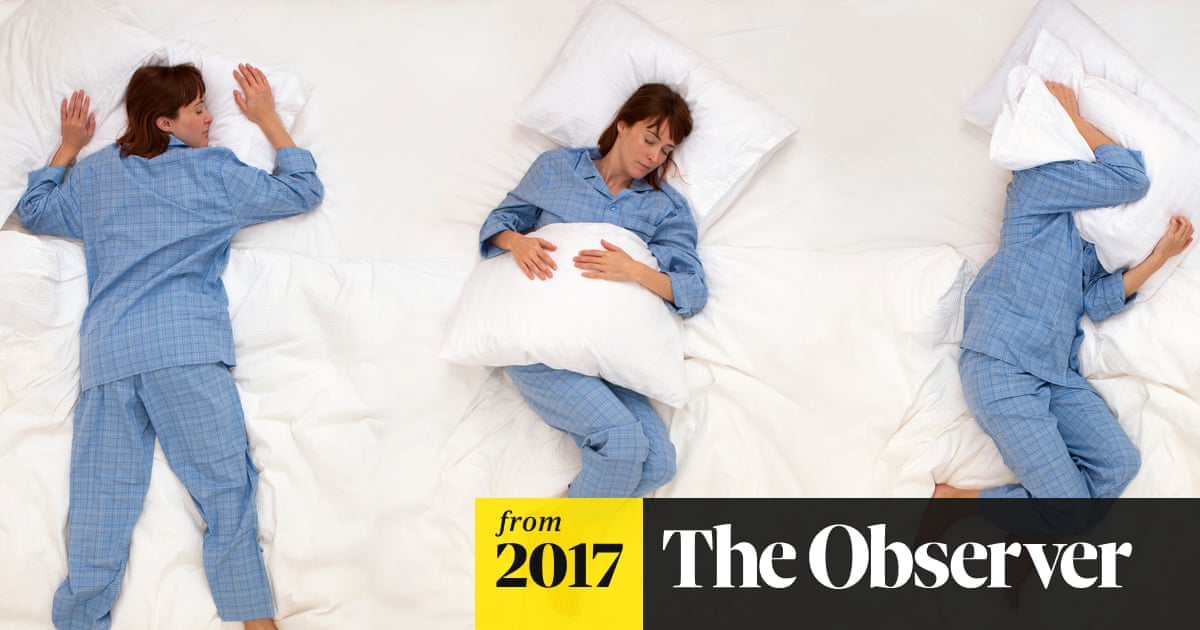
Leading neuroscientist Matthew Walker on why sleep deprivation is increasing our risk of cancer, heart attack and Alzheimer’s – and what you can do about it
Creatine found to improve cognitive performance during sleep deprivation | Hacker News
Although, I could see this being beneficial in fields where labour is scarce (e.g.: the medical field), I fear it could lend towards a "sleep deprivation is okay, just take creatine" rationale in other fields.
Depression linked to internal jet lag study finds
Circadian rhythms controlling sleep were out of sync in a quarter of young people with depression in this Sydney-based study. Read more

Precision Medicine in Neuroscience: Tools, Translation, and Implementation: A Workshop
Precision medicine approaches are rapidly transforming neuroscience, driven by advances in genetics, neuroimaging, biomarkers, and data science. These tools enable more refined disease classification, improved diagnosis, and treatments tailored to individual patients across neurological and psychiatric disorders. However, challenges remain in translating these advances into routine research and clinical practice. On March 4–5, the National Academies’ Forum on Neuroscience and Nervous System Disorders, in collaboration with the Forum on Drug Discovery, Development, and Translation and the Roundtable on Genomics and Precision Health, will host a workshop exploring opportunities, challenges, and strategies for integrating precision medicine into neuroscience research and care.

Single dose creatine improves cognitive performance and induces changes in cerebral high energy phosphates during sleep deprivation
The inverse effects of creatine supplementation and sleep deprivation on high energy phosphates, neural creatine, and cognitive performances suggest that creatine is a suitable candidate for reducing the negative effects of sleep deprivation. With this, the main obstacle is the limited exogenous uptake by the central nervous system (CNS), making creatine only effective over a long-term diet of weeks. Thus far, only repeated dosing of creatine over weeks has been studied, yielding detectable changes in CNS levels. Based on the hypothesis that a high extracellular creatine availability and increased intracellular energy consumption will temporarily increase the central creatine uptake, subjects were orally administered a high single dose of creatinemonohydrate (0.35 g/kg) while performing cognitive tests during sleep deprivation. Two consecutive 31P-MRS scans, 1H-MRS, and cognitive tests were performed each at evening baseline, 3, 5.5, and 7.5 h after single dose creatine (0.35 g/kg) or placebo during sub-total 21 h sleep deprivation (SD). Our results show that creatine induces changes in PCr/Pi, ATP, tCr/tNAA, prevents a drop in pH level, and improves cognitive performance and processing speed. These outcomes suggest that a high single dose of creatine can partially reverse metabolic alterations and fatigue-related cognitive deterioration.

Comparison of adaptive pacing therapy, cognitive behaviour therapy, graded exercise therapy, and specialist medical care for chronic fatigue syndrome (PACE): a randomised trial
CBT and GET can safely be added to SMC to moderately improve outcomes for chronic fatigue syndrome, but APT is not an effective addition.

Lying on one's right side at an angle of 45 degrees can halve the time it takes for an oral medication to work compared to standing or sitting upright.
366 votes, 55 comments. 454K subscribers in the Nootropics community. Research and discussion on nootropics and cognitive enhancers.

Life Cycle - Track Your Time App - App Store
Download Life Cycle - Track Your Time by Sleep Cycle AB on the App Store. See screenshots, ratings and reviews, user tips, and more apps like Life Cycle - Track…

Are two halves better than one whole? A comparison of the amount and quality of sleep obtained by healthy adult males living on split and consolidated sleep-wake schedules
The aim of this study was to compare the quantity/quality of sleep obtained by people living on split and consolidated sleep-wake schedules. The study had a between-groups design, with 13 participants in a consolidated condition (all males, mean age of 22.5yr) and 16 participants in a split condition (all males, mean age of 22.6yr). Both conditions employed forced desynchrony protocols with the activity:rest ratio set at 2:1, but the consolidated condition had one sleep-wake cycle every 28h (9.33+18.67), while the split condition had one sleep-wake cycle every 14h (4.67+9.33). Sleep was assessed using polysomnography. Participants in the split and consolidated conditions obtained 4.0h of sleep per 14h and 7.6h of sleep per 28h, respectively. Some differences between the groups indicated that sleep quality was lower in the split condition than the consolidated condition: the split sleeps had longer sleep onset latency (9.7 vs. 4.3min), more arousals (7.4 vs. 5.7 per hour in bed), and a greater percentage of stage 1 sleep (4.1% vs. 3.1%), than the consolidated sleeps. Other differences between the groups indicated that sleep quality was higher in the split condition than the consolidated condition: the split sleeps had a lower percentage of wake after sleep onset sleep (11.7% vs. 17.6%), and a greater percentage of slow wave sleep (30.2% vs. 23.8%), than the consolidated sleeps. These results indicate that the split schedule was not particularly harmful, and may have actually been beneficial, to sleep. Split work-rest schedules can be socially disruptive, but their use may be warranted in work settings where shiftworkers are separated from their normal family/social lives (e.g., fly-in fly-out mining) or where the need for family/social time is secondary to the task (e.g., emergency response to natural disasters).
Abolishing Daylight Saving Time is easy, setting a permanent time is not
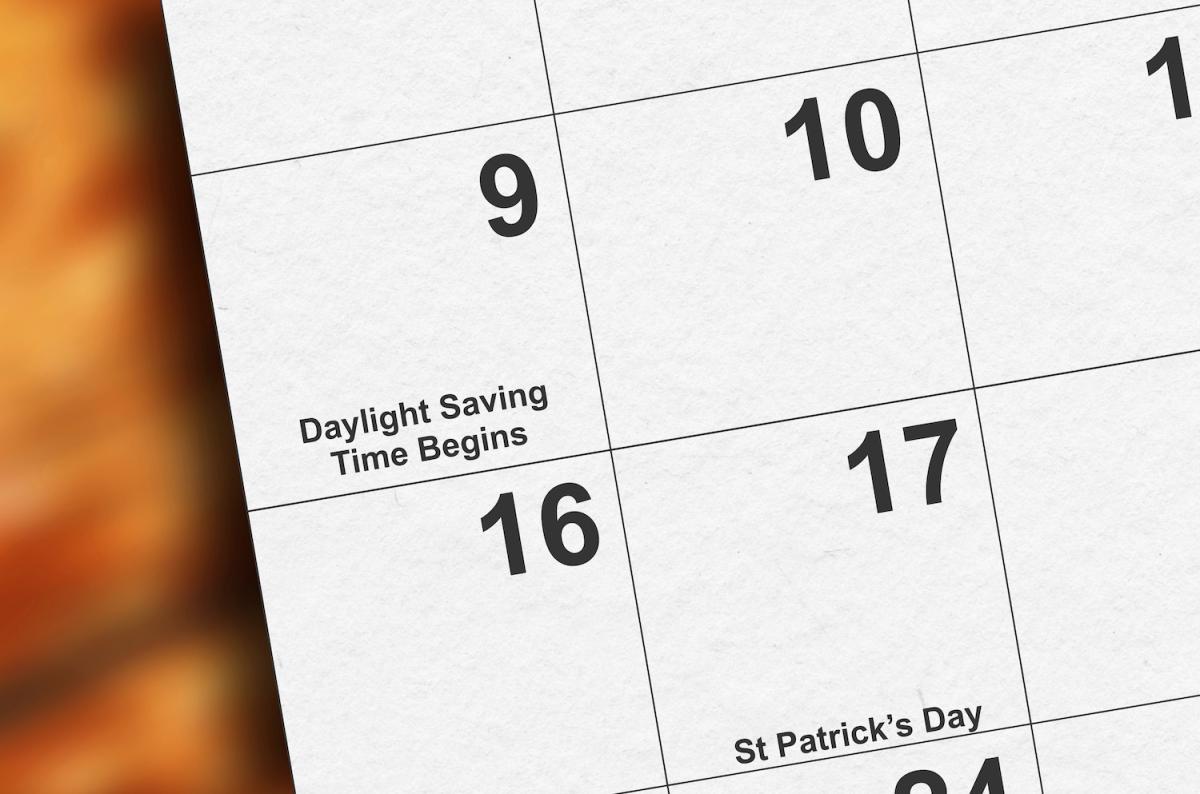
Daylight Saving Time – the biannual ritual of adjusting clocks forwards and backwards – has long been debated. Advocates argue it saves energy and promotes outdoor activities, while critics highlight its disruptive effects on health, productivity, and social routines. This column examines the health impacts, societal costs, and the outdated rationale behind the implementation of Daylight Saving Time, and argues that there is good reason to abolish it. This would imply trade-offs, however. While adopting Standard Time permanently would be better from a health perspective, ‘summer time’ is preferred in many countries.
timer
Time-boxed moderation lists: sort your blocks into T-7/T-30/T-90 lists and get reminded when time is up.
A daytime nap is good for the brain
Those prone to napping had brains that looked up to six years younger than everyone else.