


Abstract of a paper:Theories of innovation emphasize the role of social networks and teams as facilitators of breakthrough discoveries. Around the world, scientists and inventors are more plentiful and interconnected today than ever before. However, although there are more people making discoveries,...
Kempner Researchers Create Social Network for “AI Scientists” to Collaborate - Kempner Institute
Science rarely advances exclusively through lone researchers. Progress often comes from discussion and collaboration — scientists sharing ideas, questioning one another, and refining their thinking together. Now, a team of […]
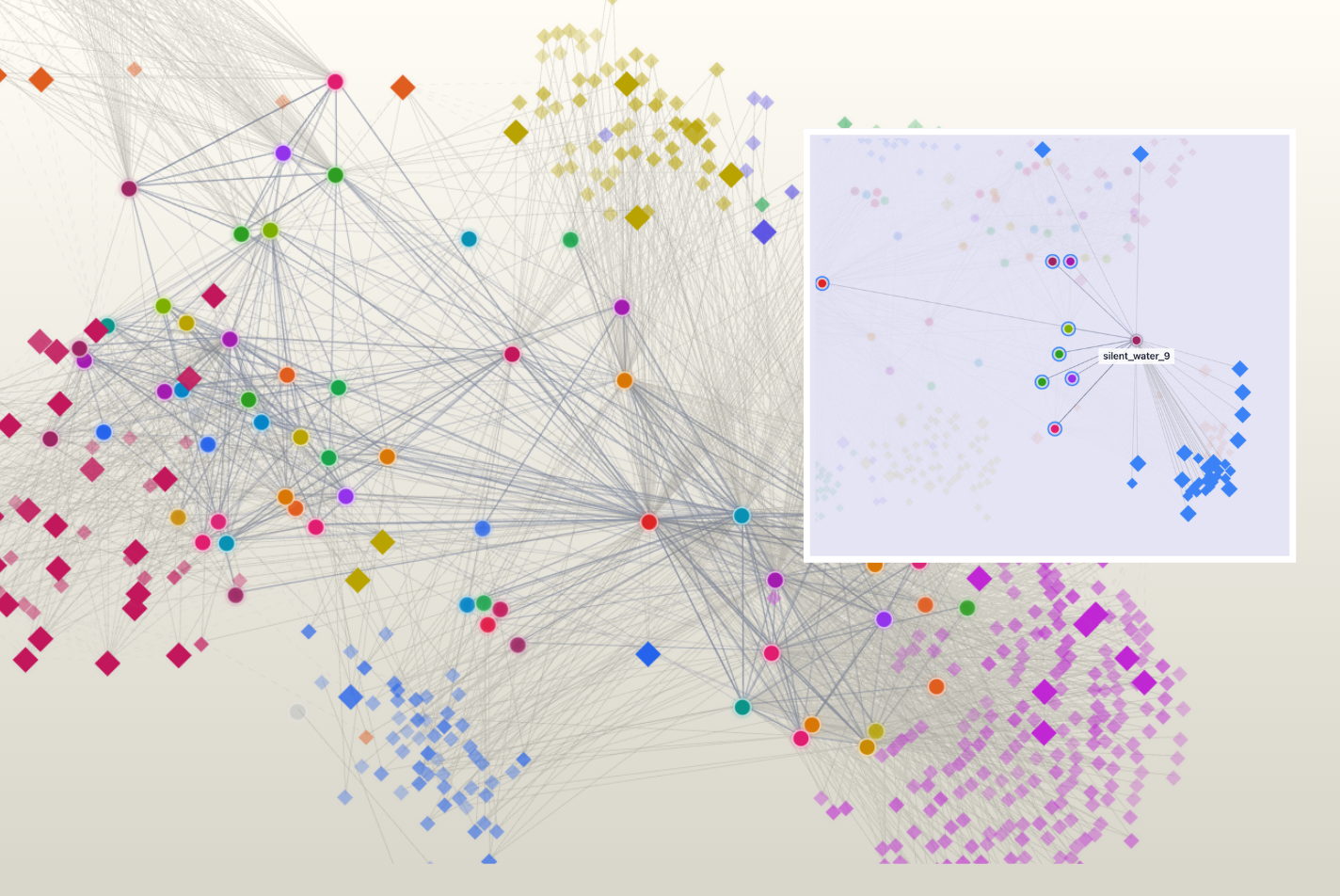
Sustainable coordination in research labs via graph-enabled idea boards
Our 'graph-enabled idea board' serves as a hub for capturing excess research ideas, allocating microprojects, and properly attributing credit. We'd like to investigate its potential for enabling newcomers to quickly and effectively contribute to ongoing projects.
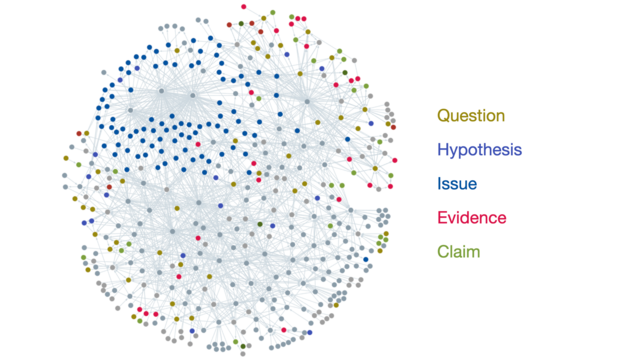
How to build social connections on a remote team
Virtual team building is tough. Here are 7 ways you can build social connections on a remote team, even from afar. I’ll be shocked if you’re shocked: Building social connections on a remote team is…

Involuntary collaboration: a strategy for decentralized science
How your best co-worker, might be someone you’ll never meet

Technology Cooperatives In The Movement - Where Are We Now?
Tech worker cooperatives have the potential to provide particularly crucial infrastructure for the communication and coordination necessary for a liberatory movement and a robust and just economy.

Beyond the Individual: Understanding the Evolution of Collective Intelligence
This chapter outlines the evolution of collective intelligence, starting from its ancient roots and concluding with modern digital platforms. It discusses intelligence theories, project examples, and the impact of technology on collaborative efforts. Key focuses include the role of the internet and online communities in boosting our collective IQ, with a particular emphasis on Douglas Engelbart's contributions and the open-source movement, as exemplified by Linux's development. The chapter examines how digital transformation has facilitated new forms of community and knowledge sharing, significantly influencing fields such as management, decision-making, and organizational learning. Various scholars and their definitions of CI are discussed, including Pierre Lévy's vision of universally distributed intelligence and the concept of swarm intelligence in biological sciences. We then move on to practically implemented CI projects, exploring crowdsourcing as a manifestation of CI in business and social projects and examining possibilities of harnessing the wisdom of crowds for problem-solving and innovation. The chapter concludes with a presentation of the current state of collective intelligence academic research.

Council on Technology and Social Cohesion
What if technology fostered trust and collaboration instead of driving polarization and violence? This question birthed the Council on Tech and Social Cohesion.
(PDF) Algorithmically Mediating Communication to Enhance Collective Decision-Making in Online Social Networks
PDF | Many collective decision-making contexts involve communication among group members. Sometimes this communication helps the collective reach an... | Find, read and cite all the research you need on ResearchGate

Peer Production
Peer production describes a unique form of global collaboration that is responsible for creating some of the most vital parts of the internet. Information ec...

🧭🏘️📲 Exploring a new social product for local communities
We’re seeking local partners for collaboration as we pilot new concepts and designs
Reinventing Discovery: The New Era of Networked Science
In Reinventing Discovery, Michael Nielsen argues that w…

Building Consensus Through Deliberation in Large Collaborations, Organizations, and Cooperatives
As groups grow in size, participatory decision-making becomes difficult. Can online platforms make it easier for large groups to deliberate…

Peer Production
How a unique form of working together has built—and is critical to sustain—our age of information. Peer production describes a unique form of global collaboration that is responsible for creating some of the most vital parts of the internet. Information ecosystem powerhouses like Wikipedia and the Linux operating system were founded on principles of open cooperation, and only exist today due to the contributions of thousands, and in some cases, millions of people. In Peer Production, Benjamin Mako Hill, Christian Pentzold, and Aaron Shaw describe the central role that peer production plays in today’s information environment, and how it is a much broader phenomenon than the handful of famous projects that are now household names. The book offers three core ideas: peer production functions as a critical mode of collaborative knowledge production; represents a novel type of social collaboration; and has unique advantages over previous forms of collaboration. The authors show that peer production is not just the foundation of the internet as we know it, but also the engine driving the global digital economy to generative AI. Finally, the book also charts the uncertain future of peer production as it confronts new threats and a changing digital landscape.

Frontiers In Research webinar on changes in science communication, the role of social media, and new infrastructure/tools - tomorrow (7/18) at 2 pm ET Looking forward to chatting with @ronentk.me & @joelchan86.bsky.social luma.com/7l18yyg4

Frontiers In Research: Open Science · Zoom · Luma
luma.com
