An overview of software technologies to get speed and simplicity at once. Comparing Python, C++, Cython, Numba, Julia and more.
Julia vs. Python: A comprehensive comparison
The debate between Julia and Python sparks intense discussions. Julia, known for its compiled nature, boasts remarkable speed, while…
Why Numba and Cython are not substitutes for Julia - Stochastic Lifestyle
Sometimes people ask: why does Julia need to be a new language? What about Julia is truly different from tools like Cython and Numba? The purpose of this blog post is to describe how Julia’s design gives a very different package development experience than something like Cython, and how that can lead to many more optimizations. What I really want to show is: Julia’s compilation setup is built for specialization of labor which is required for scientific progress Composition of Julia codes can utilize the compilation process to build new programs which are greater than the sum of the parts I will also explain some of the engineering tradeoffs which were made to make this happen. There are many state-of-the-art scientific computing and data science packages in Julia and what I want to describe is how these are using the more “hardcore ... READ MORE
Julia vs Numba and Cython: Looking Beyond Microbenchmarks
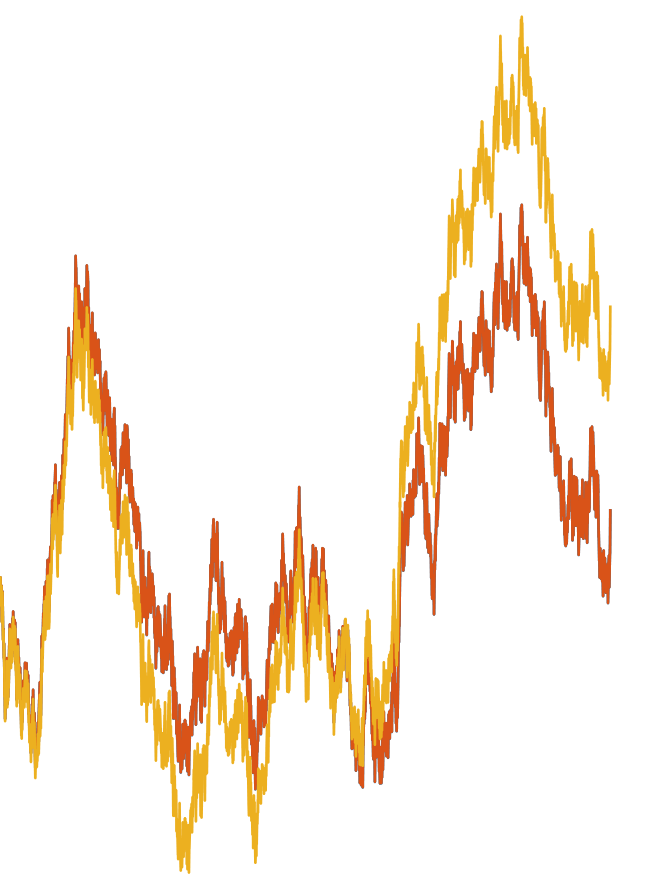
We compare the performance of Julia and Numba, for a minimal benchmark that enables to see some fundamental difference between Julia and accelerated-Python.
Please
Please is a cross-language build system with an emphasis on high performance, portability, extensibility and correctness.
Modular: The Claude C Compiler: What It Reveals About the Future of Software
Compilers occupy a special place in computer science. They're a canonical course in computer science education. Building one is a rite of passage. It forces you to confront how software actually works, by examining languages, abstractions, hardware, and the boundary between human intent and machine execution.

Python overtakes French as the most popular ‘language’ taught in primary schools
A year ago today the Computing curriculum was introduced by the government. Python now overtakes French as the most popular 'language' taught in primay schools.

madhadron - The seven programming ur-languages
I regularly hear people asking which programming language to learn, and then reeling off a list of very similar languages (“Should I learn Java, C#, C++, Python, or Ruby?”). In response I usually tell them that it doesn’t really matter, as long as they get started. There are fundamentals behind them.
Julia motivation: why weren't Numpy, Scipy, Numba, good enough?
I recently gave a Why Julia? talk to a roomful of computational fluid dynamicists and astrophysicists. (John Gibson, UNH & KITP, Julia - a high-performance dynamic programming language for technical computing, Kavli Institute, UCSB 2017-02-02). I got two main skeptical responses. One Python expert in the audience pointed out that much of what I was touting in Julia is available in Python: Numba for fast array math, %jit macros for just-in-time computation. I read up on these things afterwards a...

Speed Comparison - Programming Languages
Benchmarks run on GitHub Actions. Results may vary based on runner hardware.
aviatesk/JETLS.jl
A new language server for Julia, enabling modern, compiler-powered tooling.
Turing: Probabalistic Programming in Julia | Cameron Pfiffer | JuliaCon 2019
A Coming Revolution in Metaprogramming | Will Crichton
A single programming language is no longer enough. I predict that soon, the best programmers will fluently move between languages and the best languages will interoperate well with others. This interoperability will likely stem from strong metaprogramming facilities. I examine how we might build a programmable compiler and look at recent work toward that end.
The Next 7000 Programming Languages
Landin’s seminal paper “The next 700 programming languages” considered programming languages prior to 1966 and speculated on the next 700. Half-a-century on, we cast programming languages in a Darwinian ‘tree of life’ and explore languages, their features (genes) and language evolution from the viewpoint of ‘survival of the fittest’.