Graph embedding seeks to build a low-dimensional representation of a graph G. This low-dimensional representation is then used for various downstream tasks. One popular approach is Laplacian Eigenmaps (LE), which constructs a graph embedding based on the spectral properties of the Laplacian matrix of G. The intuition behind it, and many other embedding techniques, is that the embedding of a graph must respect node similarity: similar nodes must have embeddings that are close to one another. Here, we dispose of this distance-minimization assumption. Instead, we use the Laplacian matrix to find an embedding with geometric properties instead of spectral ones, by leveraging the so-called simplex geometry of G. We introduce a new approach, Geometric Laplacian Eigenmap Embedding, and demonstrate that it outperforms various other techniques (including LE) in the tasks of graph reconstruction and link prediction.
Graph Structure of Neural Networks
View recent discussion. Abstract: Neural networks are often represented as graphs of connections between neurons. However, despite their wide use, there is currently little understanding of the relationship between the graph structure of the neural network and its predictive performance. Here we systematically investigate how does the graph structure of neural networks affect their predictive performance. To this end, we develop a novel graph-based representation of neural networks called relational graph, where layers of neural network computation correspond to rounds of message exchange along the graph structure. Using this representation we show that: (1) a "sweet spot" of relational graphs leads to neural networks with significantly improved predictive performance; (2) neural network's performance is approximately a smooth function of the clustering coefficient and average path length of its relational graph; (3) our findings are consistent across many different tasks and datasets; (4) the sweet spot can be identified efficiently; (5) top-performing neural networks have graph structure surprisingly similar to those of real biological neural networks. Our work opens new directions for the design of neural architectures and the understanding on neural networks in general.
Linkup - SPARSEUP: Linkup's Open-Source Sparse Embedding Model
Linkup Research releases SPARSEUP, an open-source sparse embedding model under 150M parameters. SOTA on BEIR-13, sub-millisecond retrieval, Apache 2.0 license.

Partial Multi-View Clustering via Self-Supervised Network
Partial multi-view clustering is a challenging and practical research problem for data analysis in real-world applications, due to the potential data missing issue in different views. However, most existing methods have not fully explored the correlation information among various incomplete views. In addition, these existing clustering methods always ignore discovering discriminative features inside the data itself in this unsupervised task. To tackle these challenges, we propose Partial Multi-View Clustering via Self-Supervised \textbf{N}etwork (PVC-SSN) in this paper. Specifically, we employ contrastive learning to obtain a more discriminative and consistent subspace representation, which is guided by a self-supervised module. Self-supervised learning can exploit effective cluster information through the data itself to guide the learning process of clustering tasks. Thus, it can pull together embedding features from the same cluster and push apart these from different clusters. Extensive experiments on several benchmark datasets show that the proposed PVC-SCN method outperforms several state-of-the-art clustering methods.
Shared Geometry As A Rosetta Stone: Cross-Modal Alignment Without Paired Data
Multimodal representations enable zero-shot classification and retrieval, but aligning independently trained models usually requires large amounts of paired data. Yet, the Platonic Representation Hypothesis suggests that models trained on different modalities may converge spontaneously toward a shared representation geometry. But then, do we even need paired examples for cross-modal alignment? Remarkably, we show that paired examples are unnecessary for coarse cross-modal alignment. Our simple Wasserstein Procrustes method with a coarse geometric initialization aligns two disjoint embedding sets by estimating a single orthogonal map without seeing any pairs. Across datasets, modalities, and unimodal models, we show that we can consistently align independently trained representations without pairs, and standard geometric alignment metrics accurately predict when this is possible. Nevertheless, we can naturally benefit from paired examples. In the very few-pair regime, our method substantially outperforms existing ones, while staying competitive with pair-based methods with more added examples. Finally, we demonstrate that the resulting alignments can enable text-to-image generation without paired examples. These results show that independently trained models often share enough geometry to establish cross-modal correspondence with little or no paired data.

DR Group
For high-dimensional data, dimensionality reduction (DR) methods have been invaluable tools for human understanding, as they can map datasets into two or three dimensions for visualization, providing an intuitive way to understand the data. In recent years, tons of DR methods for data visualization have been proposed, and some are much better than others. In this blog post, we explore several DR methods, discuss how to determine which methods are effective, and explain why some are better than others.
Fast Embeddings on GPUs
Fast and accurate search is vital to all of Perplexity, from Search and Computer to our API Platform. Behind the scenes, the heavy lifting is done by embedding

Manifold hypothesis
The manifold hypothesis posits that many high-dimensional data sets that occur in the real world actually lie along low-dimensional latent manifolds inside that high-dimensional space.[1][2][3][4] As a consequence of the manifold hypothesis, many data sets that appear to initially require many variables to describe, can actually be described by a comparatively small number of variables, linked to the local coordinate system of the underlying manifold. It is suggested that this principle underpins the effectiveness of machine learning algorithms in describing high-dimensional data sets by considering a few common features.
Turán's theorem, from edges to eigenvalues
Turán's theorem is the founding result of extremal graph theory: among all graphs on $n$ vertices with no clique on $r+1$ vertices, the balanced complete multipartite graph has the most edges. We present the theorem through five classical proofs and follow one of them, the variational argument of Motzkin and Straus, upward into spectral graph theory, where Nikiforov's spectral strengthening returns and proves the original theorem in two lines. All mathematics herein is known; the contribution is the form of its presentation.
A 16× Smaller Index for EmbeddingGemma 2
EmbeddingGemma 2’s one advertised way to shrink its vectors, keeping 128 of 768 dimensions, loses about 0.06 nDCG@10. Storing all 768 at 2 bits each is 16× smaller with no measurable loss on SciFact or NFCorpus.
The Compressive Knowledge Graph Hypothesis: Which Graph Facts Matter for Scientific Hypothesis Generation?
Knowledge graphs (KGs) can provide structured scientific context to language models, but it remains unclear which graph facts actually shape the generated hypotheses. We study KG-guided hypothesis generation for battery materials across Mistral-7B, Llama-3.1-70B, and Gemini 2.5 Flash. We perturb local KGs by varying density, ontology richness, topology, and control structure, and evaluate outputs with both provided-graph and fixed-reference metrics. Across models, KG utility is selective and model-dependent: graph context changes outputs, but no-KG outputs also recover substantial graph content from model priors. Compact top-kk subgraphs often approximate full-KG behavior, including when claimed-outcome triples are held out. At the same time, compression is not unique to one semantic ranking rule, random and topology-based subsets can also recover much of the signal. These results support a redundancy-aware Compressive KG hypothesis: useful KG signal is often recoverable from compact, scientifically structured subgraphs rather than requiring the full local graph.
The 34th International Symposium on Graph Drawing and Network Visualization
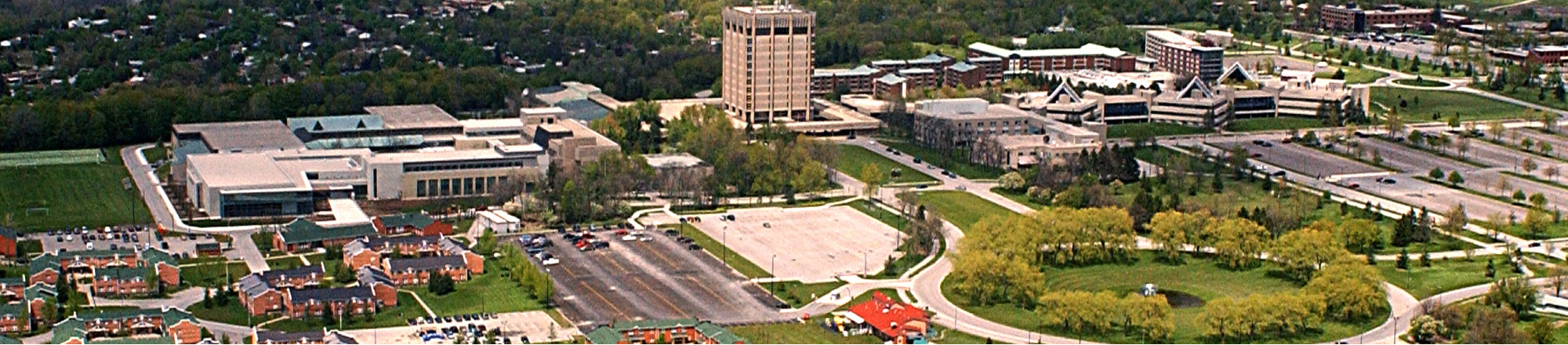
The 34th International Symposium on Graph Drawing and Network Visualization will be held at Brock University in St. Catharines, Ontario, Canada from August 17-21, 2026. A PhD school will take place on August 17-18, 2026.

The Cost of Representing Higher-Order Dynamics on Graphs: A Theoretical Framework
Can graphs represent the dynamics of higher-order (multi-body) interactions, or are hypergraphs necessary? We decompose network dynamics into three components: the combinatorial structure (graph or hypergraph), per-edge coupling functions, and per-node aggregation functions. Within this framework, we prove that graphs can always reproduce the trajectories of any hypergraph dynamics by absorbing the coupling logic into the aggregation. This generalizes a recent result by Peixoto et al., who showed the same under the assumption of flat dynamics. However, the graph representation pays a price in parsimony: when the coupling and aggregation functions are polynomials of degree at most D, the graph aggregation requires Θ(k^D/D!) parameters relative to the hypergraph alternative, where k is the interaction size. Without symmetry, the comparison can reverse. The framework also clarifies two other recent contributions by Moutuou and by Lacasa, and identifies overlooked modeling degrees of freedom including partial interaction symmetries and the role of non-additive aggregation.
A survey of community search over big graphs
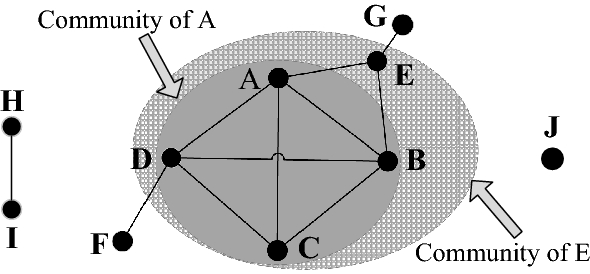
With the rapid development of information technologies, various big graphs are prevalent in many real applications (e.g., social media and knowledge bases). An important component of these graphs is the network community. Essentially, a community is a group of vertices which are densely connected internally. Community retrieval can be used in many real applications, such as event organization, friend recommendation, and so on. Consequently, how to efficiently find high-quality communities from big graphs is an important research topic in the era of big data. Recently, a large group of research works, called community search, have been proposed. They aim to provide efficient solutions for searching high-quality communities from large networks in real time. Nevertheless, these works focus on different types of graphs and formulate communities in different manners, and thus, it is desirable to have a comprehensive review of these works. In this survey, we conduct a thorough review of existing community search works. Moreover, we analyze and compare the quality of communities under their models, and the performance of different solutions. Furthermore, we point out new research directions. This survey does not only help researchers to have better understanding of existing community search solutions, but also provides practitioners a better judgment on choosing the proper solutions.