

Can graphs represent the dynamics of higher-order (multi-body) interactions, or are hypergraphs necessary? We decompose network dynamics into three components: the combinatorial structure (graph or hypergraph), per-edge coupling functions, and per-node aggregation functions. Within this framework, we prove that graphs can always reproduce the trajectories of any hypergraph dynamics by absorbing the coupling logic into the aggregation. This generalizes a recent result by Peixoto et al., who showed the same under the assumption of flat dynamics. However, the graph representation pays a price in parsimony: when the coupling and aggregation functions are polynomials of degree at most D, the graph aggregation requires Θ(k^D/D!) parameters relative to the hypergraph alternative, where k is the interaction size. Without symmetry, the comparison can reverse. The framework also clarifies two other recent contributions by Moutuou and by Lacasa, and identifies overlooked modeling degrees of freedom including partial interaction symmetries and the role of non-additive aggregation.
The rich are loopy: a spectral framework for loop structure in the rich club
The rich club coefficient $\phi(k)$ quantifies whether high-degree nodes interconnect more densely than expected, but it is blind to the structure of those interconnections and offers no principled way to select the degree threshold $k$. We introduce the *cycle core* $H_k$, the maximal subgraph of vertices with degree at least $k$ that forms cycles among themselves. The nested sequence $H_1 \supseteq H_2 \supseteq \cdots$ reveals how the cycle core evolves as the degree threshold increases, capturing structure that $\phi(k)$ cannot see. We develop two spectral tools for this sequence. The first is structural: the *$k$-blocking operator* $\mathbf{M}_k$ generalizes the non-backtracking matrix by blocking $k - 1$ directions at each node. We prove that its spectrum is equivalent to that of a modified non-backtracking matrix weighted with a specific function of the nodes' degrees. Thus, $\mathbf{M}_k$ couples cycle structure with the degree sequence of the graph. We show the spectral radius of $\mathbf{M}_k$ peaks at an intrinsic threshold $k^*$, yielding the *optimal rich club* $H_{k^*}$ without null models or parameter tuning. The second tool is dynamical: the $k$-blocking walk defines a sub-stochastic Markov chain whose leading eigenvalue $\lambda_1(k)$ measures how long a process can persist on the cycle core before being expelled to the periphery. We evaluate the framework on fifteen networks spanning different domains, wherein $H_{k^*}$ closely recovers the published rich clubs.
Higher-Order Knowledge Representations for Agentic Scientific Reasoning
Scientific inquiry requires systems-level reasoning that integrates heterogeneous experimental data, cross-domain knowledge, and mechanistic evidence into coherent explanations. While Large Language Models (LLMs) offer inferential capabilities, they often depend on retrieval-augmented contexts that lack structural depth. Traditional Knowledge Graphs (KGs) attempt to bridge this gap, yet their pairwise constraints fail to capture the irreducible higher-order interactions that govern emergent physical behavior. To address this, we introduce a methodology for constructing hypergraph-based knowledge representations that faithfully encode multi-entity relationships. Applied to a corpus of ≈\approx 1,100 manuscripts on biocomposite scaffolds, our framework constructs a global hypergraph of 161,172 nodes and 320,201 hyperedges, revealing a scale-free topology (power law exponent ≈\approx 1.23) organized around highly connected conceptual hubs. This representation prevents the combinatorial explosion typical of pairwise expansions and explicitly preserves the co-occurrence context of scientific formulations. We further demonstrate that equipping agentic systems with hypergraph traversal tools, specifically using node-intersection constraints, enables them to bridge semantically distant concepts. By exploiting these higher-order pathways, the system successfully generates grounded mechanistic hypotheses for novel composite materials, such as linking cerium oxide to PCL scaffolds via chitosan intermediates. This work establishes a “teacherless” agentic reasoning system where hypergraph topology acts as a verifiable guardrail, accelerating scientific discovery by uncovering relationships obscured by traditional graph methods.
A Gentle Introduction To Graph Theory
So many things in the world would have never come into existence if there hadn’t been a problem that needed solving. This truth applies to…
Interactions that reshape the interfaces of the interacting parties
Polynomial functors model systems with interfaces: each polynomial specifies the outputs a system can produce and, for each output, the inputs it accepts. The bicategory $\mathbb{O}\mathbf{rg}$ of dynamic organizations \cite{spivak2021learners} gives a notion of state-driven interaction patterns that evolves over time, but each system's interface remains fixed throughout the interaction. Yet in many systems, the outputs sent and inputs received can reshape the interface itself: a cell differentiating in response to chemical signals gains or loses receptors; a sensor damaged by its input loses a channel; a neural network may grow its output resolution during training. Here we introduce *polynomial trees*, elements of the terminal $(u\triangleleft u)$-coalgebra where $u$ is the polynomial associated to a universe of sets, to model such systems: a polynomial tree is a coinductive tree whose nodes carry polynomials, and in which each round of interaction -- an output chosen and an input received -- determines a child tree, hence the next interface. We construct a monoidal closed category $\mathbf{PolyTr}$ of polynomial trees, with coinductively-defined morphisms, tensor product, and internal hom. We then build a bicategory $\mathbb{O}\mathbf{rgTr}$ generalizing $\mathbb{O}\mathbf{rg}$, whose hom-categories parametrize morphisms by state sets with coinductive action-and-update data. We provide a locally fully faithful functor $\mathbb{O}\mathbf{rg}\to\mathbb{O}\mathbf{rgTr}$ via constant trees, those for which the interfaces do not change through time. We illustrate the generalization by suggesting a notion of progressive generative adversarial networks, where gradient feedback determines when the image-generation interface grows to a higher resolution.

Group size effects and collective misalignment in LLM multi-agent systems
Multi-agent systems of large language models (LLMs) are rapidly expanding across domains, introducing dynamics not captured by single-agent evaluations. Yet, existing work has mostly contrasted the behavior of a single agent with that of a collective of fixed size, leaving open a central question: How does group size shape dynamics? Here, we move beyond this dichotomy and systematically explore outcomes across the full range of group sizes. We focus on multi-agent misalignment, building on recent evidence that interacting LLMs playing a simple coordination game can generate collective biases absent in individual models. First, we show that collective bias is a deeper phenomenon than previously assessed: Interaction can amplify individual biases, introduce new ones, or override model-level preferences. Second, we demonstrate that group size affects the dynamics in a nonlinear way, revealing model-dependent dynamical regimes. Finally, we develop a mean-field analytical approach and show that, above a critical population size, simulations converge to deterministic predictions that expose the basins of attraction of competing equilibria. These findings establish group size as a key driver of multi-agent dynamics and highlight the need to consider population-level effects when deploying LLM-based systems at scale.
Turán's theorem, from edges to eigenvalues
Turán's theorem is the founding result of extremal graph theory: among all graphs on $n$ vertices with no clique on $r+1$ vertices, the balanced complete multipartite graph has the most edges. We present the theorem through five classical proofs and follow one of them, the variational argument of Motzkin and Straus, upward into spectral graph theory, where Nikiforov's spectral strengthening returns and proves the original theorem in two lines. All mathematics herein is known; the contribution is the form of its presentation.
Growing Graphs
Experimental simulation of emergent complexity through graph-rewriting automata.
An LLM's Perspective: What It's Actually Like to Receive These Instructions | Notion
graph TB subgraph

Polynomial Functors: A Mathematical Theory of Interaction
This monograph is a study of the category of polynomial endofunctors on the category of sets and its applications to modeling interaction protocols and dynamical systems. We assume basic categorical background and build the categorical theory from the ground up, highlighting pictorical techniques and concrete examples to build intuition and provide applications.
The 34th International Symposium on Graph Drawing and Network Visualization
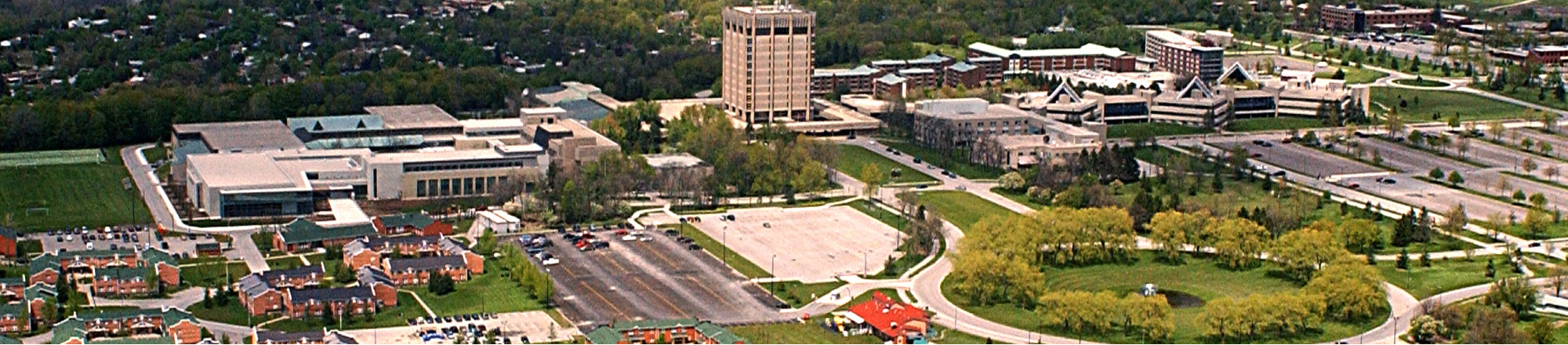
The 34th International Symposium on Graph Drawing and Network Visualization will be held at Brock University in St. Catharines, Ontario, Canada from August 17-21, 2026. A PhD school will take place on August 17-18, 2026.
GitHub - HEmile/juggl: An interactive, stylable and expandable graph view for Obsidian. Juggl is designed as an advanced 'local' graph view, where you can juggle all your thoughts with ease.
An interactive, stylable and expandable graph view for Obsidian. Juggl is designed as an advanced 'local' graph view, where you can juggle all your thoughts with ease. - GitHub - H...
Brad's Thoughts on the Social Graph
I've been thinking a lot about the social graph for awhile now: aggregating the graph, decentralization, social network portability, etc.
One Crowd, Three Cascades: Information Diffusion in LLM-Agent Simulations Is Governed by Serialization, Not Society
LLM-agent simulations are increasingly used to study how information spreads through a population, and are validated by matching macroscopic cascade statistics—final reach, structural virality, cascade-size shape—to real diffusion data. We argue this cannot certify fidelity, and show it empirically. We measure an LLM agent's exposure-response curve—its probability of adopting given $k$ of $d$ active neighbors—then hold that social fact fixed and change only its serialization: a count ("3 of 10"), a fraction ("30%"), or an enumeration of names. The encodings are semantically identical, so a faithful mechanism must be invariant to them. It is not. Across five scenarios on a local model, the inferred contagion class (simple vs. complex) flips with serialization in four of five, and the final epidemic size on a fixed network and seed changes by a median factor of $1.9\times$ (over $100\times$ when an enumerated list collapses adoption); aggregate encodings even produce a non-monotonic reversal at saturation that no contagion model (SIR, independent cascade, linear threshold) admits. Since one can reach almost any target cascade by choosing the encoding, matching a macroscopic observable does not identify a social mechanism. We turn semantic invariance into a cheap, API-free serialization-invariance diagnostic: rerun under equivalent serializations of neighbor state; if the cascade diverges, the result is a typographical artifact, not a social dynamic. All experiments run on small local models on a laptop.
Span-reachability querying in large temporal graphs
Reachability is a fundamental problem in graph analysis. In applications such as social networks and collaboration networks, edges are always associated with timestamps. Most existing works on reachability queries in temporal graphs assume that two vertices are related if they are connected by a path with non-decreasing timestamps (time-respecting) of edges. This assumption fails to capture the relationship between entities involved in the same group or activity with no time-respecting path connecting them. In this paper, we define a new reachability model, called span-reachability, designed to relax the time order dependency and identify the relationship between entities in a given time period. We adopt the idea of two-hop cover and propose an index-based method to answer span-reachability queries. Several optimizations are also given to improve the efficiency of index construction and query processing. We conduct extensive experiments on eighteen real-world datasets to show the efficiency of our proposed solution.

Truly Subquadratic 3SUM and Truly Subcubic APSP via Triangles in Sparse Lopsided Graphs
We give the first polynomial improvements over the textbook algorithms for $3$SUM and All-Pairs Shortest Paths (APSP): we show how to deterministically solve $3$SUM on $n$ integers of polynomial size in $O(n^{1.9992})$ time and APSP on directed $n$-vertex graphs with polynomially bounded integer weights in $O(n^{2.9995})$ time. This refutes the $3$SUM and APSP hypotheses. Using known reductions, we also refute the real-valued versions of the $3$SUM and APSP hypotheses, the Exact Triangle hypothesis, the Zero-Weight $k$-Clique hypotheses, and the three rectangular hinted Online Matrix--Vector conjectures of van den Brand, Nanongkai, and Saranurak, and we give polynomial speedups for a variety of other problems. All of these results follow from a single new algorithm for thin matrix products. Let $X$ be an $N\times D$ integer matrix and $Y$ a $D\times N$ integer matrix with $D\le N^{1/18}$, and let $W$ be any set of at most $N^2/\sqrt D$ positions. We compute the entries $(XY)[I,J]$, $(I,J)\in W$, in $O(N^2/D^{0.063})$ operations, which is polynomially less than the time needed to write down $XY$ or to compute $N^2/\sqrt D$ inner products one by one. We design this algorithm by modifying a variant of Coppersmith's rectangular matrix multiplication algorithm, built from a ten-multiplication identity of Schönhage, to perform only the operations needed for the entries in $W$, and show that few operations are needed. Interpreted as a graph algorithm, this solves the All-Edges Sparse Triangle problem in truly subquadratic time on sparse lopsided tripartite graphs where two parts have $n$ vertices but one part has $n^{\varepsilon}$ vertices for $\varepsilon<0.12$. By known reductions, Exact Triangle, and hence $3$SUM and APSP, reduce to this problem. We also give a data structure version that answers queries for single entries of $XY$, not known in advance.
