


The 2030 Agenda for Sustainable Development was adopted by all United Nations Member States in 2015. It is built around 17 Sustainable Development Goals (SDGs) and 169 targets that represent an ambitious plan for achieving sustainable development and serves as the basis for countries to shape their national policies and priorities. At the heart of the agenda is the recognition that truely sustainable development must combine economic growth and poverty alleviation with strategies that improve health and education, reduce inequality, while addressing climate change and protecting nature. Thus, the interlinked nature of the SDGs calls for an integrated approach to policy decisions. As the international statistical standard for measuring the environment and its relationship with the economy, the SEEA is well positioned to support integrated policies based on a better understanding of the interactions and trade-offs between the environment and economy. Progress toward the 17 goals and 169 targets of the 2030 Agenda are monitored through 244 indicators, entailing the collection of substantial amounts of data. The UN Statistical Commission (UNSC) has encouraged the Inter-Agency and Expert Group on SDG Indicators (IAEG-SDGs), the body tasked with developing and implementing the global indicator framework for the 2030 Agenda, to consider existing standards and frameworks that can improve SDG monitoring, including the System of Environmental-Economic Accounting (SEEA). System of Environmental-Economic Accounting (SEEA). Recently, the Secretariat of the Convention on Biological Diversity (CBD), UN Environment and the UN Statistics Division brought a proposal on upgrading the status of Indicator 15.9.1 to the tenth meeting of the IAEG-SDGs, where the group agreed to the proposal and reclassified the indicator from Tier III to Tier II. The United Nations Committee of Experts on Environmental-Economic Accounting (UNCEEA), an intergovernmental body established by the UNSC to provide overall vision, coordination, prioritization and direction in the field of environmental economic accounting and supporting statistics, has assessed that currently 40 indicators for nine Sustainable Development Goals can be informed by the SEEA. The SEEA is particularly well-suited for deriving ratio indicators that compare environmental and economic information.
Mapping citizen science contributions to the UN sustainable development goals
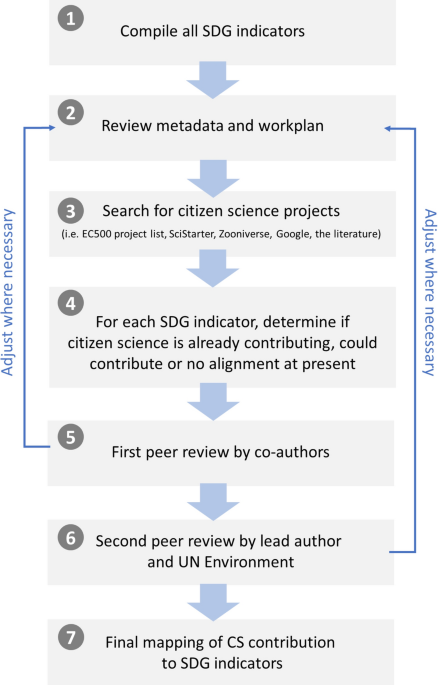
The UN Sustainable Development Goals (SDGs) are a vision for achieving a sustainable future. Reliable, timely, comprehensive, and consistent data are critical for measuring progress towards, and ultimately achieving, the SDGs. Data from citizen science represent one new source of data that could be used for SDG reporting and monitoring. However, information is still lacking regarding the current and potential contributions of citizen science to the SDG indicator framework. Through a systematic review of the metadata and work plans of the 244 SDG indicators, as well as the identification of past and ongoing citizen science initiatives that could directly or indirectly provide data for these indicators, this paper presents an overview of where citizen science is already contributing and could contribute data to the SDG indicator framework. The results demonstrate that citizen science is “already contributing” to the monitoring of 5 SDG indicators, and that citizen science “could contribute” to 76 indicators, which, together, equates to around 33%. Our analysis also shows that the greatest inputs from citizen science to the SDG framework relate to SDG 15 Life on Land, SDG 11 Sustainable Cities and Communities, SDG 3 Good Health and Wellbeing, and SDG 6 Clean Water and Sanitation. Realizing the full potential of citizen science requires demonstrating its value in the global data ecosystem, building partnerships around citizen science data to accelerate SDG progress, and leveraging investments to enhance its use and impact.
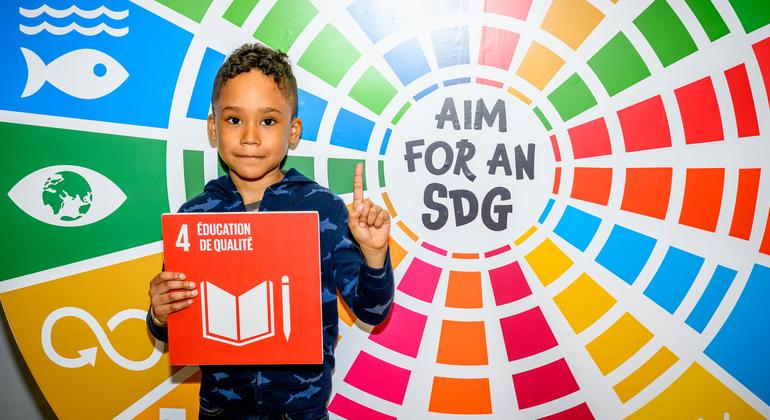
Halfway to 2030, world ‘nowhere near’ reaching Global Goals, UN warns
The world is “woefully off track” to achieve the Sustainable Development Goals (SDGs) by the 2030 deadline, top United Nations officials said on Monday, as ministers and policy makers gathered in New York to examine how countries can get back on track and make the transformative development agenda a reality.
Deliberation forums: Australasia Pacific Extension Network (APEN) International Conference
This output contributes to the following UN Sustainable Development Goals (SDGs)
The Portfolio Ideal Worker: Insecurity and Inequality in the New Economy
This output contributes to the following UN Sustainable Development Goals (SDGs)
Summary for policymakers of the global assessment report on biodiversity and ecosystem services
IPBES is an independent intergovernmental body comprising over 130 member Governments. Established by Governments in 2012, IPBES provides policymakers with objective scientific assessments about the state of knowledge regarding the planet’s biodiversity, ecosystems and the contributions they make to people, as well as options and actions to protect and sustainably use these vital natural assets. The IPBES Global Assessment of Biodiversity and Ecosystem Services represents the landmark product of the first work programme of IPBES (2014-2018). The Global Assessment was initiated following a decision from the IPBES Plenary at its fourth session (IPBES 4, Kuala Lumpur, 2016), and considered by the IPBES Plenary at its seventh session (IPBES 7, Paris, 2019). It is composed of a summary for policymakers, which was approved at IPBES 7, and six chapters, which were accepted at IPBES 7.
Key Principles for the Intergovernmental Science–Policy Panel on Chemicals and Waste
In 2021, the United Nations Environment Programme (UNEP) recognized chemical pollution as a planetary crisis tantamount to climate change and biodiversity
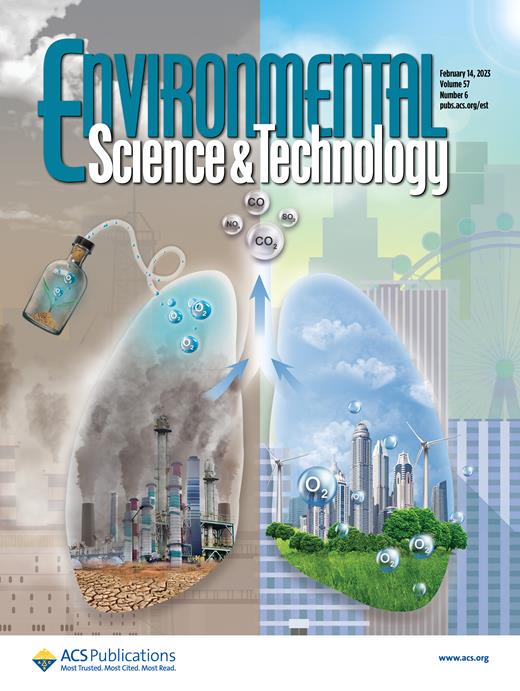
IPBES Nexus Assessment: Summary for Policymakers
Summary for Policymakers of the Thematic Assessment Report on the Interlinkages among Biodiversity, Water, Food and Health of the Intergovernmental Science-Policy Platform on Biodiversity and Ecosystem Services. The IPBES Nexus Assessment was initiated following a decision from the IPBES Plenary at its eigth session (IPBES-8) in June 2021. The summary for policymakers was approved by the IPBES Plenary at its eleventh session (IPBES-11) in December 2024.
Improving and Expanding Estimates of the Global Burden of Disease Due to Environmental Health Risk Factors
Abstract Background: The Global Burden of Disease (GBD) study, coordinated by the Institute for Health Metrics and Evaluation (IHME), produces influential, data-driven estimates of the burden of disease and premature death due to major risk factors. Expanded quantification of disease due to environmental health (EH) risk factors, including climate change, will enhance accuracy of GBD estimates, which will contribute to developing cost-effective policies that promote prevention and achieving Sustainable Development Goals. Objectives: We review key aspects of the GBD for the EH community and introduce the Global Burden of Disease–Pollution and Health Initiative (GBD-PHI), which aims to work with IHME and the GBD study to improve estimates of disease burden attributable to EH risk factors and to develop an innovative approach to estimating climate-related disease burden—both current and projected. Methods: We discuss strategies for improving GBD quantification of specific EH risk factors, including air pollution, lead, and climate change. We highlight key methodological challenges, including new EH risk factors, notably evidence rating and global exposure assessment. Discussion: A number of issues present challenges to the scope and accuracy of current GBD estimates for EH risk factors. For air pollution, minimal data exist on the exposure–risk relationships associated with high levels of pollution; epidemiological studies in high pollution regions should be a research priority. For lead, the GBD’s current methods do not fully account for lead’s impact on neurodevelopment; innovative methods to account for subclinical effects are needed. Decisions on inclusion of additional EH risk–outcome pairs need to be guided by findings of systematic reviews, the size of exposed populations, feasibility of global exposure estimates, and predicted trends in exposures and diseases. Neurotoxicants, endocrine-disrupting chemicals, and climate-related factors should be high priorities for incorporation into upcoming iterations of the GBD study. Enhancing the scope and methods will improve the GBD’s estimates and better guide prevention policy. https://doi.org/10.1289/EHP5496
Global assessment report on biodiversity and ecosystem services of the Intergovernmental Science-Policy Platform on Biodiversity and Ecosystem Services
IPBES is to perform regular and timely assessments of knowledge on biodiversity and ecosystem services and their interlinkages at the global level. Also addressing an invitation by the Conference of the Parties of the Convention on Biological Diversity (CBD) to prepare a global assessment of biodiversity and ecosystem services building, inter alia, on its own and other relevant regional, subregional and thematic assessments, as well as on national reports. The overall scope of the assessment is to assess the status and trends with regard to biodiversity and ecosystem services, the impact of biodiversity and ecosystem services on human well-being and the effectiveness of responses, including the Strategic Plan and its Aichi Biodiversity Targets. It is anticipated that this deliverable will contribute to the process for the evaluation and renewal of the Strategic Plan for Biodiversity and its Aichi Biodiversity Targets. The IPBES Global Assessment on Biodiversity and Ecosystem Services is composed of 1) a Summary for Policymakers (SPM), approved by the IPBES Plenary at its 7th session in May 2019 in Paris, France (IPBES-7); and 2) a set of six Chapters, accepted by the IPBES Plenary.
Post-growth: the science of wellbeing within planetary boundaries
There are increasing concerns that continued economic growth in high-income countries might not be environmentally sustainable, socially beneficial, or economically achievable. In this Review, we explore the rapidly advancing field of post-growth research, which has evolved in response to these concerns. The central idea of post-growth is to replace the goal of increasing GDP with the goal of improving human wellbeing within planetary boundaries. Key advances discussed in this Review include: the development of ecological macroeconomic models that test policies for managing without growth; understanding and reducing the growth dependencies that tie social welfare to increasing GDP in the current economy; and characterising the policies and provisioning systems that would allow resource use to be reduced while improving human wellbeing.

Doughnut of social and planetary boundaries monitors a world out of balance
The doughnut-shaped framework of social and planetary boundaries (the ‘Doughnut’) provides a concise visual assessment of progress towards the goal of meeting the needs of all people within the means of the living planet1–3. Here we present a renewed Doughnut framework with a revised set of 35 indicators that monitor trends in social deprivation and ecological overshoot over the 2000–2022 period. Although global gross domestic product (GDP) has more than doubled, our median results show a modest achievement in reducing human deprivation that would have to accelerate fivefold to meet the needs of all people by 2030. Meanwhile, the increase in ecological overshoot would have to stop immediately and accelerate nearly two times faster towards planetary boundaries to safeguard Earth-system stability by 2050. Disaggregating these global findings shows that the richest 20% of nations, with 15% of the global population, contribute more than 40% of annual ecological overshoot, whereas the poorest 40% of countries, with 42% of the global population, experience more than 60% of the social shortfall. These trends and inequalities reaffirm the case for overcoming the dependence of nations on perpetual GDP growth4,5 and reorienting towards regenerative and distributive economic activity—within and between nations—that assigns priority to human needs and planetary integrity.

Toward a New Global Security Paradigm. Task Force 06: Strengthening Multilateralism and Global Governance
Amidst increasing global connectivity and accelerating global change, the global security framework has become insufficient, contributing to a crippling dysfunctionality in international cooperation. The current security framework, focused almost exclusively on a narrow notion of military security, is insufficient to address escalating ‘threats without enemy,’ such as climate change, biodiversity loss, and pollution, which increasingly endanger the lives and dignity of all populations. This policy brief recommends a global social-ecological security framework, rooted in the science informed understanding of social and biophysical realities, to address the evolving needs and challenges of the 21st century. Our recommendations to operationalise this paradigm include: a reinvigorated commitment to multilateralism and peace as a pre-requisite; public participation in shaping the new inclusive international governance framework; development aid and green finance as key levers; a focus on building resilience (especially food security); and, strengthening anticipation of and response to interconnected global shocks. We propose a G20-initiated formation of a high-level working group to catalyse the creation of this new framework. Such a process must involve relevant stakeholders, leveraging new possibilities afforded by technological tools (such as AI). Implementing this ambitious agenda will be challenging, but continuing on a business as- usual trajectory is a ‘lose-lose’ spiral likely to trigger social and ecological crises. Bold leadership from the G20 is needed more than ever to reinvent multilateralism and thus ensure sustainable well-being for all.
RETRACTED ARTICLE: The economic commitment of climate change
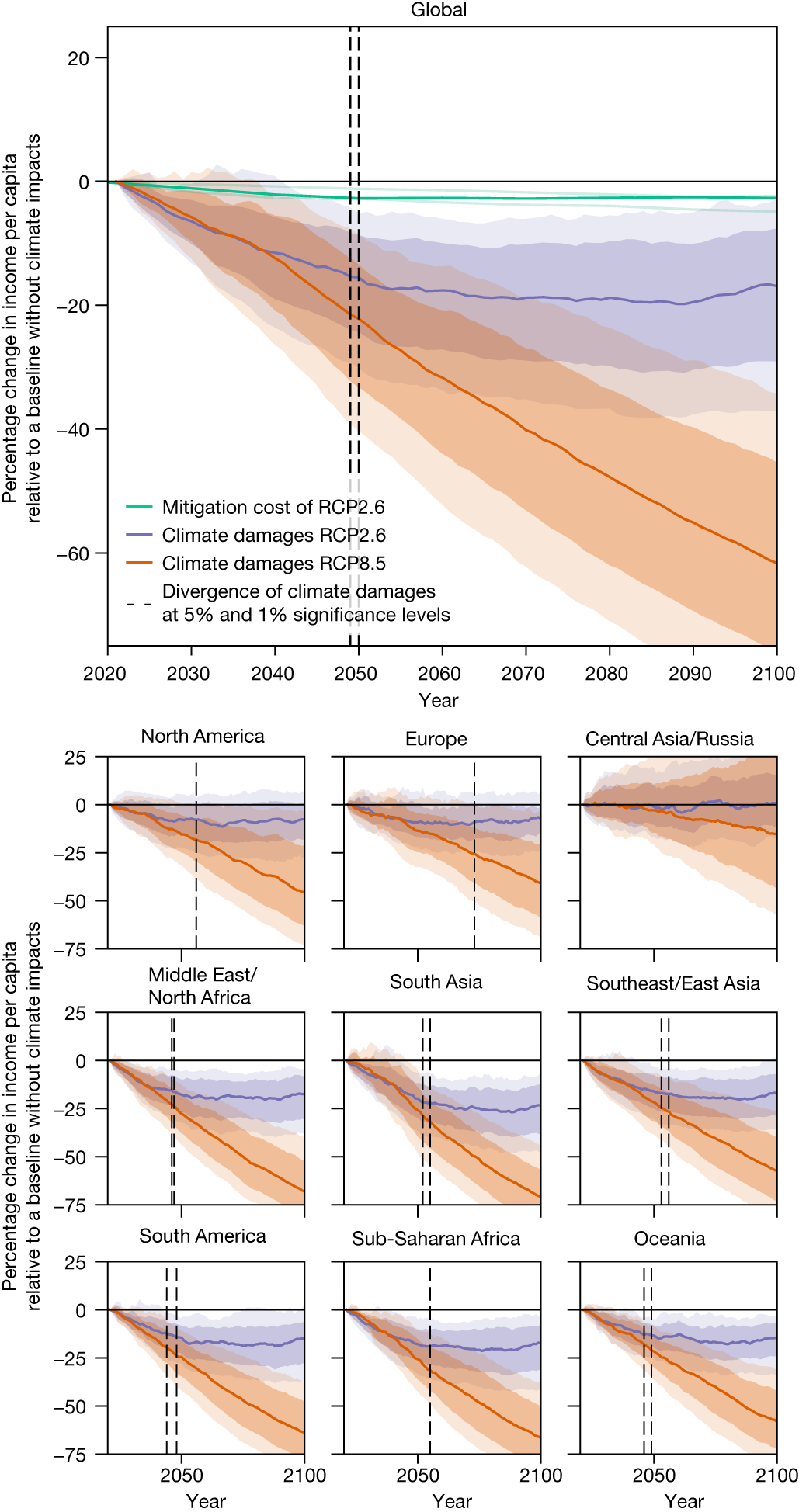
Global projections of macroeconomic climate-change damages typically consider impacts from average annual and national temperatures over long time horizons1–6. Here we use recent empirical findings from more than 1,600 regions worldwide over the past 40 years to project sub-national damages from temperature and precipitation, including daily variability and extremes7,8. Using an empirical approach that provides a robust lower bound on the persistence of impacts on economic growth, we find that the world economy is committed to an income reduction of 19% within the next 26 years independent of future emission choices (relative to a baseline without climate impacts, likely range of 11–29% accounting for physical climate and empirical uncertainty). These damages already outweigh the mitigation costs required to limit global warming to 2 °C by sixfold over this near-term time frame and thereafter diverge strongly dependent on emission choices. Committed damages arise predominantly through changes in average temperature, but accounting for further climatic components raises estimates by approximately 50% and leads to stronger regional heterogeneity. Committed losses are projected for all regions except those at very high latitudes, at which reductions in temperature variability bring benefits. The largest losses are committed at lower latitudes in regions with lower cumulative historical emissions and lower present-day income.
Metrics for biodiversity and health policy integration
Despite over a decade of progressive commitments from parties to the Convention on Biological Diversity (CBD), integrated biodiversity and health indicators and monitoring mechanisms remain limited, hampering achievement of the sustainable development goals and improvements in health and well-being. Adoption of the Kunming-Montreal Global Biodiversity Framework (2022) and the Global Action Plan on Biodiversity and Health (2024) provide a renewed entry point to shape the way governments approach health and wellbeing and address the environmental burden of disease. This is a critical opportunity that scholars at the health-environment nexus should not miss. This Perspective outlines building blocks to mobilize the field, starting with essential terminology and a scope of metrics needed by governments. We then evaluate elements to be considered in the construction of integrated metrics, including concepts, overarching challenges, a review of scientific hypotheses from an ecological perspective, as well as a set of principles and characteristics for indicators. To raise awareness across parallel communities of practice working at the health-environment nexus, we then briefly examine four approaches to integrated metrics developed by: conservationists, Indigenous scholars, One Health experts, and planetary health experts. We conclude with actionable steps to enhance governance, mobilize funding, and apply integrated indicators in national and global strategies. A broad science community is needed to support national governments to meet global commitments to address biodiversity loss and the environmental burden of disease concurrently. The overall aim of this paper is to contribute to addressing biodiversity loss by effectively linking policy and transdisciplinary practice at the health-environment nexus.
IPBES Transformative Change Assessment: Summary for Policymakers
Summary for Policymakers of the Thematic Assessment Report on the Underlying Causes of Biodiversity Loss and the Determinants of Transformative Change and Options for Achieving the 2050 Vision for Biodiversity of the Intergovernmental Science-Policy Platform on Biodiversity and Ecosystem Services. The IPBES Transformative Change Assessment was initiated following a decision from the IPBES Plenary at its eigth session (IPBES-8, June 2021), and has been approved by the IPBES Plenary at its eleventh session (IPBES-11, Windhoek, 2024). It is composed of a Summary for Policymakers and five Chapters. IPBES is an independent intergovernmental body established by Governments in 2012, IPBES provides policymakers with objective scientific assessments about the state of knowledge regarding the planet’s biodiversity, ecosystems and the contributions they make to people, as well as options and actions to protect and sustainably use these vital natural assets.
Valuing What Counts: Framework to Progress Beyond Gross Domestic Product: Our Common Agenda Policy Brief 4