


Usability, mostly.
The Decline of Usability: Revisited | datagubbe.se
Usability/UX/Accessability Research? · Issue #819 · w3c-fedid/FedCM
I'm curious if this work has any usability, UX, or accessibility research that supports the designs here? Are there non-goals, or handling of failure case scenarios that have been envisioned an...
Sikuli: using GUI screenshots for search and automation
Usability is one of the factors that determines the success of a software system. Aiming to improve it’s usability, it is necessary to evaluate the interfaces using scientific evaluation methods, like questionnaires. Often the results of these ...

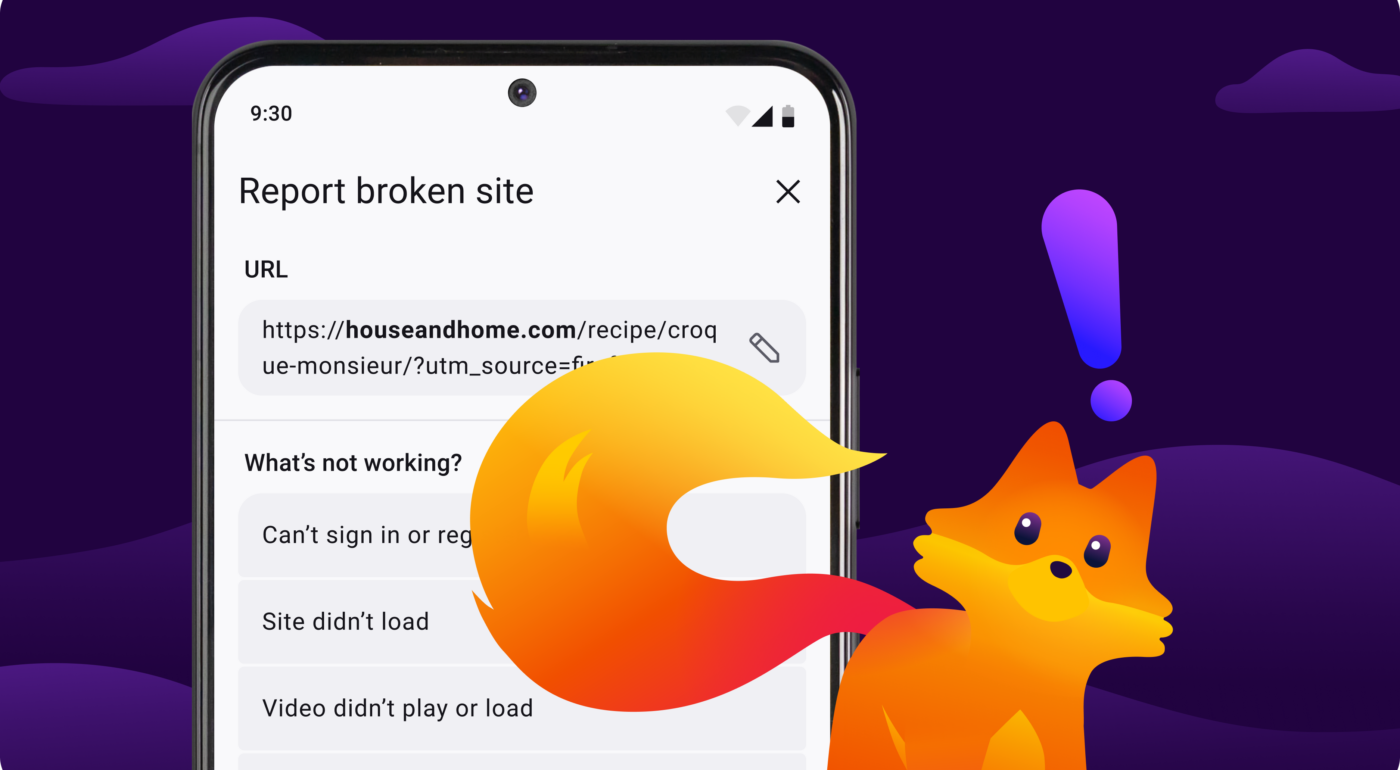
Let your designs fail for the right reasons – Firefox UX
How AI-assisted native prototypes changed what usability testing could show me. If you've ever simplified an interaction just to make a prototype manageable, you've probably felt the tension between ...
Instrumental interaction: an interaction model for designing post-WIMP user interfaces
Although the power of personal computers has increased 1000-fold over the past 20 years, user interfaces remain essentially the same. Innovations in HCI research, particularly novel interaction techniques, are rarely incorporated into products. In this ...

Mental Models and User Experience Design
What users believe they know about a user interface impacts how they use it. Mismatched mental models are common, especially with designs that try something new.

10 Usability Heuristics for User Interface Design
Jakob Nielsen's 10 general principles for interaction design. They are called "heuristics" because they are broad rules of thumb and not specific usability guidelines.

Physicality: the new age of UI
There’s a lot of rumors of a big impending UI redesign from Apple. Let’s imagine what’s (or what could be) next for the design of iPhones, Macs and iPads.

Accommodating Both Expert Users and Novice Users in One Interface by Utilizing Multi-layer Interface in Complex Function Products
Rapid development of electronic technology promotes the complex function of a product. Users have to adapt themselves to interface with diverse mental model setting. To improve usability, both resolutions of consistent interface and wizard interface were frequently applied to help novice. However, both of them require as much time for those who are familiar with the system, i.e. expert users. Shneiderman (2000) remarked that Universal Usability requires that software systems accommodate a diverse set of users. Multi-Layer interface might be a solution for complex user interface and satisfy both novice and expert users. The idea of multi-layer interface has been applied to hardware and software interface design. Cases were discussed in which the improved Multi-Layer Interface was analyzed and conclusions made.

German UPA | Berufsverband für User Experience Professionals
Der Berufsverband für UX-Professionals in Deutschland: Veranstaltungen, Konferenzen & Austausch zu User Experience und Usability
Rethinking the human-readability infrastructure
As part of the Digital Library's transition to Open Access, new features for researchers are available in the Premium Edition. Click here to learn more.
Learning From Terminals to Design the Future of User Interfaces
How we overvalue the wrong technology and novel aspects of interface design at the expense of substantial gains to our productivity.

Design Frictions for Mindful Interactions: The Case for Microboundaries
Design frictions, a term found in popular media articles about user experience design, refer to points of difficulty occurring during interaction with technology. Such articles often argue that these frictions should be removed from interaction flows in order to reduce the risk of user frustration and disengagement. In this paper we argue that, in many scenarios, designing friction into interactions through the introduction of microboundaries, can, in fact, have positive effects. Design frictions can disrupt "mindless" automatic interactions, prompting moments of reflection and more "mindful" interaction. The potential advantages of intentionally introduced frictions are numerous: from reducing the likelihood of errors in data-entry tasks, to supporting health-behaviour change.

Design From the Margins
In an age of virtual connectivity and increased reliance on the internet for daily functions, including by marginalized groups, can companies and technologists reframe their features or standards to support the most marginalized users’ needs? Can the modes of resilience within digital spaces from some of the most marginalized groups be listened to, learned from, and centered when creating technology? Design from the Margins (DFM), a design process that centers the most impacted and marginalized users from ideation to production, pushes the notion that not only is this something that can and must be done, but also that it is highly beneficial for all users and companies. For this to happen, consumer interest conversations need to be framed outside the “biggest use case” scenarios and United States and European Union-centrisms and refocused on the cases often left in the margins: the decentered cases. This report outlines how the DFM method can be used to build our most well-known and relied-upon technologies for decentered cases (often deemed “edge cases” which is atypical or less common use case for a product) from the beginning of the design process, rather than retrofitting them post-deployment to cater to communities with what are perceived to be extra needs.

Design From the Margins
In an age of virtual connectivity and increased reliance on the internet for daily functions, including by marginalized groups, can companies and technologists reframe their features or standards to support the most marginalized users’ needs? Can the modes of resilience within digital spaces from some of the most marginalized groups be listened to, learned from, and centered when creating technology? Design from the Margins (DFM), a design process that centers the most impacted and marginalized users from ideation to production, pushes the notion that not only is this something that can and must be done, but also that it is highly beneficial for all users and companies. For this to happen, consumer interest conversations need to be framed outside the “biggest use case” scenarios and United States and European Union-centrisms and refocused on the cases often left in the margins: the decentered cases. This report outlines how the DFM method can be used to build our most well-known and relied-upon technologies for decentered cases (often deemed “edge cases” which is atypical or less common use case for a product) from the beginning of the design process, rather than retrofitting them post-deployment to cater to communities with what are perceived to be extra needs.
frontend-design - Skill
Create distinctive, production-grade frontend interfaces with high design quality. Use this skill when the user asks to build web components, pages, or applications. Generates creative, polished code that avoids generic AI aesthetics.