Servo is a web rendering engine written in Rust, with WebGL and WebGPU support, and adaptable to desktop, mobile, and embedded applications.
Servo: A Web View From Somewhere Else
This month in Servo: new webview API, relative colors, canvas buffs, and more! - Servo aims to empower developers with a lightweight, high-performance alternative for embedding web technologies in applications.
Servo is becoming truly embeddable this year.
servo/tests/blink_perf_tests at main · servo/servo
Servo aims to empower developers with a lightweight, high-performance alternative for embedding web technologies in applications. - servo/servo
NLnet; Servo Webview for Tauri
The web ecosystem lacks a cross-platform, non-corporate controlled system for running web content. Tauri is a system for distributing cross-platform applications that relies on engines present on a system - effectively those owned by Apple, Google, and Microsoft. These permit varying levels of user control. The Servo project is a cross-platform, open source web engine.
"self embedding" Servo in a custom element · servo servo · Discussion #32883
Over in versotile-org/verso#79 there is some discussion about how to build a Servo based browser with a "chrome" UI written in HTML. The direction that the Verso team is exploring involve...
The Novel Engines: Servo (Web Ecosystem Health Part X) | Igalia - Open Source Consulting and Development
An open source consulting firm with deep expertise in browsers, graphics, compilers and Linux, contributing to WebKit, Chromium, Mesa and GStreamer

akshay oppiliappan (@oppi.li)
meridian: a web-browser built on GPUI and servo something i've been poking at in my free time, works on macos! tangled.org/oppi.li/meri...

Digital Sovereignty in Practice: Web Browsers as a Reality Check
Servo, a memory-safe browser engine, is kept alive by five engineers and a trickle of donations. A reality check on what an independent browser would actually cost the digital-sovereignty talk.

Writing a Web-based Editor from Scratch
At some point a while back I decided that I was going to write the front end of Weaver in Rust. I'd looked through the various 'fullstack' web application frameworks kicking around, and while they still had a ways to go, they seemed complete enough. Plus I wanted to write a semi-custom Markdown parser and renderer, to support features I wanted to exist in Weaver, like atproto record embeds, dual-column mode, and resizable images, and since I also wanted it to be fast, that meant that at least a portion of the front-end codebase would be in Rust, and Javascript-Rust FFI wasn't something I had dealt with a lot yet.
guide : using `llama-ui` — the new WebUI of llama.cpp · ggml-org llama.cpp · Discussion #16938
Overview This guide highlights the key features of the new SvelteKit-based WebUI of llama.cpp. The new WebUI in combination with the advanced backend capabilities of the llama-server delivers the u...
Servo Baseline Readiness
Servo is falling behind the web. It completes ~22 features/year at production quality, while the Baseline “Widely Available” set grows at ~52 features/year. At this pace, Servo plateaus around 80% by ~2037 and never catches up. Full velocity parity requires ~44 FTE (€8.8M/yr, €26.3M over 3yr). BWA features vary widely in real-world usage — a phased approach that prioritizes high-usage features first could reduce the initial headcount and cost by up to 40% while building toward full parity. The highest-leverage actions are unstalling 141 blocked features and fixing 51 regressions (features that lost >5 percentage points). This is a work-in-progress analysis focusing on one aspect of web engine development — feature-level readiness — and is not exhaustive. It is designed to orient thinking about cost and timelines. The central question: what would it cost in engineering investment alone to bring Servo to velocity parity within 3 years, excluding non-engineering and operational costs?
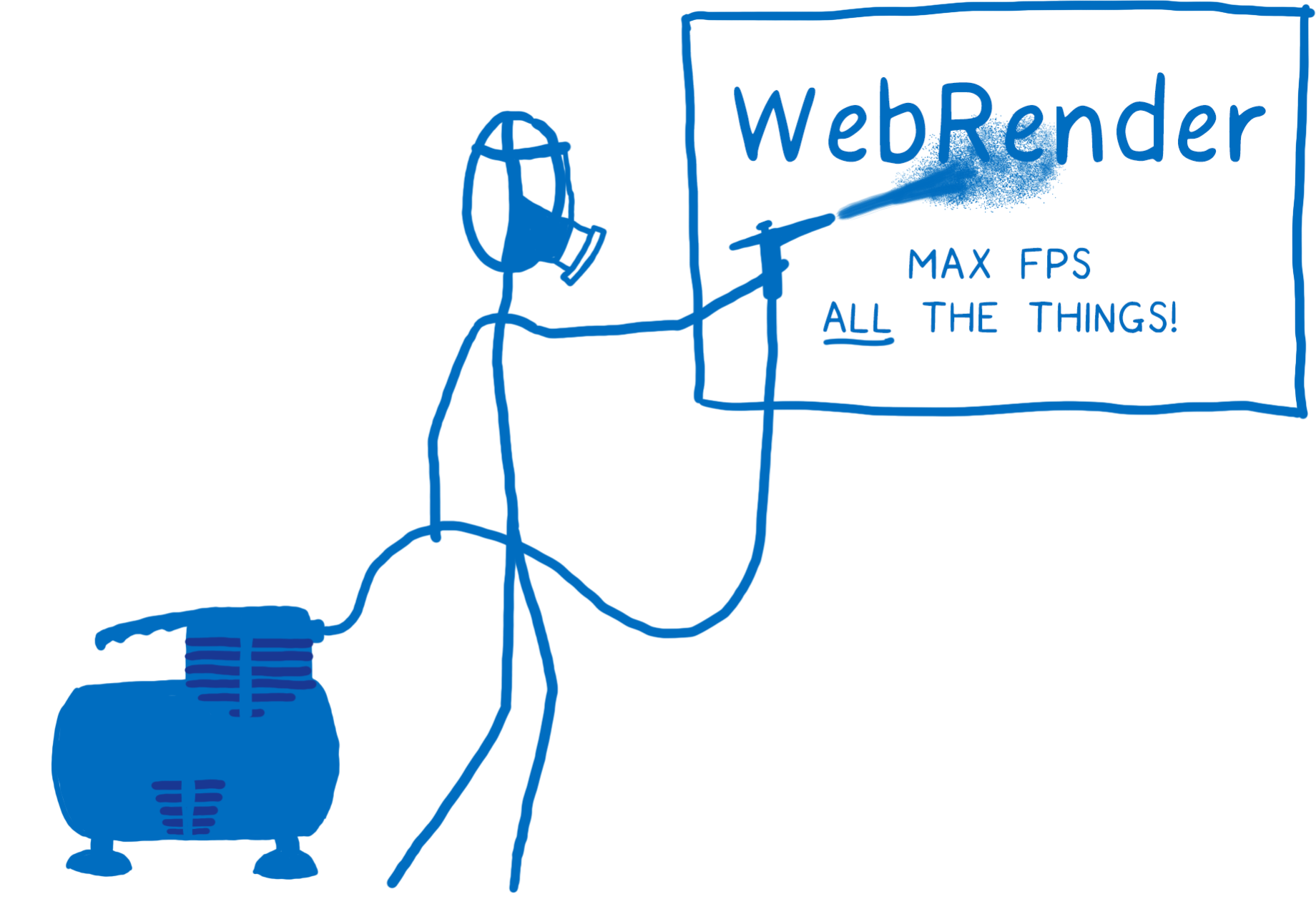
The whole web at maximum FPS: How WebRender gets rid of jank – Mozilla Hacks - the Web developer blog
The Firefox Quantum release is getting close. It brings many performance improvements, including the super fast CSS engine that we brought over from Servo. But there’s another big piece of ...
[meta] embedding · Issue #30593 · servo/servo
WRY port with raw libservo servo-wry-demo Multiple webviews in one window #30648 #30841 #30842 #31417 #31539 #31541 #30785 #31545 send Show/Hide/Raise messages to the compositor directly (as well a...
Lightpanda | The headless browser
The AI-native web browser built from scratch for machines. Not a fork. Not a patch. Fast, scalable web automation with a minimal memory footprint. 10x faster, 10x less RAM, and 100x better than Chrome headless.

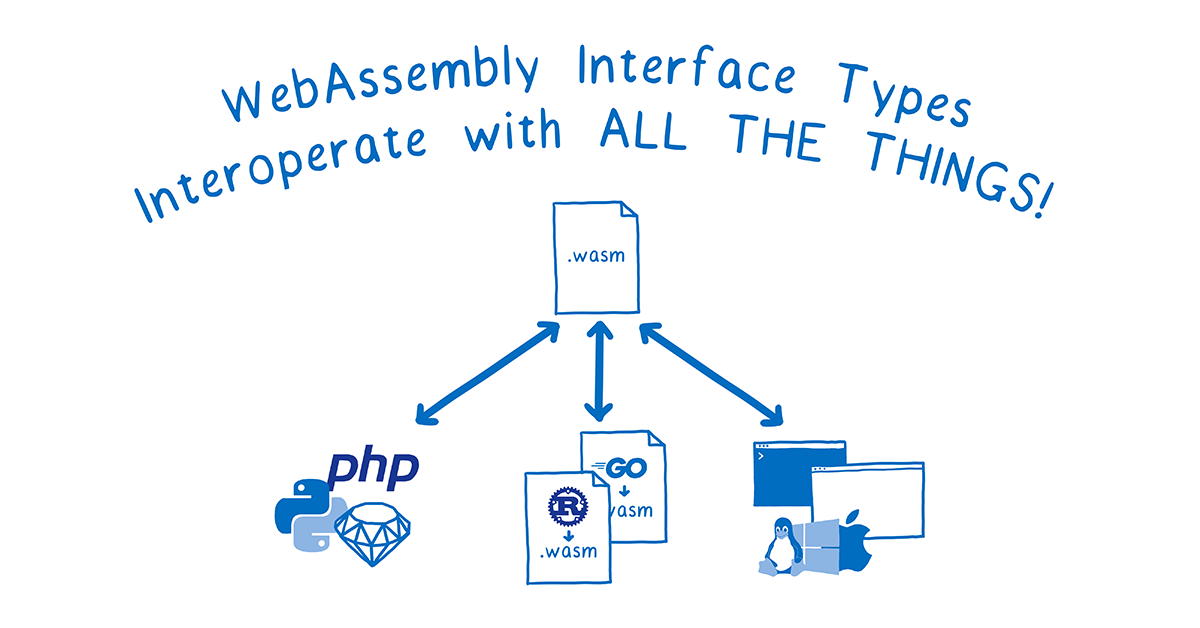
WebAssembly Interface Types: Interoperate with All the Things! – Mozilla Hacks - the Web developer blog
People are excited about running WebAssembly outside the browser. People are also excited about running WebAssembly from languages like Python, Ruby, and Rust. Lin Clark's Code Cartoons are back, illustrating ...