Inclusive LGBTQ+ sexual and reproductive health info, stories and services — created by and for our communities at Word on the Sheets.
Home
Inclusive LGBTQ+ sexual and reproductive health info, stories and services — created by and for our communities at Word on the Sheets.
Asexuality and Kink: Why Do So Many Aces Love It?
LGBTQ+ Groups & Community | Queer Omaha
LGBTQ+ Groups & Community in Omaha, Nebraska — part of Queer Omaha's community-maintained directory.
LGBTQ+ Groups & Community | Queer Omaha
LGBTQ+ Groups & Community in Omaha, Nebraska — part of Queer Omaha's community-maintained directory.
LGBTQ+ Groups & Community | Queer Omaha
LGBTQ+ Groups & Community in Omaha, Nebraska — part of Queer Omaha's community-maintained directory.
A Queer and Feminist Defense of Being Anonymous Online
From the earliest days of digital communities, online abuse has been connected to anonymity. While concerns around the impact of anonymity, particularly for women, people of color and LGBTQ folks, is legitimate, this paper argues that a flat rejection of digital anonymity is problematic, foreclosing certain forms of queer and feminist praxis. To make this case, I turn to the platform politics of Craigslist. Using Craigslist as a case study, I discuss the persistent stigma attached to online anonymity, before addressing specific tactics of online anonymity associated with queer and feminist values of privacy and mutual aid. Drawing on accounts of Craigslist users who saw anonymity as a protective form of control over their personal information, I outline ways in which anonymity is not solely an enabler for misogyny and homophobia, and can instead (or rather, also) be a subversive tool for self-expression and intimacy.
Research Guides: LGBTQIA+ Studies: A Resource Guide: 1969: The Stonewall Uprising
The collections of the Library of Congress tell the rich and diverse story of LGBTQ+ life in America and around the world. This research guide serves as an introduction into the excellent collection of LGBTQ+ resources available at the Library of Congress

Sex Work Resources
We've created this resource to link you to sex worker organisations, articles, media, websites, podcasts and more. A resource for workers, allies, and clients.

Queer Technologies | Are.na Editorial
Artworks exploring the nexus of queerness, the body, and technology

You Can Form a Part of Yourself Online: The Influence of New Media on Identity Development and Coming Out for LGBTQ Youth
Internet-based new media are increasingly utilized by lesbian, gay, bisexual, transgender, and queer (LGBTQ) youth, yet little is known about the ways in which it influences their identity developm...
You Can Form a Part of Yourself Online: The Influence of New Media on Identity Development and Coming Out for LGBTQ Youth
Internet-based new media are increasingly utilized by lesbian, gay, bisexual, transgender, and queer (LGBTQ) youth, yet little is known about the ways in which it influences their identity developm...
Trans Journalists Association Stylebook and Coverage Guide
The Transgender Journalists Association’s Stylebook and Coverage Guide is a tool reporters, editors, and other journalists can use to improve news coverage of trans people and the stories that affect them.
Queering design systems thinking by John Voss
Queerness challenges simple narratives and universal truths. What happens when you apply it to a discipline that seeks to build a clear, single source of truth?

Sharing Knowledge Openly: Author Gender, Race/Ethnicity, and Feminist Science
Open science is an increasingly important movement in contemporary social science. Many funders have begun to mandate open practices, newer journals like Socius are open access, and preprint servers have increased readership of paywalled articles. Feminist scholars have written about the values and pitfalls of open research. In this paper, we put those ideas in conversation with each other and empirical data on open-access publishing to develop a feminist framework for thinking about feminist knowledge, data, publishing, and audience. Using a survey of 19,462 social scientists, linked with their entire Web of Science publication history from 2000 to 2023 and all papers posted to SocArXiv, we replicate past work showing that articles by women are less likely to be some types of open access. We extend these findings to scholars of color and feminist scholarship, while also demonstrating a few surprising null results for all three groups.

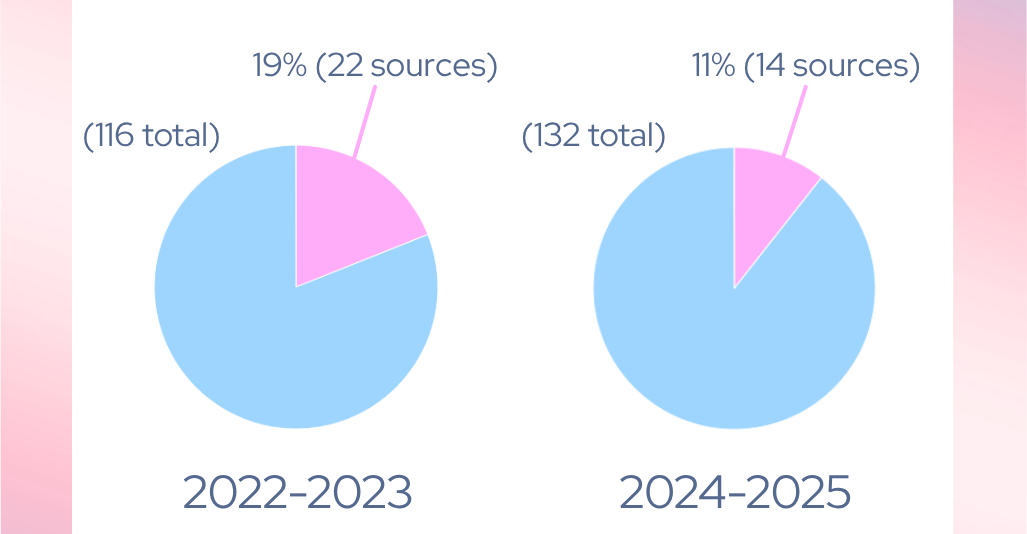
NYT Less Interested Than Ever in Trans Perspectives on Trans Issues
Even while feigning concern, the paper of record remains largely uninterested in centering trans people and perspectives in coverage of trans issues.