

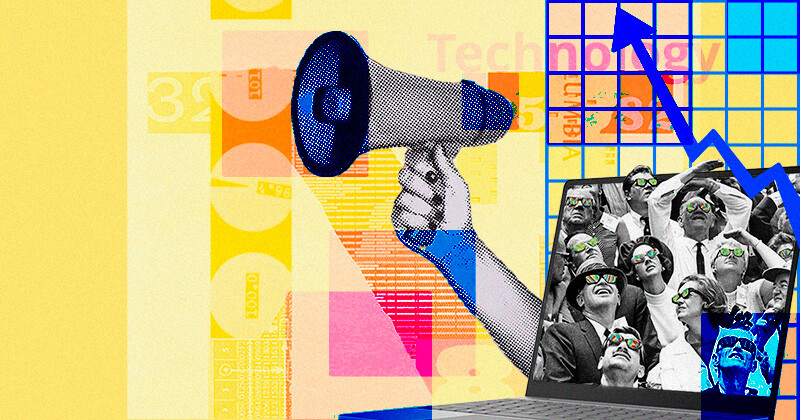
What innovation methods are overhyped and what will actually benefit their company? We examine the Gartner® Hype Cycle™ for Innovation Practices
Rediscovering The Spark
The last few years have been hard as someone who is not only very much engaged with technologies, their applications, damages and affordances as well as their politics. We’ve been moving through hype cycle after hype cycle with increasing promises at increasing speeds. Which is somewhat natural of course: Being built not around something material, […]

What's Next at Bluesky - Bluesky
As we head into 2026, we're entering a new phase for the Bluesky app. Last year was about scaling through rapid growth and getting the fundamentals in place. This year is about leaning into what's working and investing more intentionally in the things that make Bluesky different.

Are Tech Bros Ruining Fashion?
100 years of whatever this will be
What if all these weird tech trends actually add up to something? Last time, we explored why various bits of trendy technology are, in my o...
Opinion | Let’s Get Excited About Maintenance! (Published 2017)
Innovation is overrated. When it comes to technology, we need to celebrate upkeep.

Innovation is overvalued. Maintenance often matters more | Aeon Essays
Capitalism excels at innovation but is failing at maintenance, and for most lives it is maintenance that matters more

It Was Never About Innovation
This is the first in a series of articles about innovation and open computing. Because it’s a holiday time of year in the USA, I’ve decided that these next few articles will be a detour…
AI in Science: Boosting Productivity and Innovation | Arthur Turrell posted on the topic | LinkedIn
Today at Google & Google DeepMind, we published work led by Mihai Codreanu on AI in Science, drawing on 15 million Gemini interactions, 2,600 specialised AI models & a 600-scientist survey. What did we find about how AI is changing science? Read on... First, why does this matter? If AI is a tech boost we get a one-off economic growth boost. But if AI is an "innovation in the method of innovation", we get long run higher expected future growth rates! Compound interest makes those scenarios very different for future prosperity. Where might we see innovation in the method of innovation first? Well, science of course—the engine of innovation and one of the main drivers behind the huge increase in prosperity over the last 200 years. So what do we find? 1) In our data, scientists are about 2.7x overrepresented in AI use compared to what you'd expect from employment share. Scientists are using AI a lot! 2) Science convos are longer (tokens), more multimodal, and involve more domain expertise 3) Computer science has highest use 4) specialised models and LLMs are complements: LLMs do code, stats, literature, drafting, teaching, admin while specialised models predict, generate, classify — eg protein structures, weather. 5) within LLMs, analysis & modelling + communicating research findings are top 2 tasks But are we getting *improvements*? 6) 74% of scientists surveyed report net time savings; (6% report losses). Average saving of ~7 hours/week. This is mostly going back into more research. 47% report an increase in outputs of 10% or more. There's another effect too though—as some things (hypothesis generation, modelling) become 'cheap', science gets bottlenecked by other tasks... 7) 89% of those who save time spend more than a tenth of it checking AI outputs & 41% report a growing backlog of untested hypotheses Looking a bit beyond, we expect time spent on bottleneck tasks to grow as a %, more papers that recombine ideas from across disciplines, & publication volume increases for fields that don't need wet lab work. Unfortunately, not all of this volume may be high quality ("sci-slop") So what's our early take on AI as an innovation in the method of innovation? There's significant potential to increase scientific productivity, & 7 hours/week (big!) is *already* being saved. But it's early days & bottlenecks (inc. verification) limit sci-productivity take off Huge team involved in this work, as you can imagine—see the paper for more! https://lnkd.in/g55s4MtC | 38 comments on LinkedIn

In 2025, venture capital can’t pretend everything is fine any more
Venture capital is screwed. A bubble in AI is their last hope, and they’re betting everything on Sam Altman. It’s heartwarming. Today, we have the Pitchbook-NVCA Venture Monitor for Q1 2025. This i…

Open Innovation: Strategies and Examples | ITONICS
Learn what open innovation is and how it benefits companies. Explore real examples and see what tools can help you innovate through external collaboration.

What Investing in Software Looks Like in 2026
In case you quietly filed Point Nine under “boring SaaS investor” … well, first of all, I’m not going to blame you. We’ve been investing in…
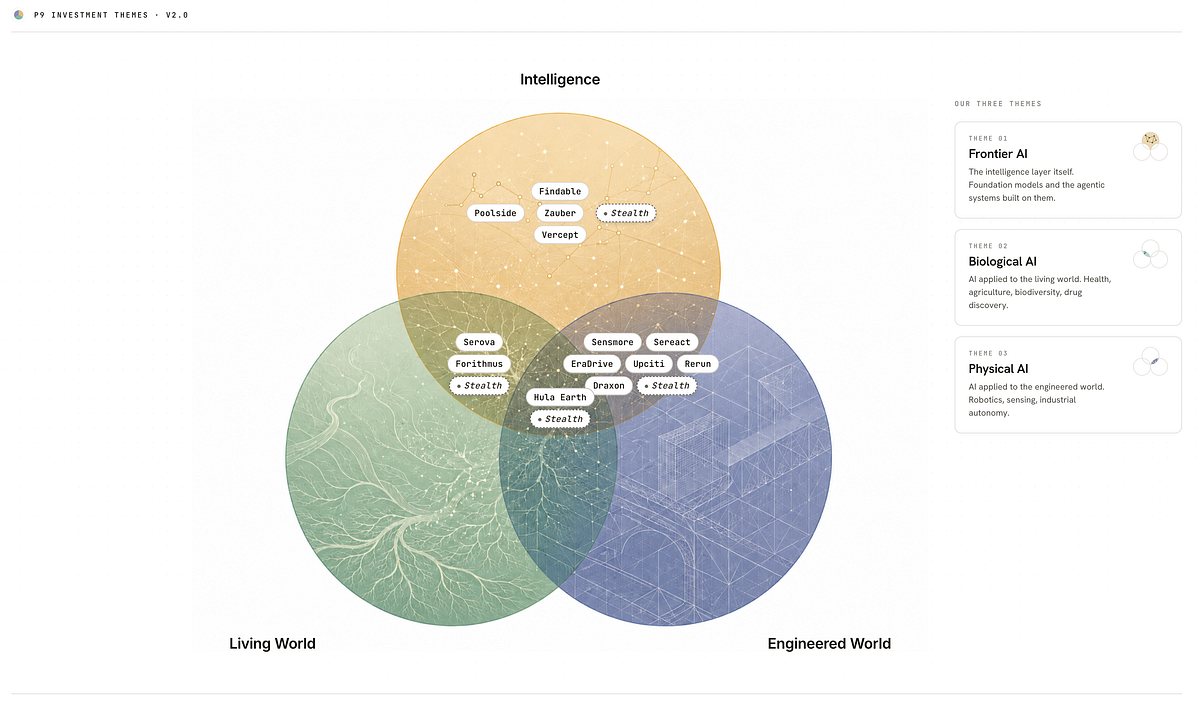
Rebuilding product strategy for the next era
For tech leaders navigating change, this is how we’re doing it differently. By Suba Vasudevan, COO, Mozilla.

The Best Innovation Process - Definition, Steps and Examples
The best innovation processes are structured, repeatable, and suited to their context. Discover 6 real-world examples of how companies innovate.

6 Internal Sources of Innovation | ITONICS
Discover 6 key internal sources of innovation with real company examples. Learn how leadership, R&D, labs, and employees can drive new product ideas.

You have to beat the models at something
In 2025, I wrote that software engineers ought to be assessed by “value over replacement”: not how much money they made for their company, but how much they…
People Loved the Dot-Com Boom. The A.I. Boom, Not So Much.
Tech leaders are beginning to worry about the public’s underwhelming enthusiasm for their plans to remake the world with artificial intelligence. Will that burst the bubble?
