


A small domestic decision can hold clues about your personality, habits, and emotional state.
Personality Traits Relate to Being a Morning or Evening Person - Neuroscience News
People who ranked higher for conscientiousness and lower in openness tend to be morning people, a new study reports. Researchers say the link between personality traits and morning/evening chronotypes is partly due to genetic factors.

Extreme night owls: ‘I can’t tell anyone what time I go to bed’
What happens when your natural sleeping pattern is at odds with the rest of the world?

People with a weak future time perspective are more likely to engage in bedtime procrastination
New research sheds light on the psychological mechanisms that help explain why being more oriented towards the future is associated with reduced bedtime procrastination. The findings, published in the International Journal of Environmental Research and Public Health, indicate that a person’s perspective of time is related to their ability to control their impulses and maintain their focus on long-term interests.
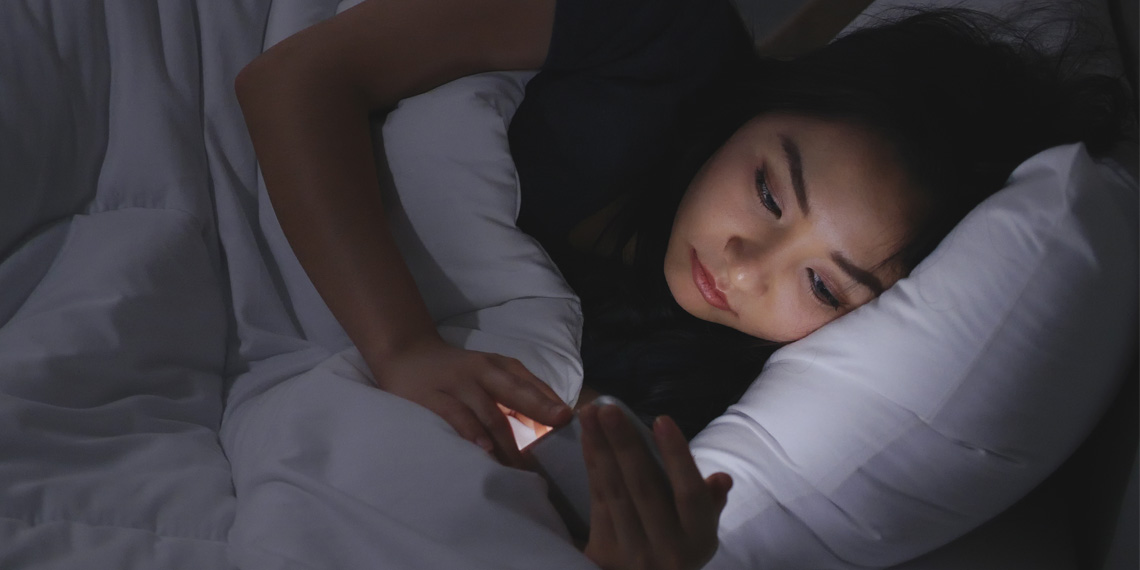
Your daily routine is making you less creative—here’s how to fix it
Some routines are good. Doctors say going to sleep and waking up at the same time every day helps you stay healthy. Familiar patterns—like regular exercise and brushing your teeth before bed—can help reduce stress and keep you grounded. But taken too far, routines can also become a problem. Doing the same thing all day, over and over, can decrease your creative thinking and blunt your competitive edge.
Couples Who Go To Bed At Different Times Are Way Happier For 7 Reasons
Going to bed at different times has been shown to be better for your relationship for a variety of fascinating reasons.

Early Riser or Night Owl? New Study May Help To Explain the Difference - Slashdot
Some people are early risers, wide awake at the crack of dawn. Others are night owls who can't seem to get to bed until well after midnight and prefer to sleep in. Why is this? An NIH-funded team has some new clues based on evidence showing how a molecular "switch" wired into the biological clocks o...

A Good Night’s Sleep Is Tied to Interruptions, Not Just Hours
New research shows that waking up several times in a night’s sleep can cause bad moods and limit one’s ability to focus and think.

Brain Scans Reveal Why "Night Owls" Have It Rough in a 9-to-5 Society
The results explain why we need to "create more flexibility in our society."

Why We Sleep, and Why We Often Can’t
Does our contemporary obsession with sleep obscure what makes it special in the first place?

How to Make Getting Out of Bed in the Morning Easier
Getting out of bed can be tough. The alarm goes off and for a moment, you just stay in bed, warm and cozy, wishing that you didn't have to move. Of co


How to Deal With Your Nighttime Anxiety
For some people, it happens like clockwork: Their anxiety is manageable during the day, but as soon as their head hits the pillow, every possible bad

Do these 6 morning routines to jumpstart your productivity
Ever felt like your whole morning slipped by before you got any real work done? Have you woken up grouchy, then felt grumpy all day? Unproductive days often have a sneaky culprit: a bad morning routine. With this in mind, we set out to find a few simple morning habits with proven track records—routines backed by studies, endorsed by experts, or practiced by successful entrepreneurs. Here are six ways you can start your morning to make for a more productive day.
How I became a morning person (and why I decided to make the change)
It’s early and dark. The alarm sounds, and you reach over to switch it off. After a short pause, you sit up. You swing your legs off the…

Self-Distancing: What It Is and How You Can Use It to Make Better Decisions – Effectiviology
It’s hard to set your emotions aside when you’re faced with a difficult decision. This is problematic, since our emotions often cause us to make the wrong decision in important areas of life, including in our relationships, our finances, and our health.
The brain functional connectome is robustly altered by lack of sleep
Sleep is a universal phenomenon necessary for maintaining homeostasis and function across a range of organs. Lack of sleep has severe health-related consequences affecting whole-body functioning, yet no other organ is as severely affected as the brain. The neurophysiological mechanisms underlying these deficits are poorly understood. Here, we characterize the dynamic changes in brain connectivity profiles inflicted by sleep deprivation and how they deviate from regular daily variability. To this end, we obtained functional magnetic resonance imaging data from 60 young, adult male participants, scanned in the morning and evening of the same day and again the following morning. 41 participants underwent total sleep deprivation before the third scan, whereas the remainder had another night of regular sleep. Sleep deprivation strongly altered the connectivity of several resting-state networks, including dorsal attention, default mode, and hippocampal networks. Multivariate classification based on connectivity profiles predicted deprivation state with high accuracy, corroborating the robustness of the findings on an individual level. Finally, correlation analysis suggested that morning-to-evening connectivity changes were reverted by sleep (control group)-a pattern which did not occur after deprivation. We conclude that both, a day of waking and a night of sleep deprivation dynamically alter the brain functional connectome.