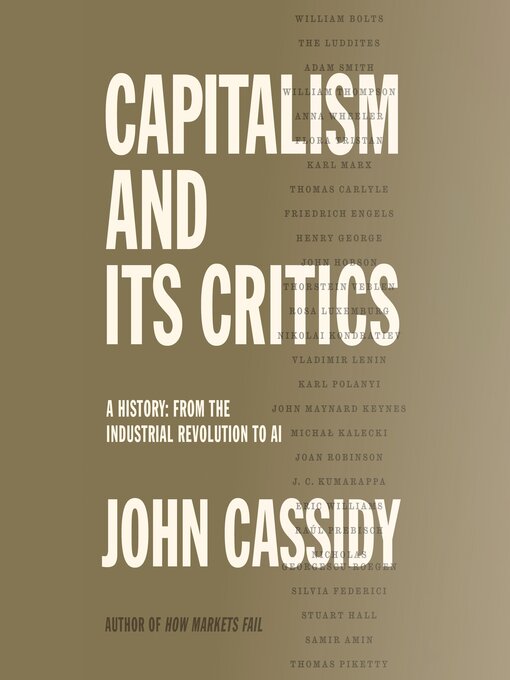
A Financial Times Most Anticipated Book of 2025A sweeping, dramatic history of capitalism as seen through the eyes of its fiercest critics. At a time when artificial intelligence, climate change, and inequality are raising fundamental questions about the economic system, Capitalism and Its Critics provides a kaleidoscopic history of global capitalism, from the East India Company and Industrial Revolution to the di...
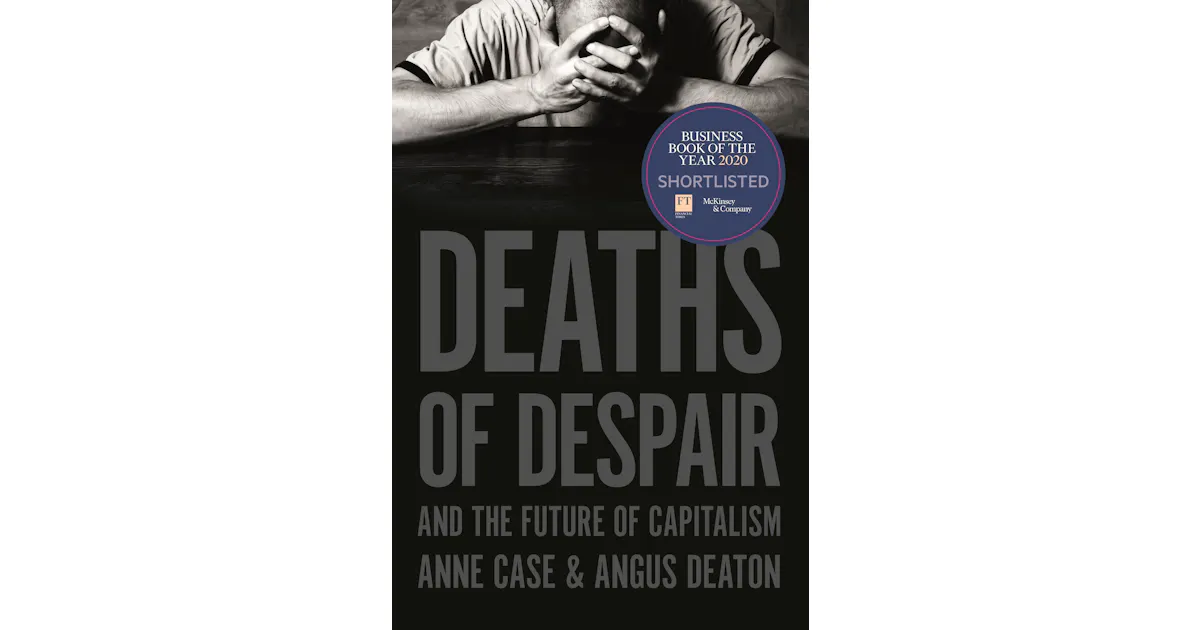
Deaths of Despair and the Future of Capitalism
A New York Times BestsellerA Wall Street Journal BestsellerA New York Times Notable Book of 2020A New York Times Book Review Editors' ChoiceShortlisted for the Financial Times and McKinsey Business Book of the YearA New Statesman Book to ReadFrom economist Anne Case and Nobel Prize winner Angus Deaton, a groundbreaking account of how the flaws in capitalism are fatal for America's working class
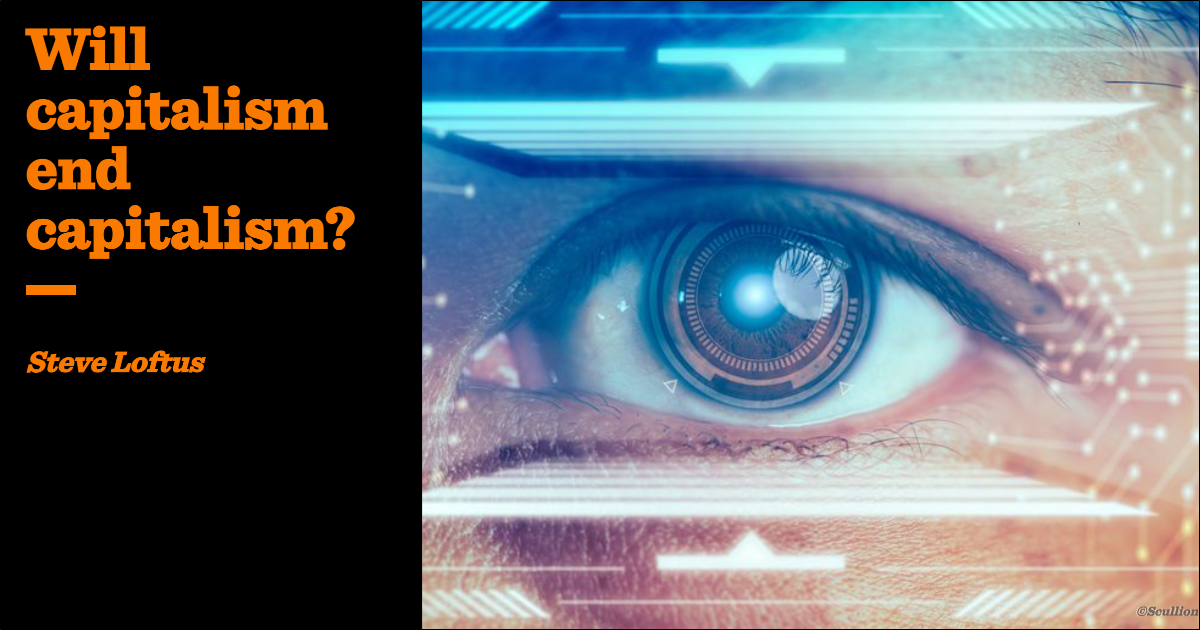
Will capitalism end capitalism? | Steve Loftus | The Critic Magazine
Imagine waking up one morning to discover your job still exists, but your services are no longer required. The work is being done, just not by you, not by anybody. Somewhere, a machine is doing it…
A Thesis on the History of the 21st Century: Technocracy, AI, and the End of the World
Reviewing a trio of books by a sextet of ruling-class ideologues, Mathias Fuelling finds an ambient anxiety hanging over a perceived crisis in American capitalism, with visions of bolstering a Silicon Valley-led technocracy fueled by AI investment reflecting American fears over the dawn of a "Chinese Century."
Hype, financial narratives, and self-fulfilling prophecies in surveillance capitalism
The rise of platforms has transformed our understanding of contemporary capitalism, with the critical literature describing how these firms leverage unprecedented digital powers to extract monopoly rents – perhaps even heralding a new form of Feudalism. This paper draws on the literature on financial narratives to examine the role that such stories play within the form of capitalism that they describe, and what this suggests for the role of “hype” in contemporary capitalism. The same stories that for critical scholars appear as menacing threats of “technofeudalism” or “surveillance capitalism” for investors appear as optimistic stories of promising future returns. By driving financial investments, narratives afford platforms very real social and political powers, enabling them to function as a form of self-fulfilling prophecies. The paper argues for a cultural inflection to the political economy of Big Tech – viewing capitalism as neither mechanistic nor rational, but as an expression of a complex interplay between narrative, technology, and economic power. This suggests the need for a critical hype studies, geared at deconstructing the narratives undergirding the technological waves of capitalist pursuits, and examining the broader role of hype in coordinating and directing flows of capital within contemporary financialized capitalism.

Capitalism in Crisis Amid Slow Growth and Growing Inequality
Six years after the Lehman disaster, the industrialized world is suffering from Japan Syndrome. Growth is minimal, another crash may be brewing and the gulf between rich and poor continues to widen. Can the global economy reinvent itself?

Apocalypse Now and Then • EQUATOR
Artificial intelligence is capitalism’s final destination

Capitalist Realism: Is There No Alternative?
It is easier to imagine the end of the world than the end of capitalism. After 1989, capitalism has successfully presented itself as the only realistic political-economic system - a situation that the bank crisis of 2008, far from ending, actually compounded. The book analyses the development and principal features of this capitalist realism as a lived ideological framework. Using examples from politics, film (Children Of Men, Jason Bourne, Supernanny), fiction (Le Guin and Kafka), work and education, it argues that capitalist realism colors all areas of contemporary experience, is anything but realistic and asks how capitalism and its inconsistencies can be challenged. It is a sharp analysis of the post-ideological malaise that suggests that the economics and politics of free market neo-liberalism are givens rather than constructions. New Edition includes:Forward by Zoe Fisher, Mark’s wife, talking about Mark as a personIntroduction by Alex Niven, his friend and colleague, talking about the political significance of the book thirteen years after it was writtenAfterword by Tariq Goddard, the original editor and publisher, describing the writing and editing of the book, its original reception, and Mark’s own view of it"A quick and entertaining read." Socialist Standard "A provocative and necessary read...for anyone wanting to talk seriously about the politics of education today. " Times Higher Educational Supplement
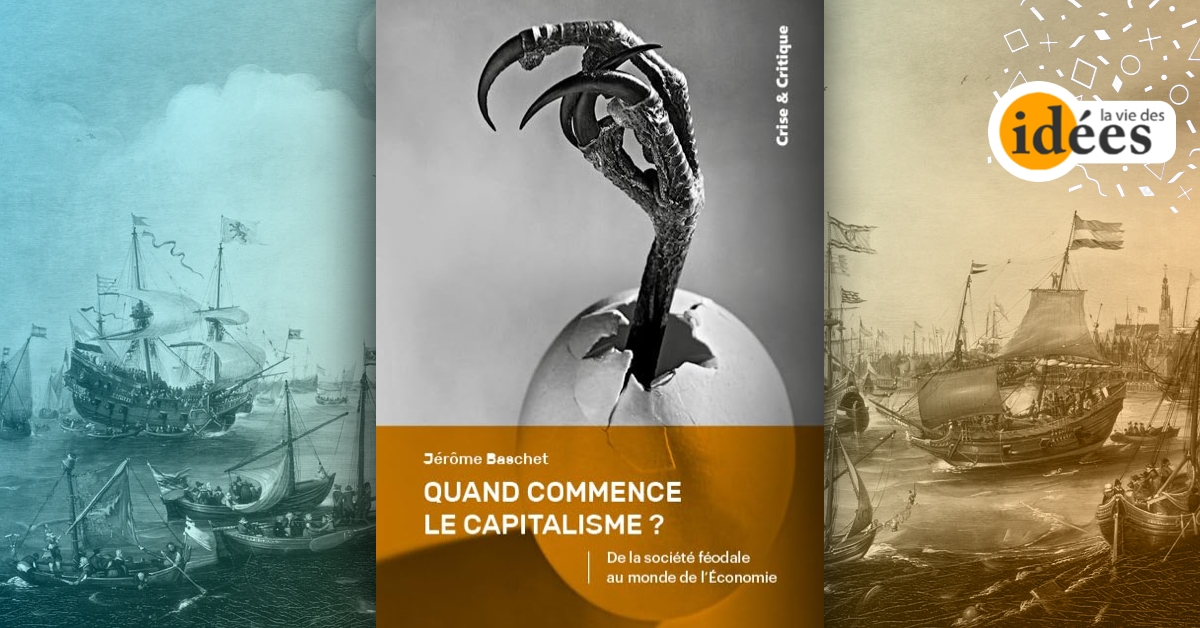
Le grand basculement capitaliste
À propos de : Jérôme Baschet, Quand commence le capitalisme ? De la société féodale au monde de l'économie, Crise et critique
The Fallacy of Endless Economic Growth
What economists around the world get wrong about the future.

Le capitalisme de la finitude : pessimisme et bellicisme
Traduction française de « Capitalism of finitude: pessimism and bellicosity. Review of Arnaud Orain’s "Le Monde Confisqué" » de Branko Milanovic

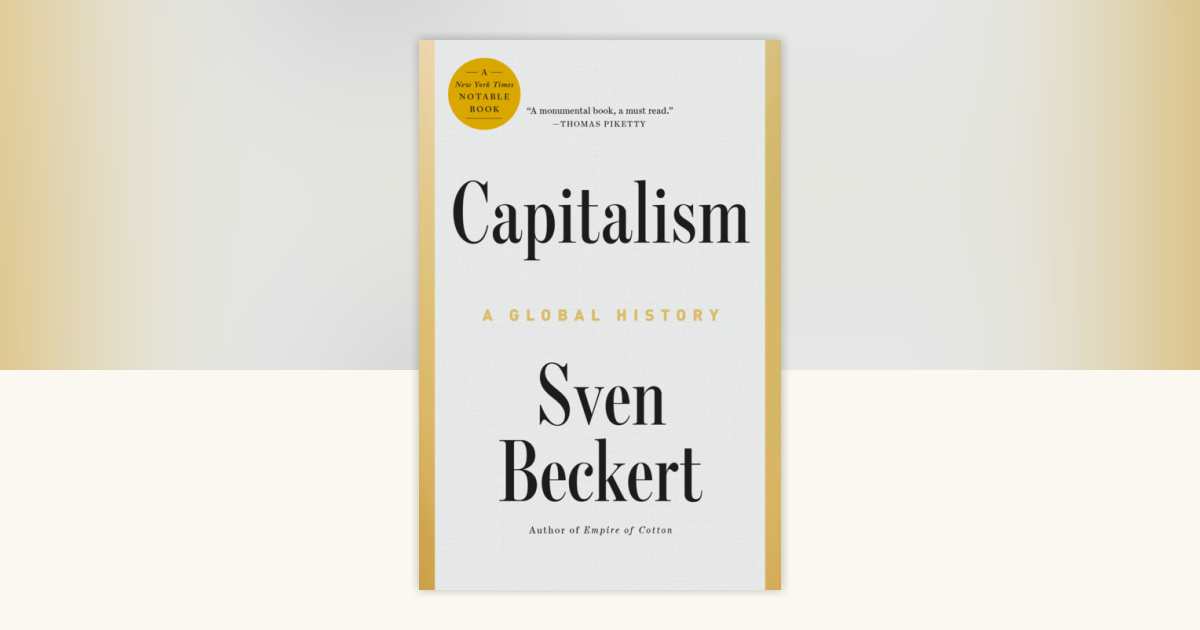
Capitalism by Sven Beckert: 9780735220836 | PenguinRandomHouse.com: Books
Buy Capitalism by Sven Beckert from Penguin Random House
Economics for the future – Beyond the superorganism
Our environment and economy are at a crossroads. This paper attempts a cohesive narrative on how human evolved behavior, money, energy, economy and th…
Techno-capitalism, Crisis Epistemology, and Disaster Ableism: How (not) to Respond to Generative AI in Higher education (My presentation @ #PhiDisSocCh6)
Introduction Techno-capitalism is a social system dominated by technology-driven capital, in which technological development is a primary vehicle for wealth concentration. Professors are currently …

The Player and the Played
In an age when capitalism feels like an unwinnable game, extreme reactionary ideas and politics are on the rise. The Hunger Games, Game of Thrones, Squid Gam...

What corporate thrillers tell us about the '90s economy
PLUS: Has Forum Brain crossed the gender divide?

Myopic memory: Capitalism's new continuity in the age of AI
This article is a commentary on the relationship between artificial intelligence (AI), capitalism, and memory. The political policies of neoliberalism have reduced the capacity of individuals and groups to reflect on and change the social world, meanwhile applications of AI and algorithmic technologies, rooted in the profit-seeking objectives of global capitalism, deepen this deficit. In these conditions, memory in individuals and across society is at risk of becoming myopic. In this article, I develop the concept of myopic memory with two core claims. Firstly, I argue that AI is a technological development that cannot be divorced from the capitalist conditions from which it comes from and is implemented in service of. To this end, I reveal capitalism and colonialism's historical and contemporary use of surveillance as a way to control the populations it oppresses, imagining their pasts to determine their futures, disempowering them in the process. My second core claim emphasises that this process of disempowerment is undergoing an acute realisation four decades into the period of neoliberalism. Neoliberal policies have restructured society on the basis of being an individual consumer, leaving little time, space, and institutional capacity for citizens to reflect on their impact or challenge their dominance. As a result, with the growing role of AI and algorithmic technologies in shaping our engagement with society along similar lines of individualism, it is my conclusion that the scope of memory is being reduced and constrained within the prism of capitalism, reducing its potential, and rendering it myopic.