

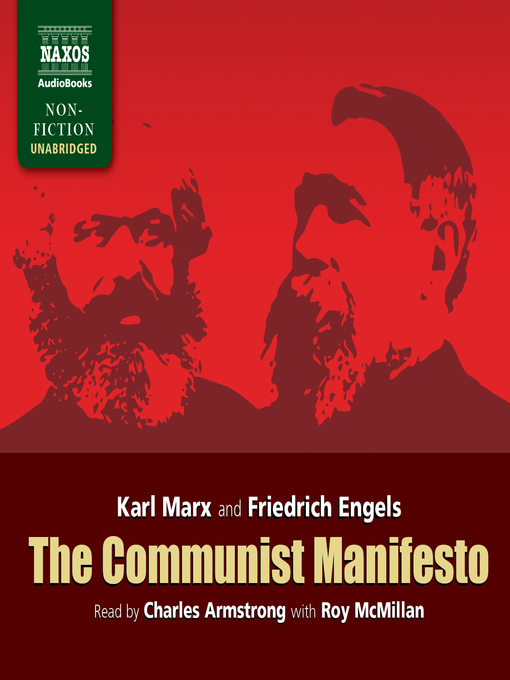
Without question one of the most significant books in modern history, The Communist Manifesto is a brief, populist pamphlet that distils the core ideas of Communism into accessible prose. Published just months before violent uprisings threatened to destabilise much of the European establishment, it outlines a view of history as a constant battle between the classes that will inevitably result in revolution. An ang...
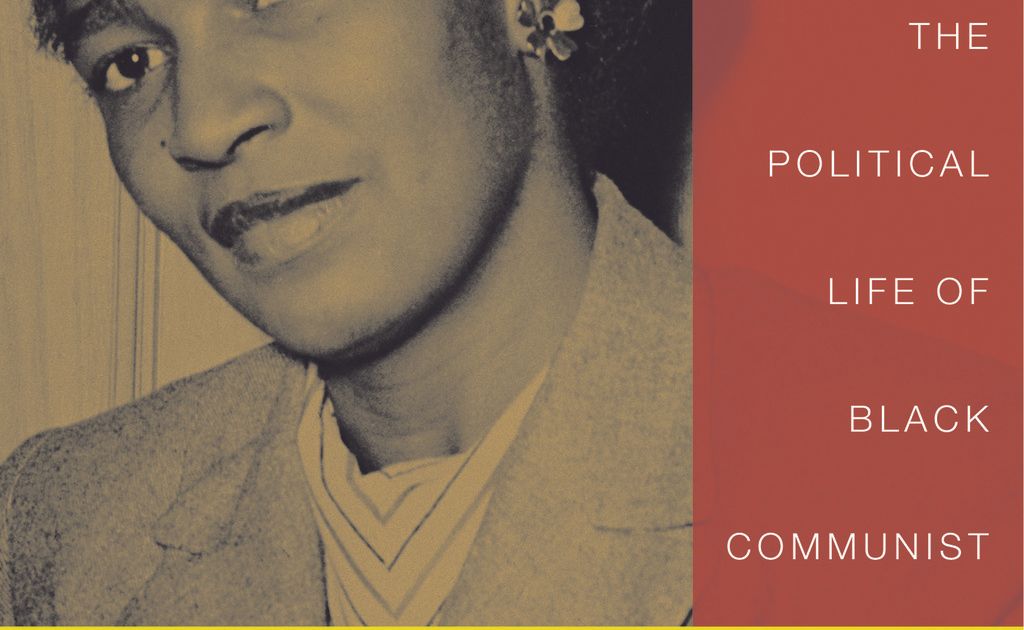
Left of Karl Marx: The Political Life of Black Communist Claudia Jones - Carole Boyce Davies | Are.na
doi.org/10.1215/9780822390329
Revolutionary Suicide by Huey P Newton | East Bay Booksellers
The searing, visionary memoir of founding Black Panther Huey P. Newton, in a dazzling graphic package Tracing the birth of a revolutionary, Huey P. Newton's famous and oft-quoted autobiography is as much a manifesto as a portrait of the inner circle of America's Black Panther Party.

Cognitive Capitalism - Public Seminar
There are broadly three ways of thinking historically about capitalism. One draws on Marx’s value theory and pretty much treats...Read More

Palantir's Manifesto Is as Subtle as a MAGA Hat
Palantir's 22-point manifesto is nonsense, writes Dave Karpf. But it at least it is short enough to be clarifying, he says.

Palantir's Manifesto Is as Subtle as a MAGA Hat
Palantir's 22-point manifesto is nonsense, writes Dave Karpf. But it at least it is short enough to be clarifying, he says.
CYBER-COMMUNISM by Richard Barbrook | Imaginary Futures
‘…is the impact of the …information revolution on capitalism not the ultimate exemplification of… Marx’s thesis that: “at a certain stage of their development, the material productive forces come into conflict with the existing relations of production…”? …does the prospect of the… “global village” not signal the end of market relations… at least in the sphere of digitalised information?’ (Zizek 1998: 33-4)
The Communist and the Caricature: The Missed Opportunity in August Nimtz and Kyle Edwards' "The Communist and the Revolutionary Liberal in the Second American Revolution"
Nimtz and Edwards offer caricatures where a fascinating and nuanced reality was available.
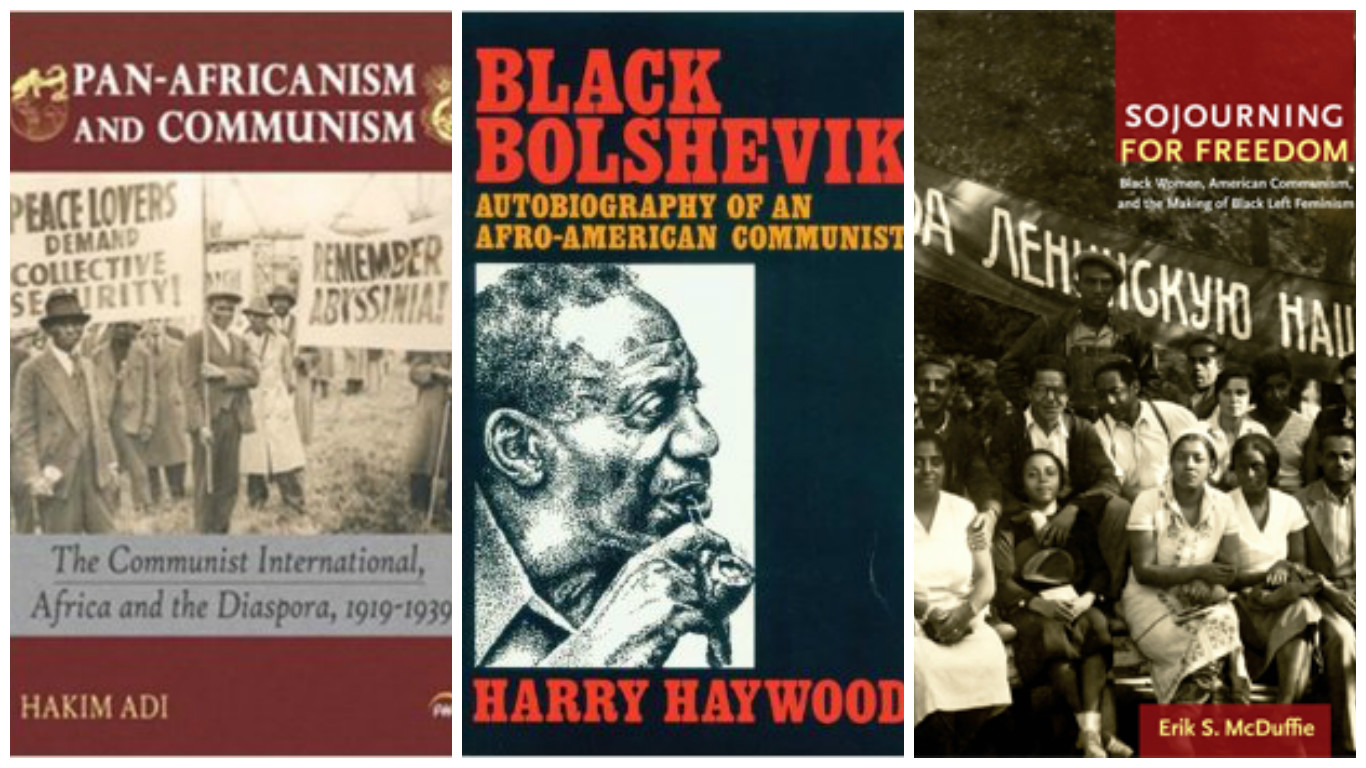
The #BlackCommunistReadingList - AAIHS
Here is a list of recommended books on African Americans and Communism. As a graduate student at the University of Illinois, I read many of these books to gain an intellectual understanding of why black Americans and other people African descent saw Communism as a political ideology through which to achieve black liberation. Harry Haywood’s
Black Marxism, Revised and Updated Third Edition by Cedric J Robinson | East Bay Booksellers
In this ambitious work, first published in 1983, Cedric Robinson demonstrates that efforts to understand Black people’s history of resistance solely through the prism of Marxist theory are incomplete and inaccurate.
Palantir posted a manifesto that reads like the ramblings of a comic book villain
Palantir shared 22 points excerpted from CEO Alex Karp and Nicholas W. Zamiska's 2025 book, The Technological Republic, and they're troubling.

"Collective Power: Patterns for a Self-Organized Future by Ted J. Rau" [english edition] (ebook) - Sociocracy For All
by Ted Rau Preorder Ebook
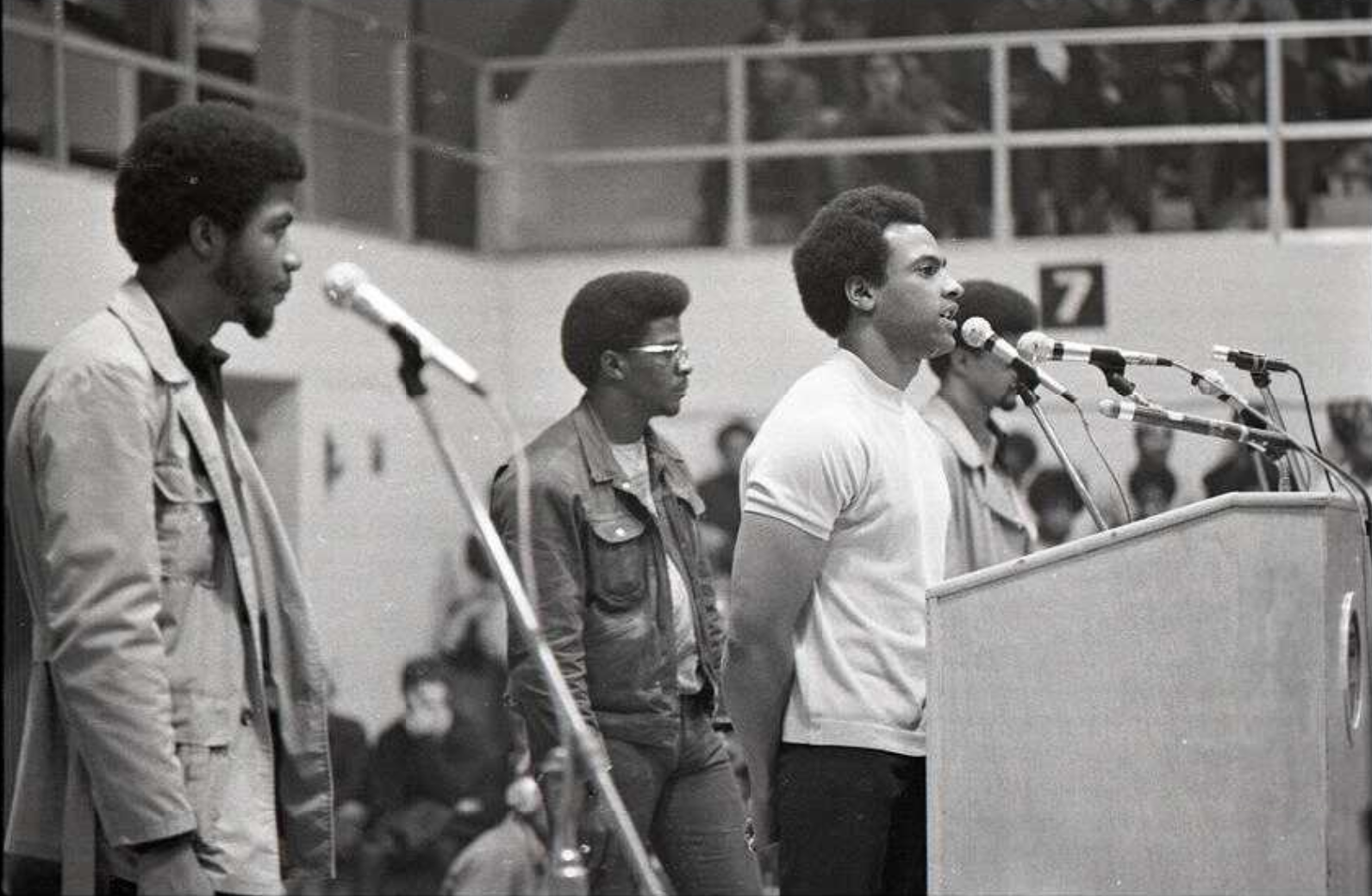
Huey Newton introduces Revolutionary Intercommunalism, Boston College, November 18 1970
In 1970 Huey Newton gave a speech at Boston college outlining a new ideological direction for the Black Panther Party, Revolutionary Intercommunalism. Newton described his rejection of the idea of black people being an internal colony in the US, that class struggle rather than national liberation was the only route to a communist society (describing the failure of liberation movements in Africa as 'neo-colonialism'), concerns around automation and the working class, and the impossibility of a socialist state in the US (against the position of the Progressive Labor Party), although he still described Vietnam and China as partially liberated.
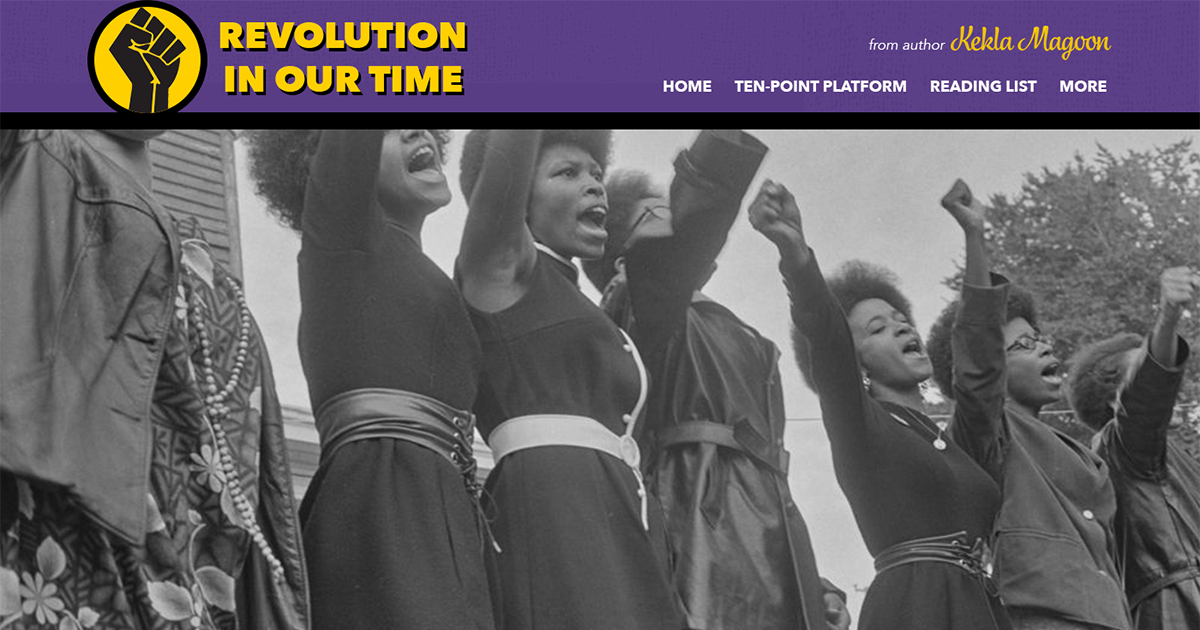
Revolution in Our Time: The Black Panther Party's Promise to the People
Kekla Magoon relays an essential account of the Black Panthers—as militant revolutionaries and human rights advocates.
A Systems Literacy Manifesto
In 1968, West Churchman wrote, “…there is a good deal of turmoil about the manner in which our society is run. …the citizen has begun to suspect that the people who make major decisions that affect our lives don’t know what they are doing.”[1] Churchman was writing at a time of growing concern about war, civil rights, and the environment. Almost fifty years later, these concerns remain, and we have more reason than ever “to suspect that the people who make major decisions that affect our lives don’t know what they are doing.” Examples abound.

Robin Berjon


"For A Left Populism" by Chantal Mouffe Excellent first read of the year. A framework and a strategy for the change we need. If you're progressive and unsure of what to do, what politics should look like, this is a good short read to think it through