


Why Words Matter, Even If They Sound Academic

Post-Structuralism | The Paper Pilot
The Paper Pilot's digital garden of thoughts on philosophy, politics, and sociology
You Don’t Need Words to Think
Brain studies show that language is not essential for the cognitive processes that underlie thought

Misarticulation: Why We Sometimes Feel Our Words Don’t Match Our Thoughts
People do not always say what they mean. In everyday conversations, people regularly sense that they have not fully communicated what they had in mind—a subject

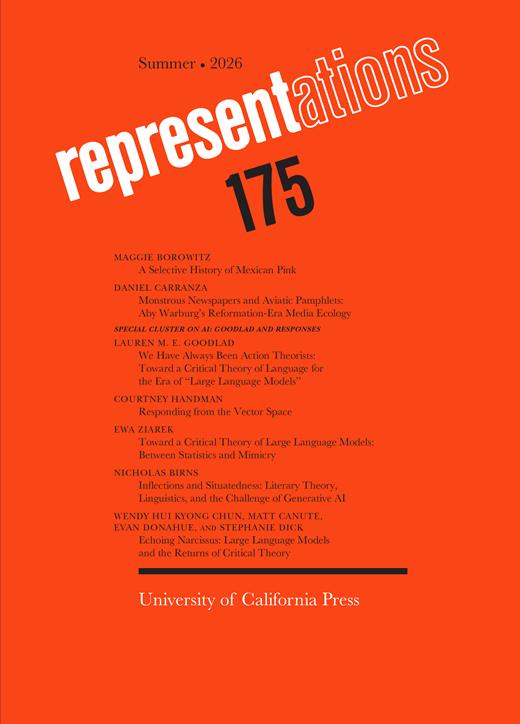
We Have Always Been Action TheoristsToward a Critical Theory of Language for the Era of “Large Language Models”
Scholars of literature and culture understandably place themselves among the world’s premiere experts on matters of language. But they also know that fields like linguistics and communication have their own ways of studying how people express themselves through speech and written media. A key difference concerns the theories and methodologies...
Large Language Muddle | The Editors
The AI upheaval is unique in its ability to metabolize any number of dread-inducing transformations. The university is becoming more corporate, more politically oppressive, and all but hostile to the humanities? Yes — and every student gets their own personal chatbot. The second coming of the Trump Administration has exposed the civic sclerosis of the US body politic? Time to turn the Social Security Administration over to Grok. Climate apocalypse now feels less like a distant terror than a fact of life? In three years, roughly a tenth of US energy demand will come from data centers alone.

Structural Monism — Canon v1.0.0 | SUBIT-Theory | Nautilus Docs
This repository contains the official release of the Canon of Structural Monism (version 1.0.0). Structural Monism is an ontological doctrine that describes consciousness as a single field and all forms of existence as configurations of that field. The doctrine includes the SUBIT‑64 spectral model, the principle of vertical coherence, the mathematical framework, ethical implications, and canonical definitions.

A Philosopher’s One-Word Theory to Explain Why the World Feels So Weird
Once you learn what the "uni-context" is, you won't stop seeing it everywhere

Working Group Formation: Polite Goshawk · Issue #14 · lexicon-community/governance
What is the objective? Explore the definition and reference implementation of Lexicon Lenses, a transformation of records from one type to another. This working group is expected to production docu...
When Nature Calls: The Enshittification of Science and Its Enablers
Proof-of-work papers, policy laundering, and the collapse of self-correction

Ask don't tell: Reducing sycophancy in large language models
Sycophancy, the tendency of large language models to favour user-affirming responses over critical engagement, has been identified as an alignment failure, particularly in high-stakes advisory and...

I saw this meta-analysis shared a couple of times recently, so we took a look and re-analyzed the data. | František Bartoš
I saw this meta-analysis shared a couple of times recently, so we took a look and re-analyzed the data. We found that the conclusion is almost entirely driven by publication bias. Both state-of-the-art and standard methods reduce the degree of the effect 2-3 fold. Moreover, the data no longer show statistical evidence for the main conclusions. Importantly, our findings do not imply that there is no positive effect of ChatGPT, or other large language models on learning; in fact, our analysis reveals that there is “absence of evidence” rather than “evidence of absence”. The present literature appears to be contaminated by publication bias; high-quality registered reports are needed to properly evaluate the effect of large language models in educational settings. See the full response just submitted for publication at https://lnkd.in/eGKHHKtg

How linguistics learned to stop worrying and love the language models
Language models (LMs) can produce fluent, grammatical text. Nonetheless, some maintain that language models don’t really learn language and also, even if they did, that would not be informative for the study of human learning and processing. On the other side, there have been claims that the success of LMs obviates the need for studying linguistic theory and structure. We argue that both extremes are wrong. LMs can contribute to fundamental questions about linguistic structure, language processing, and learning. They force us to rethink arguments and ways of thinking that have been foundational in linguistics. While they do not replace linguistic structure and theory, they serve as model systems and working proofs of concept for gradient, usage-based approaches to language. We offer an optimistic take on the relationship between language models and linguistics.

From Human Discourse to Noospheric Semiosis: Artificial Intelligence and the Reordering of Language at Planetary Scale
This article develops a theoretical account of artificial intelligence (AI) through the noosphere, understood as an Earth-scale infrastructure of stored, indexed, transmissible, and recombinable semiosis. It situates current systems within a longer history of writing, print, platforms, and computational mediation. AI’s historically specific threshold arises from the integration of corpus-scale induction, prompt-conditioned generation, rapid recomposition, individualized adaptation, and recursive circulation within a broadly reusable infrastructure. This configuration reshapes the conditions of meaning, reference, normativity, and speech-act uptake by linking local practice to corpus formation, retrieval, ranking, and moderation. For communication theory, AI organizes visibility, attention, and semantic uptake across the public arena. Linguistically, it extends writing and grammatization by making language searchable, averaged, recomposable, and sometimes executable. The noosphere thus connects collective cognition, communication infrastructure, and material Earth systems.

Contra Literacy-Laundering: Mechanistic Critical AI Literacy
Critical discourse on large language models (LLMs) has bifurcated between epistemic dismissal that invokes some form of the stochastic parrot metaphor to puncture hype, and pragmatic accommodation that treats LLM capability improvements as grounds for updating the critique. We argue that both misdiagnose the problem as the issue is not whether or not LLMs work, but what kind of working is happening and at whose cost. Drawing on meta-theoretical frameworks of cognitive science, feminist labor analysis and critical pedagogy, we propose a conceptual reorientation. We develop this claim through registers of (i) the cognitive, examining what is forfeited when statistical pattern-matching substitutes for the iterative, grounded processes that constitute thinking; (ii) the pedagogical, examining how “AI literacy” as currently deployed is itself a symptom of the confusion it purports to address; and (iii) the political, examining how the infrastructure framing of AI naturalizes asymmetric labor displacement, particularly of feminized cognitive and reproductive work. The stochastic parrot, deployed with mechanistic precision rather than mere rhetorical convenience, specifies what is forfeited when cognitive labor is delegated, who bears the cost, and why a literacy adequate to this moment must begin from the epistemology of those most harmed by the systems it describes. We conclude with underlining that critical AI literacy, which this paper embodies an instance of, is the only sensible way forward.