On turning 50: a personal story about luck, curiosity, disillusionment, and hope.
36 important life and work lessons a top tech executive learned before turning 30
The days are long but the decades are short.
50 Ideas That Changed My Life - David Perell
David shares 50 ideas that changed his life. Read here.

The Role of Luck in Life Success Is Far Greater Than We Realized
Are the most successful people in society just the luckiest people?
Memories, dreams, reflections
In the spring of 1957, when he was eighty-one years old…

Chasing life goals is a recipe for disaster – so try these tiny experiments instead
Whether its our careers, health or relationships, we often set the bar too high and end up feeling disappointed when it doesn’t work out. Try this new way of thinking … and you may just see some real results

Learning From Older Adults: An Intergoal Compatibility Account for Successful Happiness Pursuit
Academic Abstract People want to pursue happiness but often fail, a phenomenon known as the paradox of pursuing happiness. The mechanisms underlying this paradox remain elusive. Age differences in happiness—specifically that older adults appear more successful in pursuing happiness (the emotion paradox of aging)—provide valuable insights into effective happiness pursuit. Drawing on this literature, we propose an intergoal compatibility account to interpret both paradoxes through the lens of intergoal interactions, an intuitively critical yet underexplored factor in existing interpretations. This account asserts that greater compatibility (fewer conflicts and greater facilitation) between happiness pursuit and other important personal goals enhances the effectiveness of happiness pursuit, and such compatibility can be enhanced through contextual influences (e.g., age-graded developmental tasks) and strategic self-regulation (e.g., goal adjustments). This account generates testable predictions and practical implications for enhancing happiness pursuit across the lifespan. Public Abstract Why do people often struggle to achieve happiness? And why are older adults happier than younger adults, even though they face more losses in life? While these questions have drawn extensive attention, they remain puzzling. A crucial yet insufficiently explored factor in successful happiness pursuit is intergoal compatibility —the extent to which the pursuit of happiness aligns or conflicts with other important personal goals. For younger adults, the demands of age-related developmental tasks (e.g., educational and career aspirations) often create conflicts with the pursuit of happiness, diminishing its effectiveness. Conversely, in older adults, happiness becomes more prioritized and compatible with other important personal goals, thereby enhancing the effectiveness of pursuing happiness. A lesson we can learn from older adults is to pursue happiness in ways compatible with other important personal goals.

The Principles of Getting Ahead.
Two people can start from almost the same place. Same age. Similar intelligence. Same 24 hours in a day. Five years later, their lives can look completely different. 1 One has built valuable skills

Why older people are happier and what we can learn from them | Psyche Ideas
Around the world, happiness tends to peak later in life. It has more to do with balancing priorities than elderly wisdom

I’m learning to code at 56. Here’s an epic beat-down of my critical inner self.
By VM Vaughn I’m 56 years old and learning to code. Why? Because I love it. And I’ve got a knack for it. That doesn’t mean it’s easy. It’s hard. And that’s OK. I love losing myself in an algorithm challenge. I love squeezing in a few extra minutes te...

Want to Be Happy? Think Like an Old Person (Published 2017)
In a series update, we catch up with a group of New Yorkers over age 90: warm, cranky, funny and three years older than when we first met them.

What if Age Is Nothing but a Mind-Set? (Published 2014)
Ellen Langer’s experiments have shown that mental attitudes might reverse some ravages of old age. Now she wants to test that same radical principle on cancer.

A letter to my younger self: big things start small
What I wish I had known when starting my career in consumer tech a decade ago…
On technological optimism and technological pragmatism
"There are no guarantees that things are going to turn out very well for anyone.”

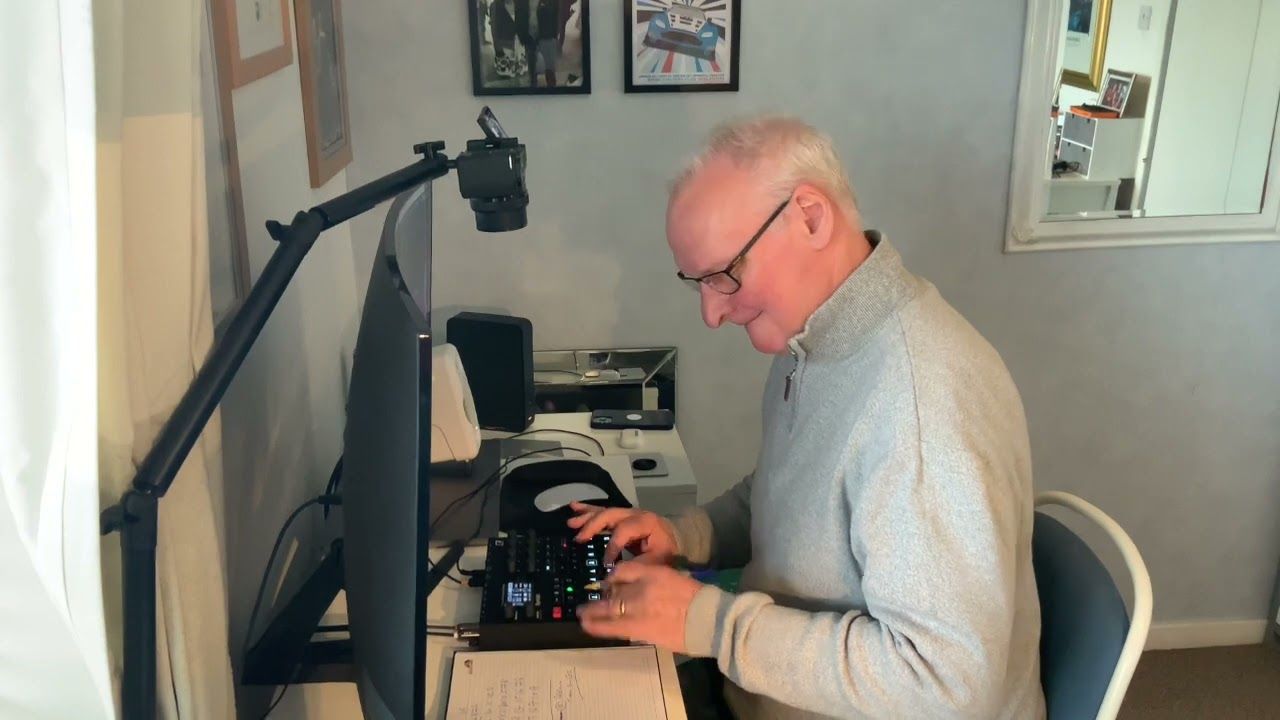
"Last night I got an email from someone who said 'I'm 46, is it okay to start producing music?' I said 'yes, start now!'": How a 67-year-old pensioner went viral performing industrial techno at home
What started as a post-retirement hobby has led The Last DJ to runaway success and his first gig in 40 years. Now he's on a mission to inspire others to do the same
Brett Scott (@brettscott)
Despite all the rhetoric about automation supposedly making our lives easier, the true story being told by Big Tech is that our lives are better when speeded up You are supposed to be in an ever-accelerating race, packing more units of experience into the same unit of time, a phenomenon that requires a contraction of patience and a blurring of experience as everything quickens In the end, this is what ‘convenience’ actually is. It’s a state of being in which you become disassociated and disengaged from the texture of the world around you. You pass through it dreamlike, and suddenly wake up decades years later as an elderly person on your deathbed, thinking “WTF happened”, as then the memory slips away

21 Very Short and Addicting Stories You Can Read Online
It can be extremely hard to find time to read these days. With our lives cluttered with work, school, life, and new amazing episodes of…