


Have you ever tried to enlarge a film negative? We'll walk you step-by-step through the process of enlarging a negative using only analog techniques...

How To Remove Remjet: An Update
Welcome to my blog about all things film photography. We'll talk about books, cameras, film stock, etc. If it's film it's game.

Minimalist tape dispenser by Edgar.A | Download free STL model | Printables.com
Here is an design and minimalistic tape discouter for all the tape under 12mm.

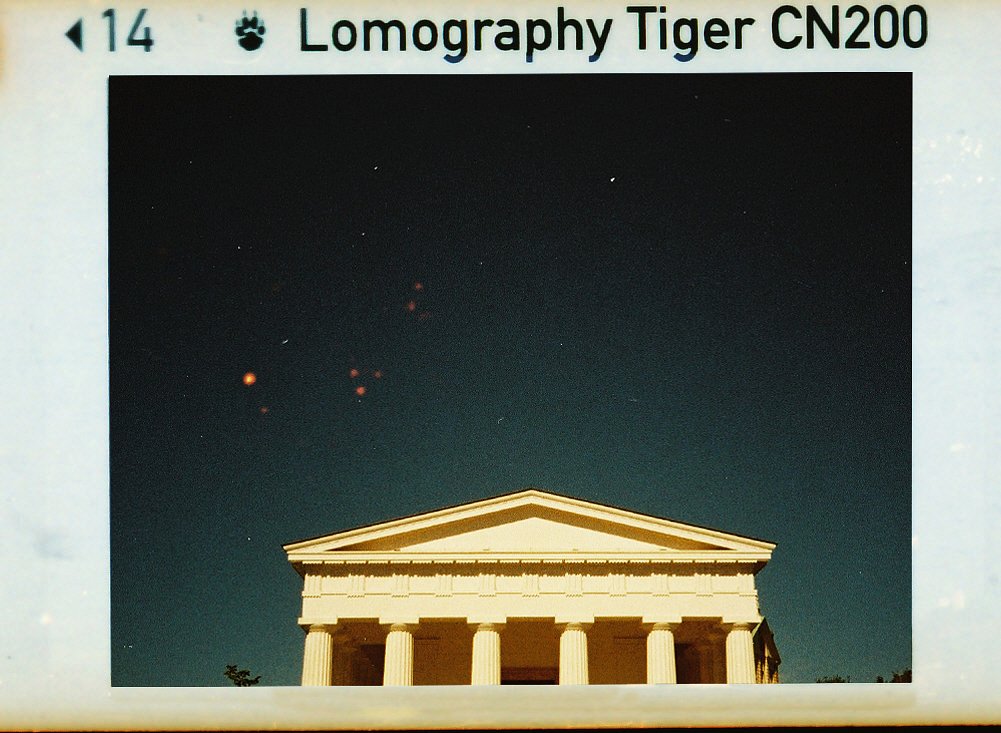
Double Exposures on 35mm Film - Tutorial
Tutorial on how I shoot double exposures on 35mm film by Eric James Photography

Applying Simple Graffiti
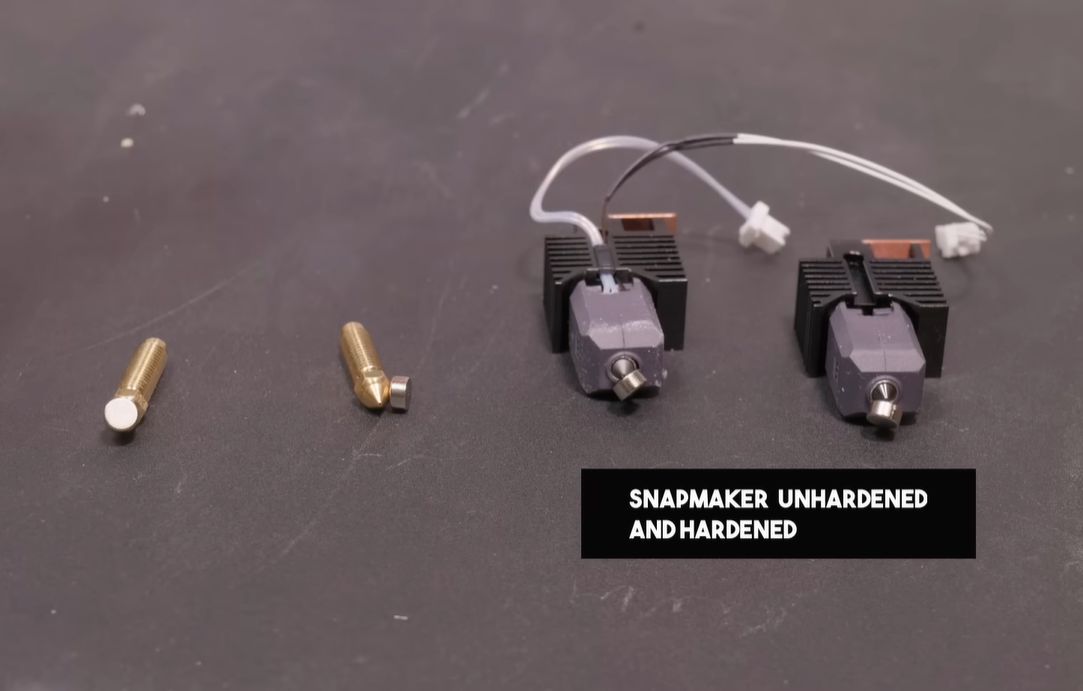
Ways To Embed Magnets In 3D Prints And Not Ruin Printers
Adding magnets to a 3D print can be very useful in a design, but there are some things that can trip you up if you’re not aware of them. In a recent video by [Lost in Tech] some of the essent…
Brosse à dents électrique Dyson CameraJet™ (Rose céramique)
La seule brosse à dents dotée d’une caméra pour cibler avec précision les espaces interdentaires. Optimisée par la technologie Gap Optical Targeting™. Élimine la plaque dentaire pendant le brossage. En Rose céramique. Achetez maintenant
Lomo Quick Hacks: Verwandle einen ISO 200 Pocketfilm in einen ISO 400
Hier gibt's eine DIY-Idee für alle Pocketfilmfans: verwandle einfach und schnell eine ISO 200 110er-Filmkassette in eine ISO 400 Variante.
Meta Ray-Ban glasses make it easy to film (and harass) strangers
We regret to inform you that the pickup artists have discovered Meta Ray-Bans.

Oliver Fabel Brings MicroPython to the Popular Flipper Zero Multitool
If JavaScript isn't your bag, this work-in-progress MicroPython port brings you an alternative way to write programs for the Flipper Zero.

UV Enlargers - Part01: A 100W UV light source
Foaming photopolymers as a high-resolution biomimetic printing platform
Nature creates a diverse range of foam-like materials, from bones to banana peels, through a rich orchestration of physical and biochemical processes across hierarchical length scales1. Here, we introduce deep-foam photolithography, a spatially controlled, light-induced foaming process in which a photosensitized polymer film is exposed to deeply penetrating UV-A light, which initiates the production of both scission and crosslinked polymers throughout the depth of the film. Hypotonically driven case II permeation2 of a weak solvent triggers pore nucleation, expansion and a controllable viscoelastic collapse to create foams through a localized solubilization of polymer fragments within a crosslinked network. The resemblance to amorphous structural whites in nature enables inkless printing in white and greyscale; the resolution is high enough (about 20,000 dots per inch) to generate diffractive colour. This uniquely allows the printing of mechanically expanded and collapsed foams with high aspect ratios (20×); controlled collapse creates hierarchically rough surfaces with lotus-like super-hydrophobicity. Deep-foam photolithography is applied to both films and fibres, using a range of amorphous and semi-crystalline polymeric materials. Patterning μm-level spatial differences in foamability, wettability, optical properties and local thickness enables high-resolution printing, microfluidics and picolitre capture of liquids and colloidal matter.
New blog post airglow.offprint.app/a/3mkddtrbsya23-sharing-or-no…

Sharing or not sharing social graph, why not both? | Airglow | Offprint
airglow.offprint.appAnchor positioning makes this type of effect feel almost too easy to make now. If you want the long-form where I break it down in more detail, you can find it here: youtu.be/8_NQ7ARXz8c

