


Building a social network is not easy. Social networks have value proportional to their size, so participants aren’t motivated to join new social networks which aren’t already large. It’s a paradox where if people haven’t already joined, people aren’t motivated to join. The trouble is that whi...
Death of the private self: how fifteen years of Facebook changed the human condition
In 2004, the social network site was set up to connect people. But now, with lives increasingly played out online, have we forgotten how to be alone?
Avoiding Walled Gardens on the Internet
I occasionally get requests to join private social networking sites, like LinkedIn or Facebook. I always politely decline. I understand the appeal of private social networking, and I mean no disrespect to the people who send invites. But it’s just not for me. I feel very strongly that we

How to beat LinkedIn: The Game
A strategy guide for using a semi-pointless social network in all the wrong ways.


The year social networks were no longer social | TechCrunch
The term “social network” has become a meaningless association of words. Pair those two words and it becomes a tech category, the equivalent of a single

Friend of a Friend: The Facebook That Could Have Been
Why didn't the FOAF standard give us distributed social networking in the 2000s?
In social networks, group boundaries promote the spread of ideas, study finds
Social networks affect every aspect of our lives, from the jobs we get and the technologies we adopt to the partners we choose and the healthiness of our lifestyles. But where do they come from?

Building for Organizers - The People Layer
The most enduring social networks aren’t the prettiest or the most addictive – it’s the ones that empower organizers.
Building for Organizers - The People Layer
The most enduring social networks aren’t the prettiest or the most addictive – it’s the ones that empower organizers.
The Atmosphere . Building the open social web
Cohort — A New Professional Social Graph
“Professional? Social? Isn’t that what LinkedIn is for!” Nope.

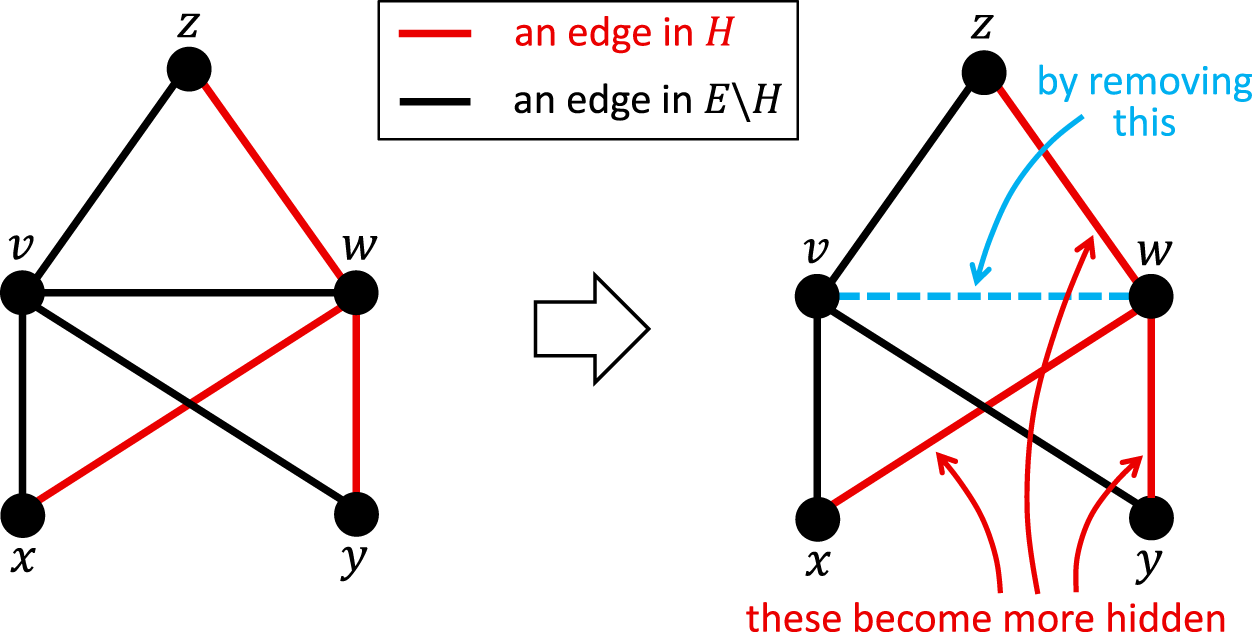
How to Hide One’s Relationships from Link Prediction Algorithms
Our private connections can be exposed by link prediction algorithms. To date, this threat has only been addressed from the perspective of a central authority, completely neglecting the possibility that members of the social network can themselves mitigate such threats. We fill this gap by studying how an individual can rewire her own network neighborhood to hide her sensitive relationships. We prove that the optimization problem faced by such an individual is NP-complete, meaning that any attempt to identify an optimal way to hide one’s relationships is futile. Based on this, we shift our attention towards developing effective, albeit not optimal, heuristics that are readily-applicable by users of existing social media platforms to conceal any connections they deem sensitive. Our empirical evaluation reveals that it is more beneficial to focus on “unfriending” carefully-chosen individuals rather than befriending new ones. In fact, by avoiding communication with just 5 individuals, it is possible for one to hide some of her relationships in a massive, real-life telecommunication network, consisting of 829,725 phone calls between 248,763 individuals. Our analysis also shows that link prediction algorithms are more susceptible to manipulation in smaller and denser networks. Evaluating the error vs. attack tolerance of link prediction algorithms reveals that rewiring connections randomly may end up exposing one’s sensitive relationships, highlighting the importance of the strategic aspect. In an age where personal relationships continue to leave digital traces, our results empower the general public to proactively protect their private relationships.
Remote Collaboration Fuses Fewer Breakthrough Ideas - Slashdot
Abstract of a paper:Theories of innovation emphasize the role of social networks and teams as facilitators of breakthrough discoveries. Around the world, scientists and inventors are more plentiful and interconnected today than ever before. However, although there are more people making discoveries,...

Why Your Social Capital is Probably Worthless
In 1973, sociologist Mark Granovetter published one of the most influential papers in social network theory. "The Strength of Weak Ties" demonstrated something counterintuitive: when it comes to finding jobs and opportunities, your casual acquaintances are often more valuable than your close friends. This makes perfect sense when you think

I get the impression that the people at @wsocial.eu haven’t grasped the principle of a free and open social network protocol. They look a bit like venture capitalists turning up at Wikipedia and wondering how they can make a fortune there. Poke @anna.wsocial.eu
It's important to understand: social networks are not meant to be one-size-fits all! When Meta (which makes Threads, as well as Facebook and Instagram) creates platforms that have hundreds of millions of users, they do things like enable genocides, where tens of thousands of innocent people die.

Christopher Mims
So I guess either Bluesky becomes a nonprofit or we all start sharing our Threads handles on here…?

