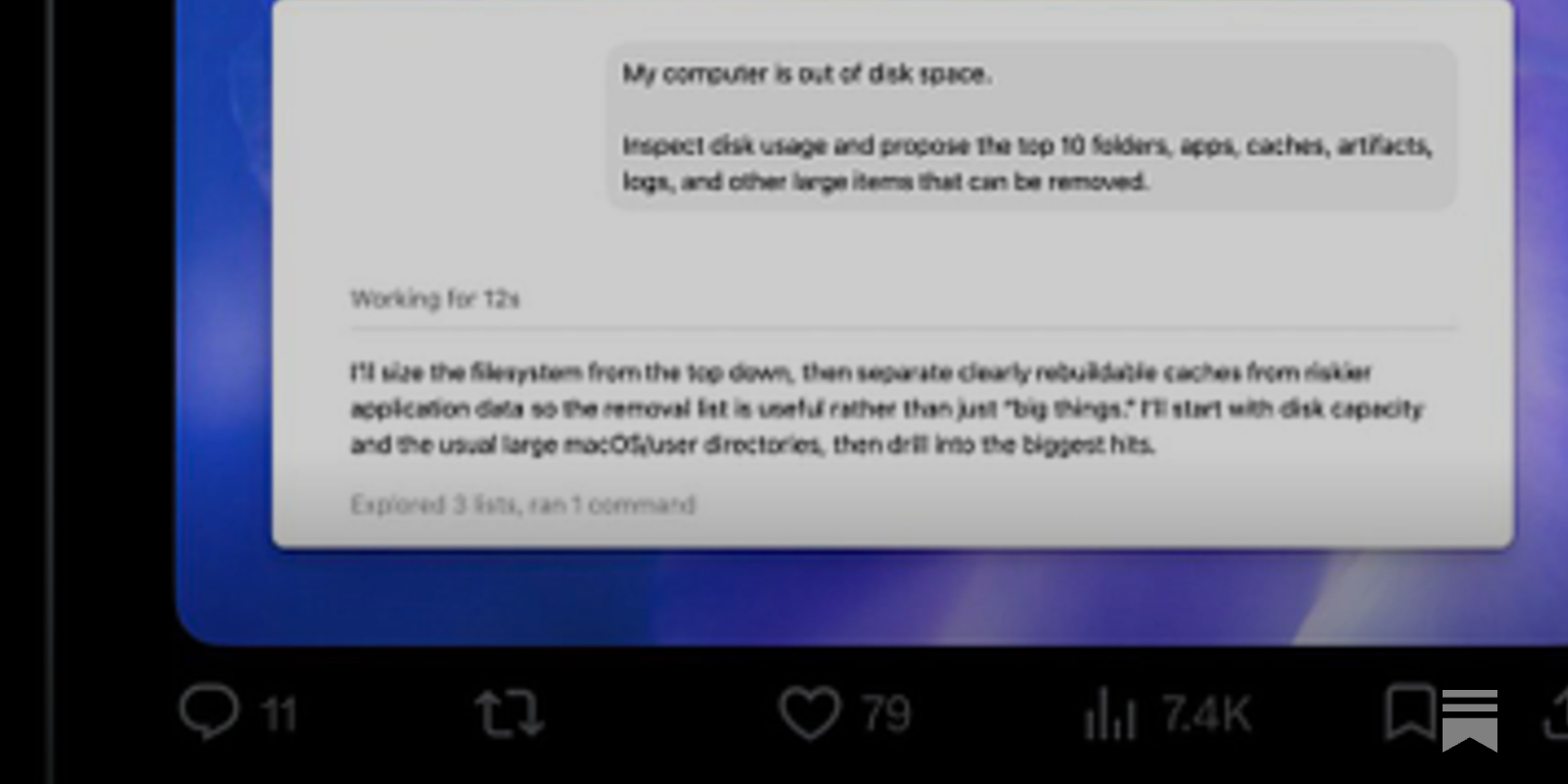
Literate programming is the idea that code should be intermingled with prose such that an uninformed reader could read a code base as a narrative, and come away with an understanding of how it works and what it does. Although I have long been intrigued by this idea, and have found uses for it in a couple1 of different cases2, I have found that in practice literate programming turns into a chore of maintaining two parallel narratives: the code itself, and the prose. This has obviously limited its adoption.
The 80% Problem in Agentic Coding
Managing comprehension debt when leaning on AI to code

On Programming with Agents
From the Zed Blog: Agents handle typing so we can focus on thinking.
Chris Granger - Coding is not the new literacy
Despite the good intentions behind the movement to get people to code, both the basic premise and approach are flawed. The movement sits on the idea that “coding is the new literacy,” but that takes a narrow view of what literacy really is.
How to harness AI
"Coding agents" are complicated but intelligible

Coding After Coders: The End of Computer Programming as We Know It
In the era of A.I. agents, many Silicon Valley programmers are now barely programming. Instead, what they’re doing is deeply, deeply weird.

Coding After Coders: The End of Computer Programming as We Know It
In the era of A.I. agents, many Silicon Valley programmers are now barely programming. Instead, what they’re doing is deeply, deeply weird.
AI Code
As AI Coding Agents write more code, it's more important than ever that we're intentional about the code it writes.
The Gap Through Which We Praise the Machine
My current theory of agentic programming: people are amazing at adapting the tools they're given and totally underestimate the extent to which they do it, and the amount of skill we build doing that is an incidental consequence of how badly the tools are designed.

AI Literacy Across the Curriculum
As you have no doubt seen, AI is becoming ubiquitous in our lives and in the technologies we use every day. Generative AI is no longer an experimental tool, but a deployed technology in many of the…

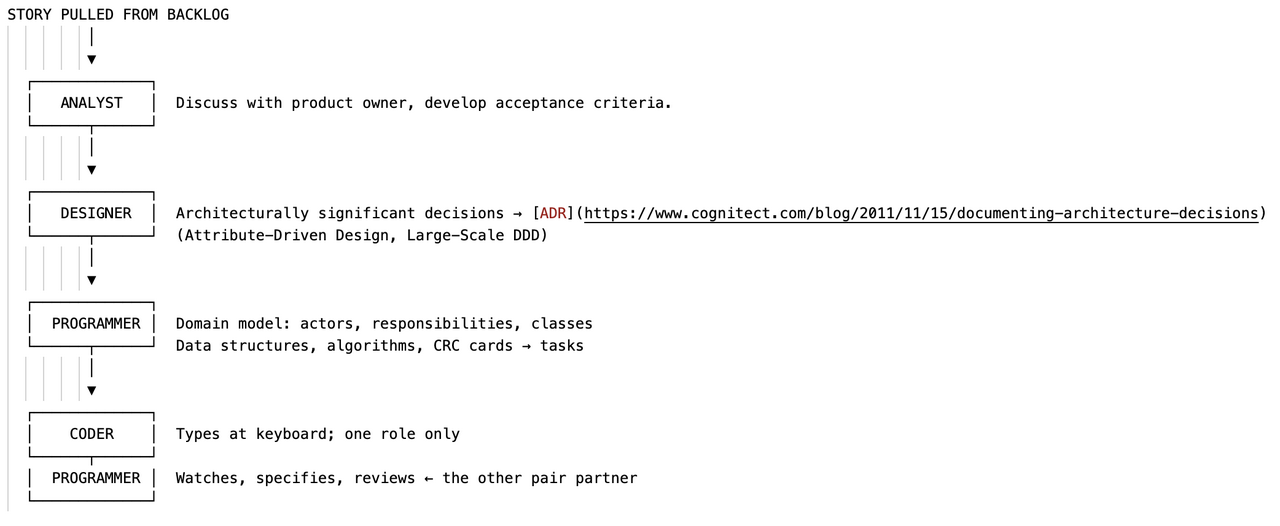
Coding Is Dead, Long Live Programming — Ian Cooper - Staccato Signals
Summary In this post, we argue that the role of a coder now belongs to a coding agent, but that the distinct role of a programmer define...
Rachel Thomas on Twitter / X
"We argue for a reorientation from autonomous to human-centered coding agents: systems designed not only to complete tasks, but to collaborate effectively with people."@ZhiruoW @jyangballin @KLierethttps://t.co/ncWiAUxwbo 1/— Rachel Thomas (@math_rachel) October 20, 2026
Agent READMEs: An Empirical Study of Context Files for Agentic Coding
Agentic coding tools receive goals written in natural language, break them down into specific tasks, and write or execute code with minimal human intervention. Central to this process are agent context files (e.g., AGENTS.md and CLAUDE.md) that provide persistent, project-level instructions. In this paper, we conduct the first large-scale empirical study of 2,303 agent context files from 1,925 repositories to characterize their structure, maintenance, and content. We find that these files are not static documentation but complex, difficultto-read artifacts that evolve like configuration code through frequent, small additions. Our content analysis of 16 instruction types shows that developers prioritize functional context, such as test procedures (75.9%), implementation details (70.8%), and architecture (68.1%). We also identify a significant gap: non-functional requirements such as security (14.8%) and performance (14.5%) are rarely specified. These findings indicate that while developers use context files to make agents functional, they provide few guardrails to ensure that agent-written code is secure or performant, highlighting the need for improved tools and practices.

Joshua Gu on Twitter / X
Recent agentic systems (Claude Code, Codex, RLM, etc.) push context out of the prompt and into the environment (e.g., as files). This helps them maintain long-term knowledge about their goals and functionality.🚨 While this is a good idea, we show a surprising result: systems… pic.twitter.com/XHFVaDcr4l— Joshua Gu (@astrogu_) May 20, 2026

Three camps alike in dignity
🪧 A full catalogue of the field can now be found at agentlanguages.dev. In the last six months, programming languages designed for models rather than humans have started to appear. Work on most began entirely independently, initiated by people who had never heard of each other, but all roughly during the same window of time. […]

Claude Code, Codex and Agentic Coding #8
When I started this series, everyone was going crazy for coding agents.