

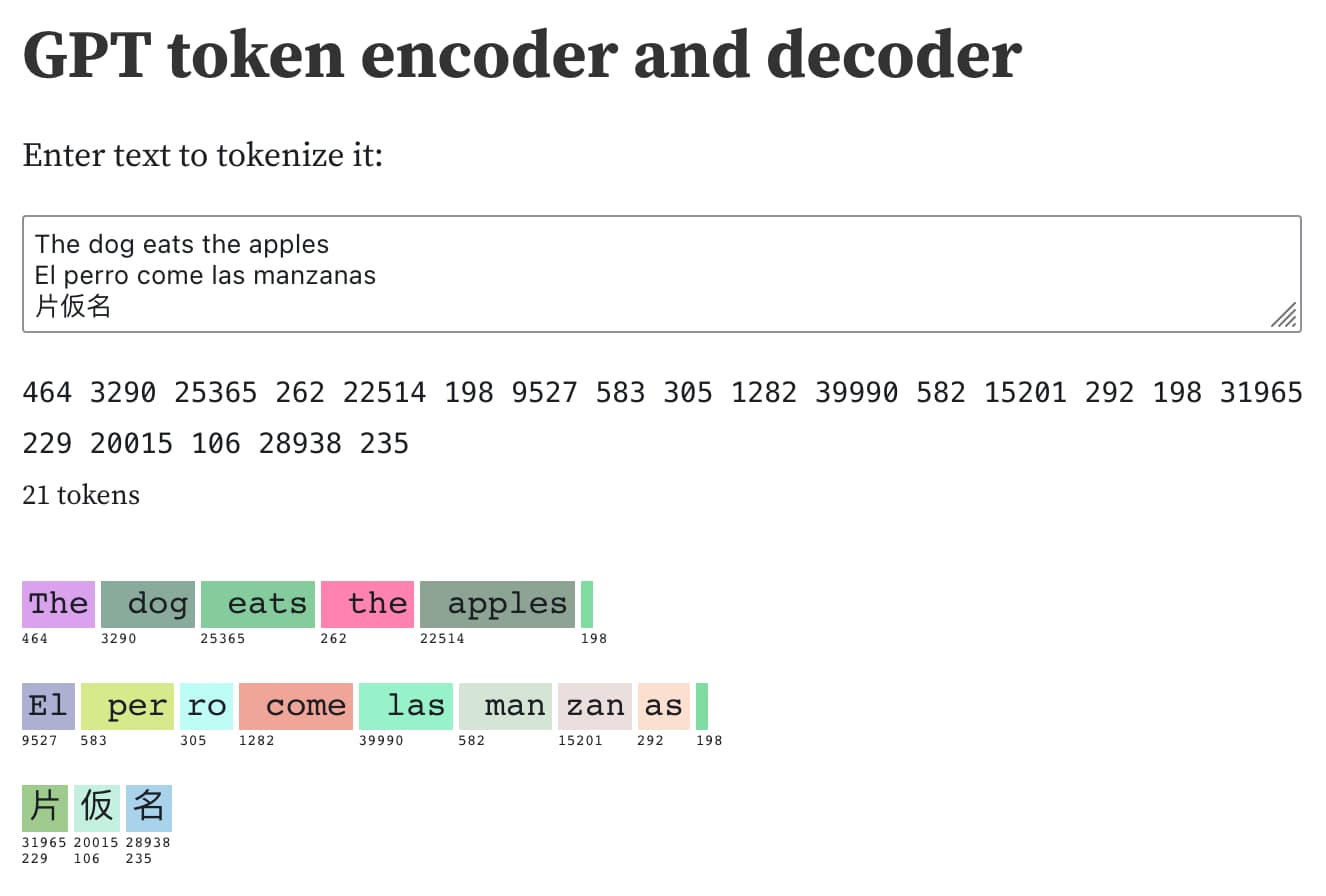
Large language models such as GPT-3/4, LLaMA and PaLM work in terms of tokens. They take text, convert it into tokens (integers), then predict which tokens should come next. Playing …
Context Rot: How Increasing Input Tokens Impacts LLM Performance
Large Language Models (LLMs) are typically presumed to process context uniformly—that is, the model should handle the 10,000th token just as reliably as the 100th. However, in practice, this assumption does not hold. We observe that model performance varies significantly as input length changes, even on simple tasks. In this report, we evaluate 18 LLMs, including the state-of-the-art GPT-4.1, Claude 4, Gemini 2.5, and Qwen3 models. Our results reveal that models do not use their context uniformly; instead, their performance grows increasingly unreliable as input length grows.
Mastering Token Limits and Memory in ChatGPT and other Large Language Models
A Guide for the Everyday User

The ability for language models to write coherent text can be explained as each token develops some affinity for other tokens. During next token prediction each of the previous tokens "vote" for the tokens they have high affinity for, which results in coherent continuation.
The ability for language models to write coherent text can be explained as each token develops some affinity for other tokens.During next token prediction each of the previous tokens "vote" for the tokens they have high affinity for, which results in coherent continuation. https://t.co/APkIpDoi4N— Chomba Bupe (@ChombaBupe) April 21, 2024
Your LLM Knows the Future: Uncovering Its Multi-Token Prediction Potential
Autoregressive language models are constrained by their inherently sequential nature, generating one token at a time. This paradigm limits inference speed and parallelism, especially during later stages of generation when the direction and semantics of text are relatively certain. In this work, we propose a novel framework that leverages the inherent knowledge of vanilla autoregressive language models about future tokens, combining techniques to realize this potential and enable simultaneous prediction of multiple subsequent tokens. Our approach introduces several key innovations: (1) a masked-input formulation where multiple future tokens are jointly predicted from a common prefix; (2) a gated LoRA formulation that preserves the original LLM's functionality, while equipping it for multi-token prediction; (3) a lightweight, learnable sampler module that generates coherent sequences from the predicted future tokens; (4) a set of auxiliary training losses, including a consistency loss, to enhance the coherence and accuracy of jointly generated tokens; and (5) a speculative generation strategy that expands tokens quadratically in the future while maintaining high fidelity. Our method achieves significant speedups through supervised fine-tuning on pretrained models. For example, it generates code and math nearly 5x faster, and improves general chat and knowledge tasks by almost 2.5x. These gains come without any loss in quality.

Tokenization Tax 2026: LLM Tokenizer Comparison | ellamind
A measurement study of 20 LLM tokenizers across 12 languages and 21 kinds of text. On German, Claude 4.7+ needs 2.01x the tokens of the OpenAI reference, and Cohere Command A+ the fewest.
Introducing GPT-5.4
Introducing GPT-5.4, OpenAI’s most most capable and efficient frontier model for professional work, with state-of-the-art coding, computer use, tool search, and 1M-token context.

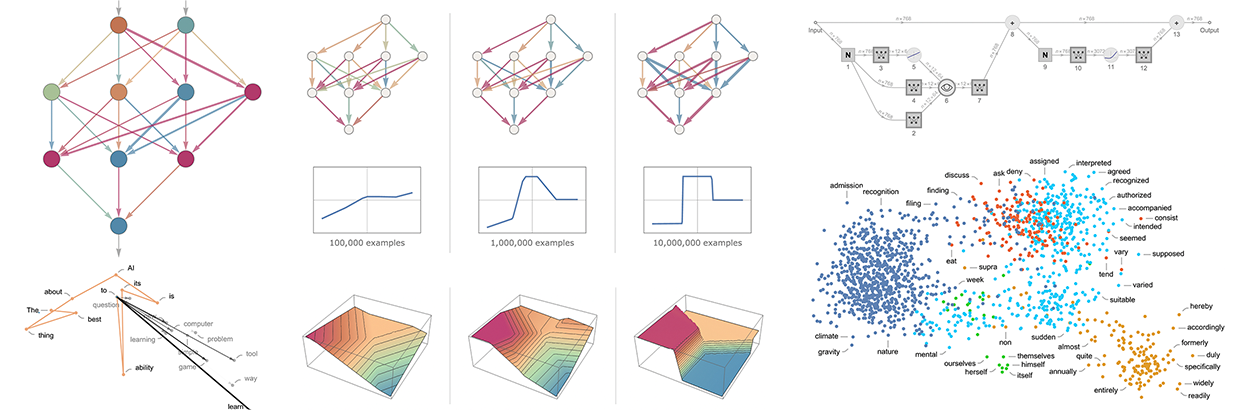
What Is ChatGPT Doing … and Why Does It Work?
Stephen Wolfram explores the broader picture of what's going on inside ChatGPT and why it produces meaningful text. Discusses models, training neural nets, embeddings, tokens, transformers, language syntax.
The Bitter Lesson is coming for Tokenization
Highlights the desire to replace tokenization with a general method that better leverages compute and data. We'll see tokenization's fragility and review the Byte Latent Transformer arch.

The Curse of Recursion: Training on Generated Data Makes Models Forget
Stable Diffusion revolutionised image creation from descriptive text. GPT-2, GPT-3(.5) and GPT-4 demonstrated astonishing performance across a variety of language tasks. ChatGPT introduced such...
What Language is This? Ask Your Tokenizer
Language Identification (LID) is an important component of many multilingual natural language processing pipelines, where it facilitates corpus curation, training data analysis, and cross-lingual evaluation of large language models. Despite near-perfect performance on high-resource languages, existing systems remain brittle in low-resource and closely related language settings. We introduce UniLID, a simple and efficient LID method based on the UnigramLM tokenization algorithm, leveraging its probabilistic framing, parameter estimation technique and inference strategy. In short, to predict a string's language label, we simply ask: under which language's unigram distribution is this string most likely? Our formulation is data- and compute-efficient, supports incremental addition of new languages without retraining existing models, and can naturally be integrated into existing language model tokenization pipelines. Empirical evaluations against widely used baselines, including fastText, GlotLID and CLD3, show that UniLID achieves competitive performance on standard benchmarks, substantially improves sample efficiency in low-resource settings -- reaching ~70% accuracy with as few as five labeled samples per language -- and delivers large gains on fine-grained dialect identification.
GLaM: Efficient Scaling of Language Models with Mixture-of-Experts
Scaling language models with more data, compute and parameters has driven significant progress in natural language processing. For example, thanks to scaling, GPT-3 was able to achieve strong results on in-context learning tasks. However, training these large dense models requires significant amounts of computing resources. In this paper, we propose and develop a family of language models named GLaM (Generalist Language Model), which uses a sparsely activated mixture-of-experts architecture to scale the model capacity while also incurring substantially less training cost compared to dense variants. The largest GLaM has 1.2 trillion parameters, which is approximately 7x larger than GPT-3. It consumes only 1/3 of the energy used to train GPT-3 and requires half of the computation flops for inference, while still achieving better overall zero-shot and one-shot performance across 29 NLP tasks.
Embers of autoregression show how large language models are shaped by the problem they are trained to solve
The widespread adoption of large language models (LLMs) makes it important to recognize their strengths and limitations. We argue that to develop a holistic understanding of these systems, we must consider the problem that they were trained to solve: next-word prediction over Internet text. By recognizing the pressures that this task exerts, we can make predictions about the strategies that LLMs will adopt, allowing us to reason about when they will succeed or fail. Using this approach—which we call the teleological approach—we identify three factors that we hypothesize will influence LLM accuracy: the probability of the task to be performed, the probability of the target output, and the probability of the provided input. To test our predictions, we evaluate five LLMs (GPT-3.5, GPT-4, Claude 3, Llama 3, and Gemini 1.0) on 11 tasks, and we find robust evidence that LLMs are influenced by probability in the hypothesized ways. Many of the experiments reveal surprising failure modes. For instance, GPT-4’s accuracy at decoding a simple cipher is 51% when the output is a high-probability sentence but only 13% when it is low-probability, even though this task is a deterministic one for which probability should not matter. These results show that AI practitioners should be careful about using LLMs in low-probability situations. More broadly, we conclude that we should not evaluate LLMs as if they are humans but should instead treat them as a distinct type of system—one that has been shaped by its own particular set of pressures.

Embers of autoregression show how large language models are shaped by the problem they are trained to solve
The widespread adoption of large language models (LLMs) makes it important to recognize their strengths and limitations. We argue that to develop a holistic understanding of these systems, we must consider the problem that they were trained to solve: next-word prediction over Internet text. By recognizing the pressures that this task exerts, we can make predictions about the strategies that LLMs will adopt, allowing us to reason about when they will succeed or fail. Using this approach—which we call the teleological approach—we identify three factors that we hypothesize will influence LLM accuracy: the probability of the task to be performed, the probability of the target output, and the probability of the provided input. To test our predictions, we evaluate five LLMs (GPT-3.5, GPT-4, Claude 3, Llama 3, and Gemini 1.0) on 11 tasks, and we find robust evidence that LLMs are influenced by probability in the hypothesized ways. Many of the experiments reveal surprising failure modes. For instance, GPT-4’s accuracy at decoding a simple cipher is 51% when the output is a high-probability sentence but only 13% when it is low-probability, even though this task is a deterministic one for which probability should not matter. These results show that AI practitioners should be careful about using LLMs in low-probability situations. More broadly, we conclude that we should not evaluate LLMs as if they are humans but should instead treat them as a distinct type of system—one that has been shaped by its own particular set of pressures.
Build A Large Language Model (From Scratch), Published by Manning, ISBN 978-1633437166
Implement a ChatGPT-like LLM in PyTorch from scratch, step by step
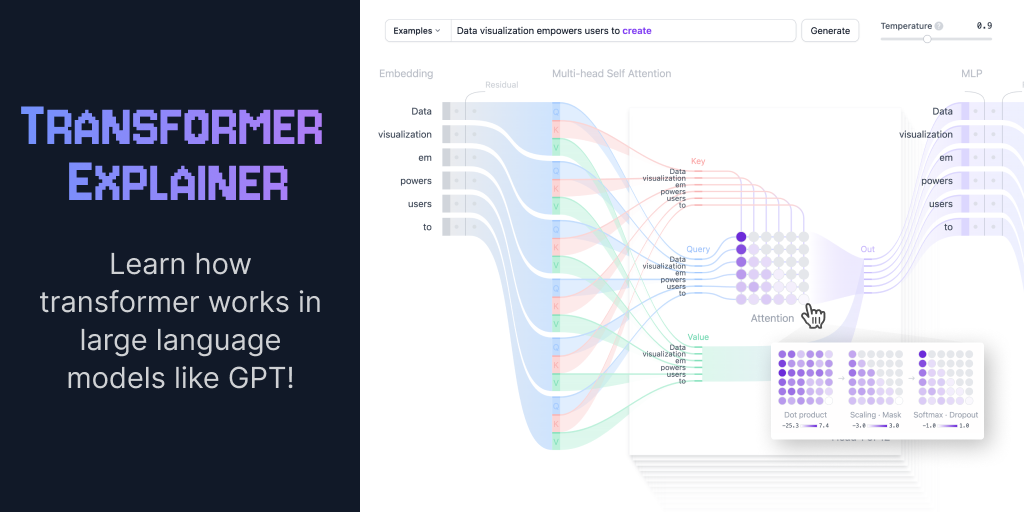
Transformer Explainer: LLM Transformer Model Visually Explained
An interactive visualization tool showing you how transformer models work in large language models (LLM) like GPT.
I'm creating a series of short form videos about how language models work technically. The goal is to be something in between "you know it's next token prediction" and "now you've taken a machine learning class." I'd love your thoughts so here are the first few! 🧵 youtube.com/shorts/VZB8XCcyllE

How does ChatGPT work? Or rather, language models in general- Part 1 attempting a lay explanation.
www.youtube.com