

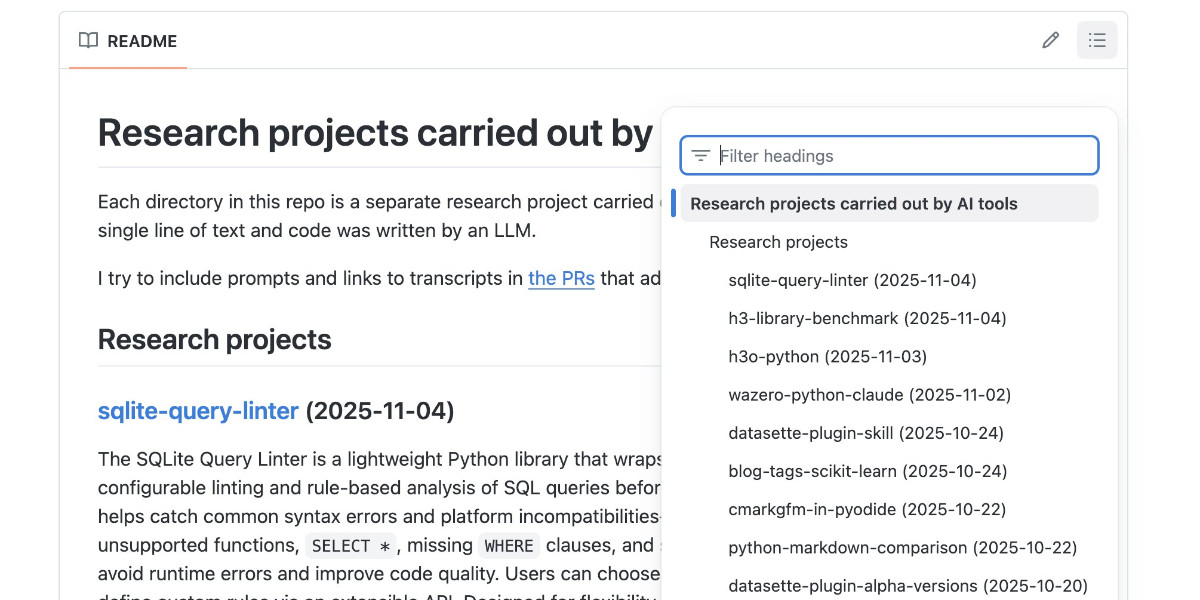
I’ve been experimenting with a pattern for LLM usage recently that’s working out really well: asynchronous code research tasks. Pick a research question, spin up an asynchronous coding agent and …
Designing agentic loops
Coding agents like Anthropic’s Claude Code and OpenAI’s Codex CLI represent a genuine step change in how useful LLMs can be for producing working code. These agents can now directly …
Claude Code, Codex and Agentic Coding #8
When I started this series, everyone was going crazy for coding agents.
How I program with Agents
Personal experiences using feedback-driven LLMs to write programs.

truefoundry/trueforge
The open-source agent harness - the runtime layer that turns an LLM into a working agent.
Agentic Engineering Patterns - Simon Willison's Weblog
Patterns for getting the best results out of coding agents like Claude Code and OpenAI Codex. See my introduction for more on this project.
Small agents for everyday research workflows - HiRSE Summer of AI for RSE
Paul Iusztin on Twitter / X
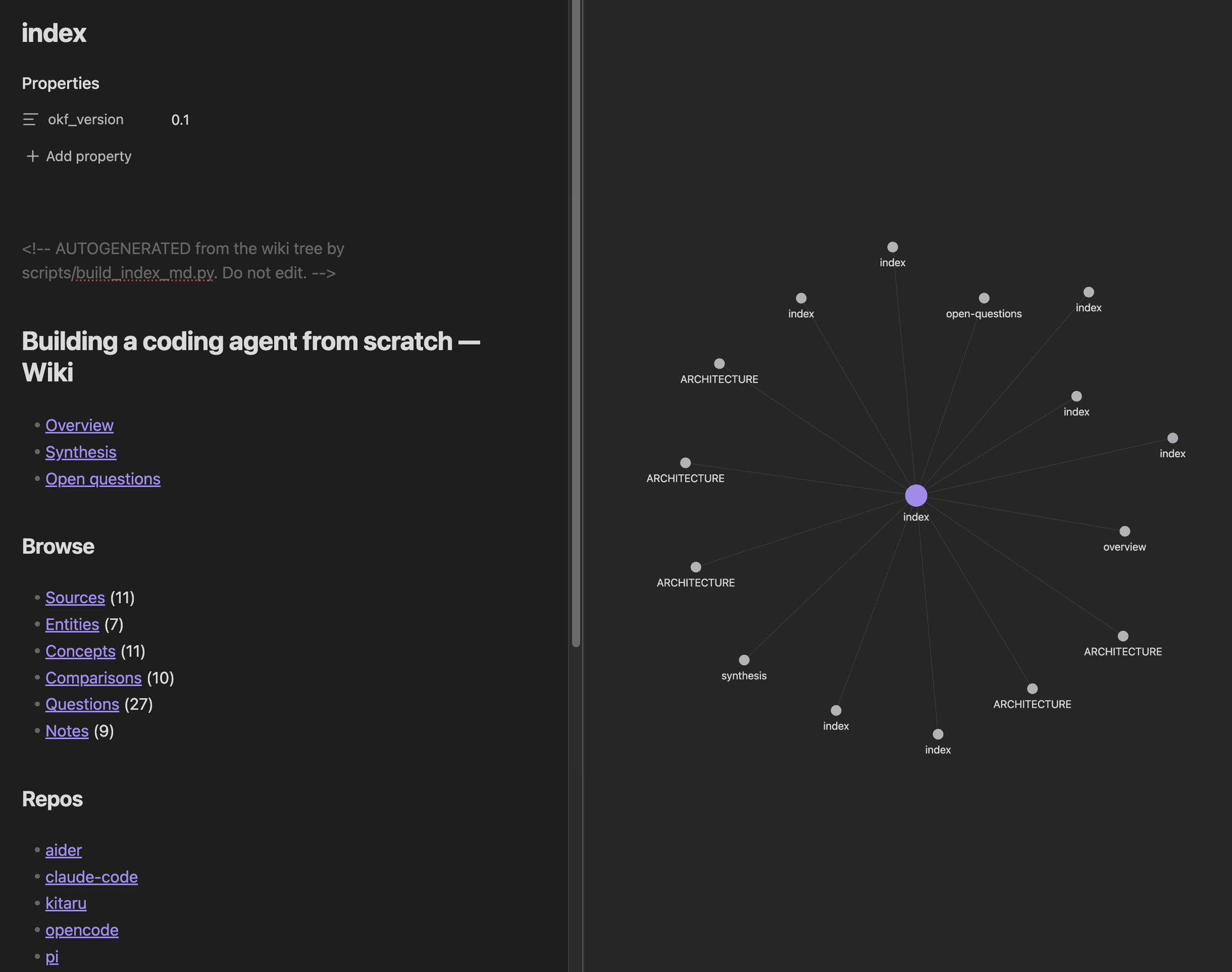
Using LLM wikis for agentic coding is pure gold. It's so powerful it feels like cheating. Here is how I used it to develop a coding harness from scratch:1. I ingested multiple coding harnesses repositories into the LLM wiki (e.g., opencode, pi, hermes, etc.) pic.twitter.com/7WE7NI9tnN— Paul Iusztin (@pauliusztin_) June 29, 2026
Andrej Karpathy on Twitter / X
A few random notes from claude coding quite a bit last few weeks.Coding workflow. Given the latest lift in LLM coding capability, like many others I rapidly went from about 80% manual+autocomplete coding and 20% agents in November to 80% agent coding and 20% edits+touchups in…— Andrej Karpathy (@karpathy) January 26, 2026
My Agentic Coding Setup, July 2026
With the right tools, coding agents can run autonomously, in parallel, and be reachable from anywhere. Here's how I've stitched them together.
Agents Done Right: A Framework Vision for 2026
Agents choke on context, loop on failures, and dump walls of code for review. It's time to rethink the architecture.
Writing about Agentic Engineering Patterns
I’ve started a new project to collect and document Agentic Engineering Patterns—coding practices and patterns to help get the best results out of this new era of coding agent development …
Scaling long-running autonomous coding · Cursor
We've been experimenting with running coding agents autonomously for weeks at a time.
Evaluating AGENTS.md: Are Repository-Level Context Files Helpful for Coding Agents?
A widespread practice in software development is to tailor coding agents to repositories using context files, such as AGENTS.md, by either manually or automatically generating them. Although this practice is strongly encouraged by agent developers, there is currently no rigorous investigation into whether such context files are actually effective for real-world tasks. In this work, we study this question and evaluate coding agents' task completion performance in two complementary settings: established SWE-bench tasks from popular repositories, with LLM-generated context files following agent-developer recommendations, and a novel collection of issues from repositories containing developer-committed context files. Across multiple coding agents and LLMs, we find that context files tend to reduce task success rates compared to providing no repository context, while also increasing inference cost by over 20%. Behaviorally, both LLM-generated and developer-provided context files encourage broader exploration (e.g., more thorough testing and file traversal), and coding agents tend to respect their instructions. Ultimately, we conclude that unnecessary requirements from context files make tasks harder, and human-written context files should describe only minimal requirements.

Agent Recipes
Explore common agent recipes with ready to copy code to improve your LLM applications.
