

Shlok Khemani has been doing excellent work reverse-engineering LLM systems and documenting his discoveries. Last week he wrote about ChatGPT memory. This week it's Claude. Claude's memory system has two …
I Reverse Engineered Claude's Memory System, and Here's What I Found!
When I reverse-engineered ChatGPT’s memory system, I found it uses pre-computed summaries injected into every prompt. But Claude’s approach is different. Through extensive experimentation, I discovered Claude uses on-demand tools and selective retrieval, a fundamentally different architecture. But how does this actually work? And how does it compare to ChatGPT’s approach? This is the second post in a series where I reverse-engineer the memory systems of popular AI assistants. The first post focused on ChatGPT’s memory system. In this post, we’ll do the same exercise for Claude—and the differences are fascinating.
Claude Memory: A Different Philosophy
A breakdown of Claude's memory implementation, how it differs from ChatGPT, and what these opposite approaches reveal about each company's philosophy.
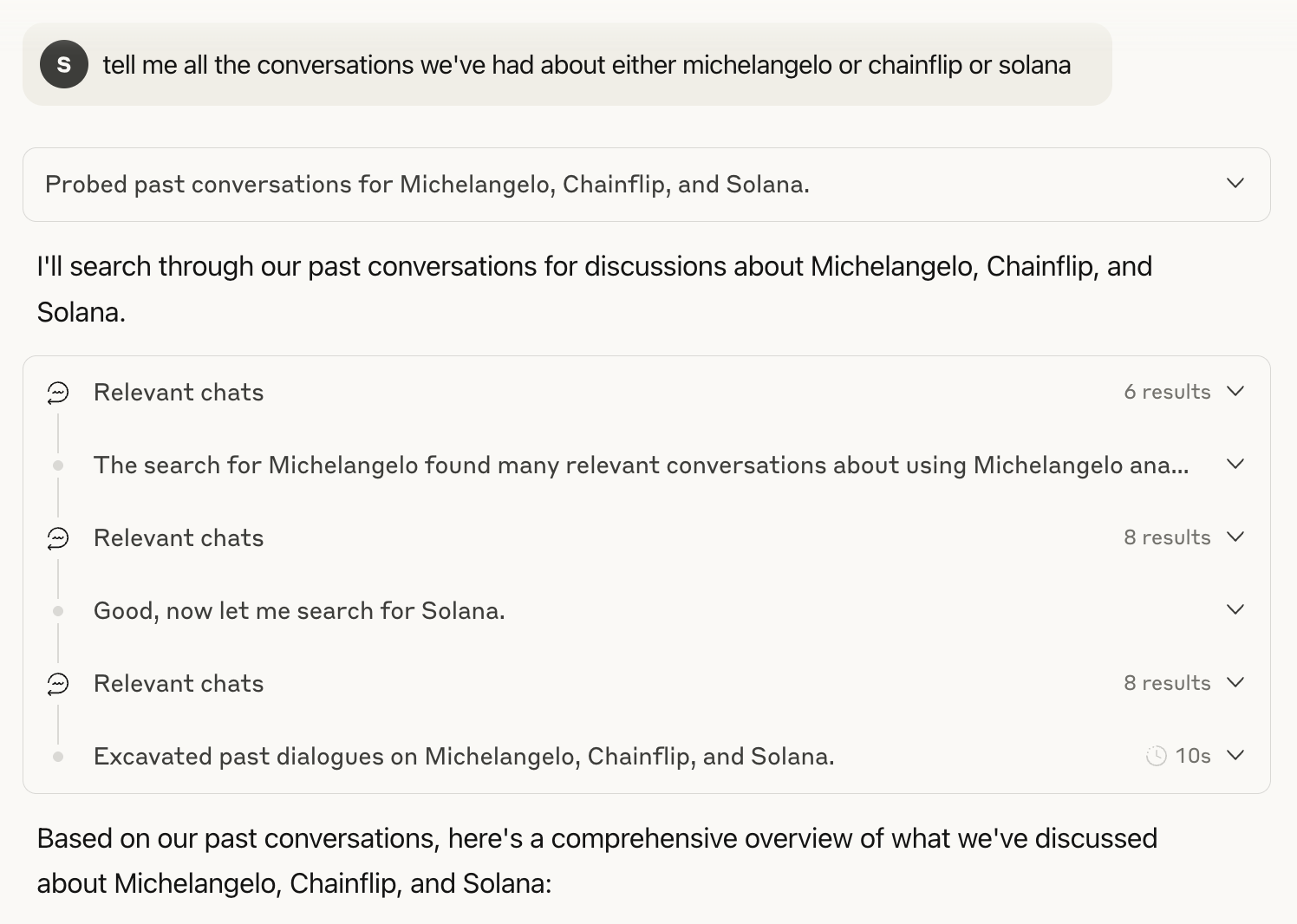
ChatGPT Memory and the Bitter Lesson
I reverse-engineered ChatGPT's memory system to understand what it stores, how it works (spoiler: not RAG!), and why OpenAI built it this way. Complete with prompts you can try yourself to explore your own ChatGPT memory.
Shlok Khemani on Twitter / X
It's telling that neither ChatGPT nor Claude uses RAG for their memory systems, despite having:- the most data (oldest services, highest usage, general purpose)- strong incentives for memory (user lock-in)- A+ talent and alpha on model trajectoriesMaybe RAG just doesn't…— Shlok Khemani (@shloked) September 15, 2025
I Reverse Engineered ChatGPT's Memory System, and Here's What I Found!
When I asked ChatGPT what it remembered about me, it listed 33 facts from my name and career goals to my current fitness routine. But how does it actually store and retrieve this information? And why does it feel so seamless? After extensive experimentation, I discovered that ChatGPT’s memory system is far simpler than I expected. No vector databases. No RAG over conversation history. Instead, it uses four distinct layers: session metadata that adapts to your environment, explicit facts stored long-term, lightweight summaries of recent chats, and a sliding window of your current conversation.
Use Claude’s chat search and memory to build on previous context | Anthropic Help Center
You can prompt Claude to search through your previous conversations to find and reference relevant information in new chats. Claude can also remember context from your chats and carry it into new conversations and Cowork tasks. This article explains how chat search and memory work, what Claude does and doesn't remember, how to review and edit what's saved, and how to turn these features on or off.

ChatGPT will now use its 'memory' to personalize web searches | TechCrunch
ChatGPT will now use its 'memory' to personalize web searches, thanks to a new feature called Memory with Search.

ellen livia ᯅ on Twitter / X
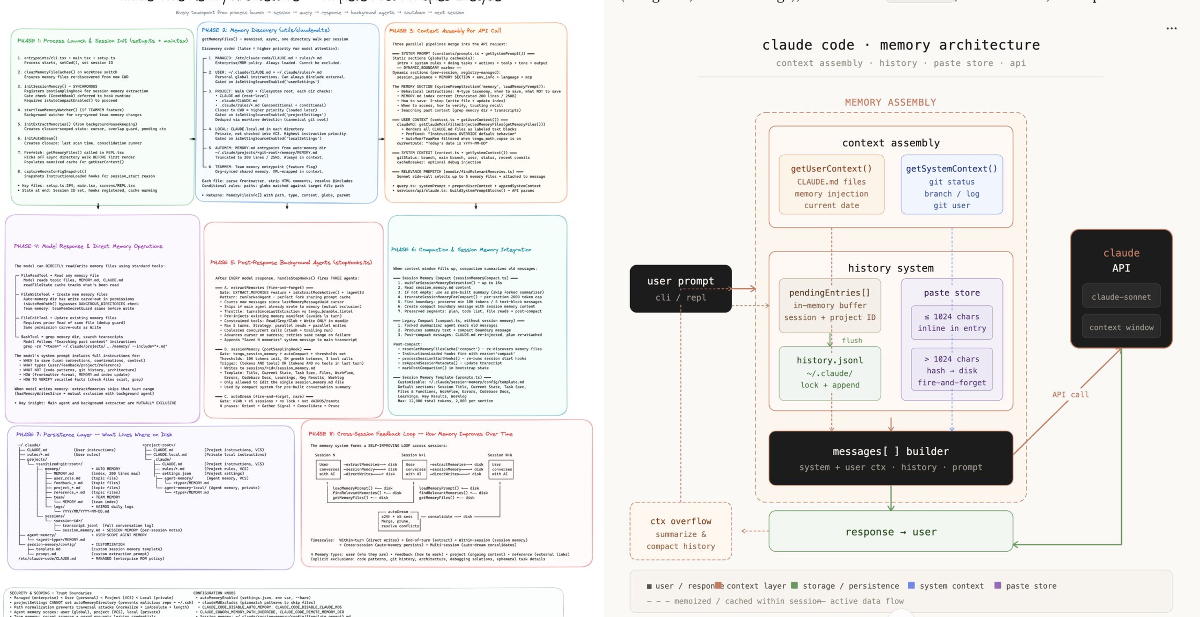
here's how Claude Code actually handles memory : all 8 phases 🧵Our team at @mem0ai use @claudeai a lot, we deeply care about memory. here is a summary of how it works 👇User Input -> Context Assembly -> History System -> API / Query -> Response -> SummaryPhase 1: session… pic.twitter.com/hcZbJzbUxB— ellen livia ᯅ (@ellen_in_sf) March 31, 2026
OpenAI on Twitter / X
We’re starting to roll out a lightweight version of memory improvements to Free users. In addition to existing saved memories, ChatGPT now references your recent conversations to provide more personalized responses. https://t.co/RZFYUC9JAT https://t.co/O8lubCBNZO— OpenAI (@OpenAI) June 3, 2025
Claude carries memory into work - Sensemaker
Chat and cloud Cowork now share remembered topics; continuity improves, but so can the reach of a mistake.
Dreaming: Better memory for a more helpful ChatGPT
ChatGPT introduces a new memory system to better remember preferences, keeping context fresh and relevant across conversations.
Anthropic's Opinionated Memory Bet
A deep dive into Claude's new memory tool—how it works, the architectural bets they're making, and whether it's the right fit for your application.
How ChatGPT Remembers You: A Deep Dive into Its Memory and History Features
Deep-Dive on how ChatGPT profiles your account and how it can reference it during conversations

i can’t help but think we’re far from nailing memory systems this one here is extremely interesting. two LLMs at once, one just managing and surfacing memory for the other

Asa ⭔
I'm not a fan of the decoupled 'memory retrieval → task execution' loop, so my agent has a subconscious background thread that looks for relevant, unique memory context in its experiential database while it runs and injects it on top of the live context window.
