
I have heard the following from a bunch of people, one of whom was me six months ago: “I keep on reading all these posts by really smart people who identify as Reactionaries, and I don’…
The Anti-Reactionary FAQ
[Edit 3/2014: I no longer endorse all the statements in this document. I think many of the conclusions are still correct, but especially section 1 is weaker than it should be, and many reactionarie…
Reactionary Centrism: a Response to Jonathan Chait
Jonathan Chait recently criticized a 2018 essay I wrote about “reactionary centrism," a term that's picked up some steam over the years from journalists like Michael Hobbes and history professor Thomas Zimmer. Below, I've quoted some relevant passages from Chait's essay and some brief responses. Huertas defined

Editor's Notes: Reactionaries Are Not Fun Weirdos
One wonders why Richard Hanania has gotten so much attention.

A Historical Reference of React Criticism—zachleat.com
There have been a number of criticisms levied at the React project over the years, some of them handled and some of them still wavering in the wind. In this…
Folks in mentions call me a “fascism apologist” for not calling Scott a crypto-reactionary. He IS credulous about reactionary ideas & “insight”, part of their recruitment pipeline, and his community overlaps heavily with theirs. A fellow traveller. Bad & dangerous enoug
Folks in mentions call me a “fascism apologist” for not calling Scott a crypto-reactionary. He IS credulous about reactionary ideas & “insight”, part of their recruitment pipeline, and his community overlaps heavily with theirs. A fellow traveller.Bad & dangerous enough.19/— Jonathan Korman 🟣 (@miniver) February 18, 2021

Becca Lewis - Reactionary Futurism - 2025/2027 Rogers Chair Series
Superheros are Reactionary | The Paper Pilot
The Paper Pilot's digital garden of thoughts on philosophy, politics, and sociology
Cognitive Autonomous Zones: against “framework fundamentalism” — Belshaw Brain Archive
In my previous post on the “cash value” of truth, I explored how Pragmatist philosophy offers a way to test beliefs through their practical consequences. Is something, as William James would put it, “
Opinionrot: Toward a Theory of Collective Reasoning Decay in the Age of Synthetic Consensus
This article introduces the concept of opinionrot to describe the structural erosion of collective reasoning within contemporary information systems. Rather than treating post-truth politics as a failure of individual rationality or as a decline in information quality alone, the article argues that public reasoning is increasingly shaped by infrastructures that capture attention, monetize cognitive bias, and automate the conditions under which claims become visible and credible. Methodologically, the article proceeds through a conceptual-historical reconstruction, tracing how persuasion became institutionalized, platformized, and increasingly predictive. It identifies three mechanisms through which opinionrot intensifies today: cognitive capture, infrastructural decay, and discursive saturation. The framework is illustrated through debates over equality and affirmative action, showing how communicative infrastructures can transform contested political concepts into predictable and polarized semantic routines. By shifting the analysis from discrete falsehoods to the conditions under which public judgment is formed, contested, and revised, the article offers a diagnostic vocabulary for studying how information infrastructures increasingly convert deliberation into statistical efficiency within contemporary economies of attention.
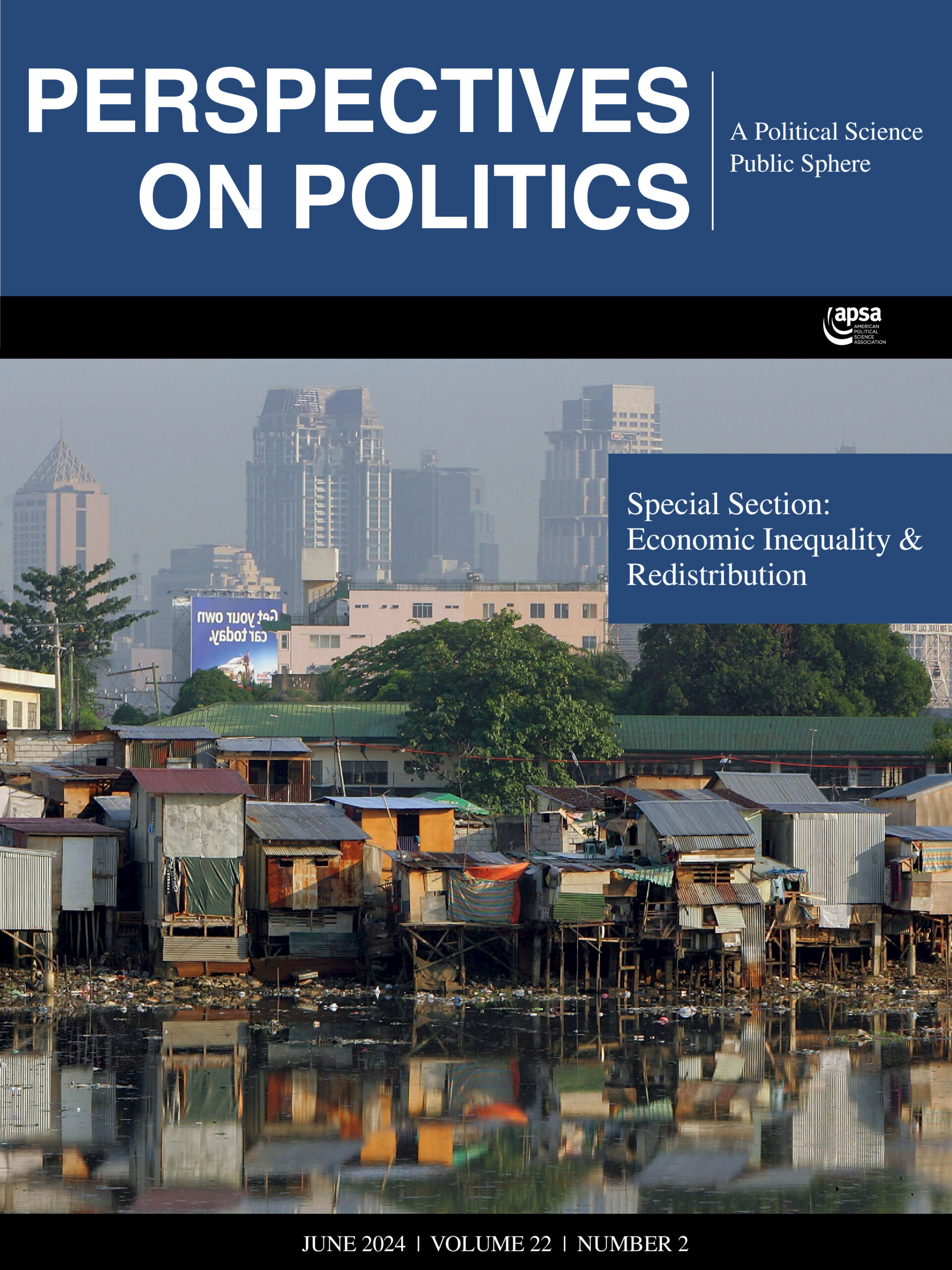

Curtis Yarvin: An Extremist Walks into a Sauna
Curtis Yarvin is the court philosopher for the reactionary right in the US. He recently met with leading intellectuals at a luxury hotel in the Alps. How did he fare?

Apoliticism | The Paper Pilot
The Paper Pilot's digital garden of thoughts on philosophy, politics, and sociology
Dec 2020 -- Jelle Bruineberg -- Embodied cognition and the attention crisis
philosophy for life on Twitter / X
“Any fool can know. The point is to understand.”- Albert Einstein— philosophy for life (@philosophy_life) October 11, 2026
There is no fresh air: A problem with the concept of echo chambers
Standardly, echo chambers are thought to be structures that we should avoid. Agents should keep away from them, to be able to assess a fuller range of evidence and avoid having their confidence in that information manipulated. This paper argues against that standard view. Not only can echo chambers be neutral or good for us, but the existing definitions apply so widely that such chambers are unavoidable. We are all in large numbers of echo chambers at any time – they can be found not just on social media or in political groups, but in almost every social or epistemic group we could categorise ourselves into. Because we are finite and fallible, we cannot escape them and need to exist in them just to get by. The concept, then, does not actually capture something as structurally problematic as the paradigmatic cases would suggest. Our way of using the term in social epistemology needs to change.