


I admitted in my last post on Reaction that I devoted insufficient space to the question of why society does seem to be drifting gradually leftward. And I now realize that in order to critique the …
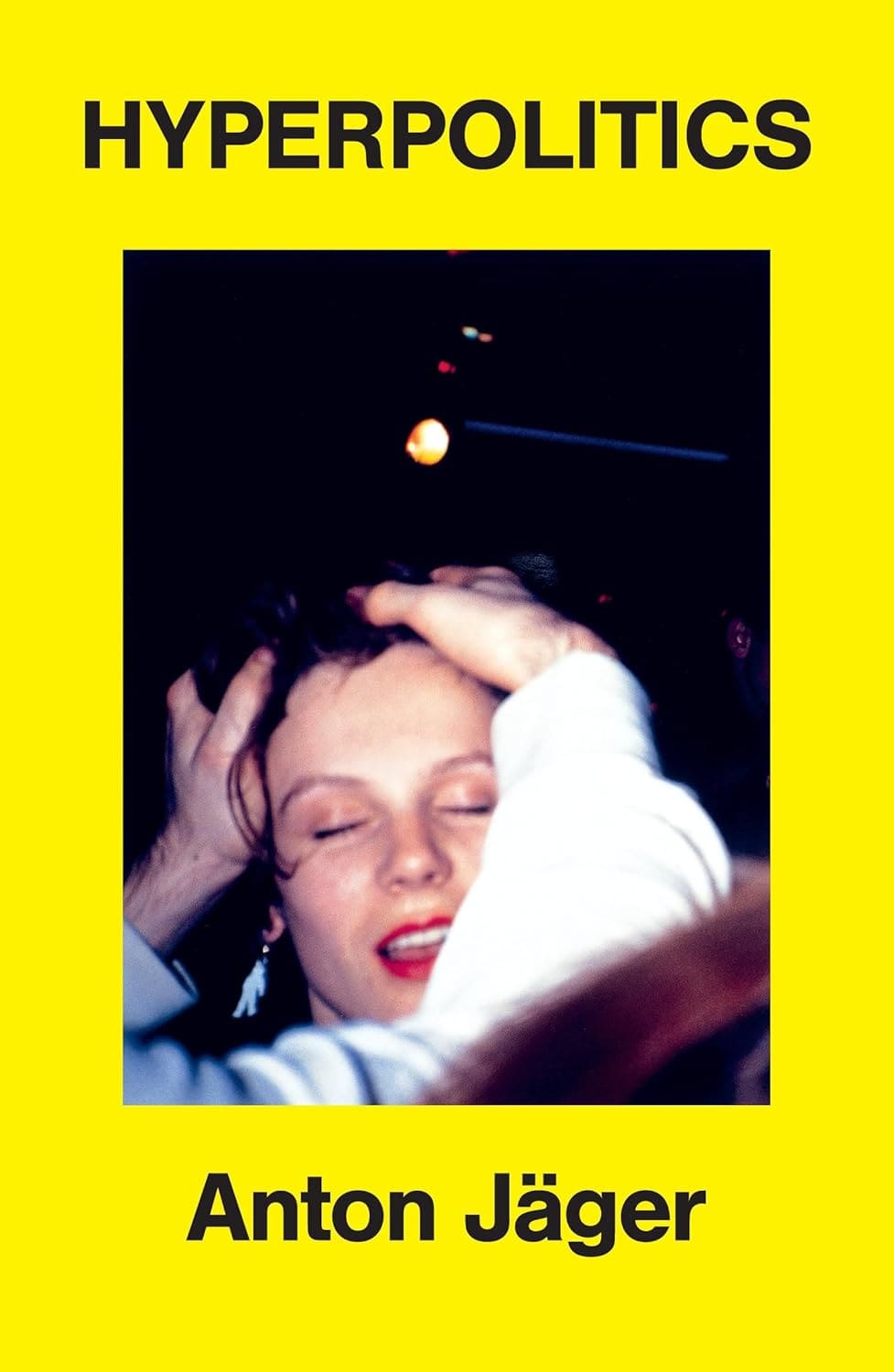
Hyperpolitics: Extreme Politicization without Political Consequences
POLITICS AFTER THE END OF THE END OF HISTORYWhat happens when politics is everywhere, yet nothing seems to change? From the abandoned dance floors of Thatcher’s London to the mass mobilizations of Black Lives Matter, Anton Jäger traces how public life has become infused with protest, spectacle, and moral urgency — while the old infrastructure of parties, unions, and civic solidarity has been hollowed out.Hyperpolitics revisits the illusions of the “end of history” and dissects the strange energies that replaced them: viral outrage, endless culture wars, and the digital rush of causes that flare and vanish overnight. Jäger shows how the promises of post–Cold War liberalism gave way to a restless, unsteady public sphere where private passions overflow into politics but rarely build enduring power.Ranging from Guy Debord and Wolfgang Tillmans to Houellebecq’s disenchanted fictions, Hyperpolitics makes sense of a world in which collective action remains fragmented and the social fabric thinner than ever. For anyone trying to grasp why our age feels so charged yet so inconsequential, this book offers a vital map through the new contradictions of our hyperpolitical moment.
Grow like Trees: An Organic Approach to Societal Regrowth
2026 is the year that system breakdown became impossible to deny. Democratic norms, societal norms, rule of law, the fabric of the social contract tearing as we watch. Or hide, unwilling or unable to face the unravelling. The hopeful among us see opportunity through the dark. Tentatively or boldly we

The Great Realignment: Why the New Right Is Here to Stay
The re-election of Donald Trump has illustrated in spectacular fashion the extent to which politics all over the world is in a state of continual flux. Old political configurations and parties are under unprecedented strain, with new forces, particularly on the hard right, challenging the status quo everywhere. Rejecting stale analyses based on moralistic panics about 'populism' or social media, political commentator Steve Davies shows how we are going through a deep-seated process of realignment rooted in underlying structural trends. We are transitioning, he argues, from an era where the key political division was over the economic structure of society to one where the primary division is between a vision rooted in national identity and sovereignty, and an essentially post-national cosmopolitanism. This change upends the ideological and electoral alliances that have structured our political systems for decades. No-one who wishes to truly understand the crises currently roiling the political status quo can afford to miss this stunning panoramic analysis of how this process works and how it is playing out across the world, from the USA and Germany to Argentina and India, and beyond.
Preface | The World After Capital
Since publishing the previous version of The World After Capital, I have met with people across the political spectrum to discuss the ideas from the book. When I present these in person, I emphasize that the ideas are neither left nor right but forward (credit to Scott Santens who first used this phrase about Universal Basic Income). My writing, however, at times has alienated readers who identify as being more on the right. In this new edition, I am therefore making an extra effort to emphasize how both my diagnosis of where we are at and my suggestions for how to move forward do not map onto the existing political divides. Instead this is a new way of understanding our challenges and opportunities that can be the basis for movements and parties that are not trapped in Industrial Age ideology.
The Joy of Becoming Worthless…except to each other — Douglas Rushkoff
My last piece, The Intentional Collapse, seems to have agitated a few people. I know it came off a bit dark. I talked about how the Uber wealthy believe the world as we know it is ending and that there won’t be enough essential resources to go around, so they need to take control of as much money and stuff and land as possible in order to position themselves for the end of days.
Hyperpolitics? Yes, Please • Protean Magazine
Alex Colston reviews Anton Jäger's "Hyperpolitics," filling in gaps in the book's short argument and arguing for the importance of political formations and activities independent of official political society.
The demise of the nation state
The long read: After decades of globalisation, our political system has become obsolete – and spasms of resurgent nationalism are a sign of its irreversible decline
The Fragile Foundations of the Intelligent Age
Amidst political volatility and technological acceleration, truth and trust are deteriorating, warns Klaus Schwab.

Radical Futurisms: Ecologies of Collapse, Chronopolitics, and Justice-to-Come
Ecologies of Collapse, Chronopolitics, and Justice-to-Come
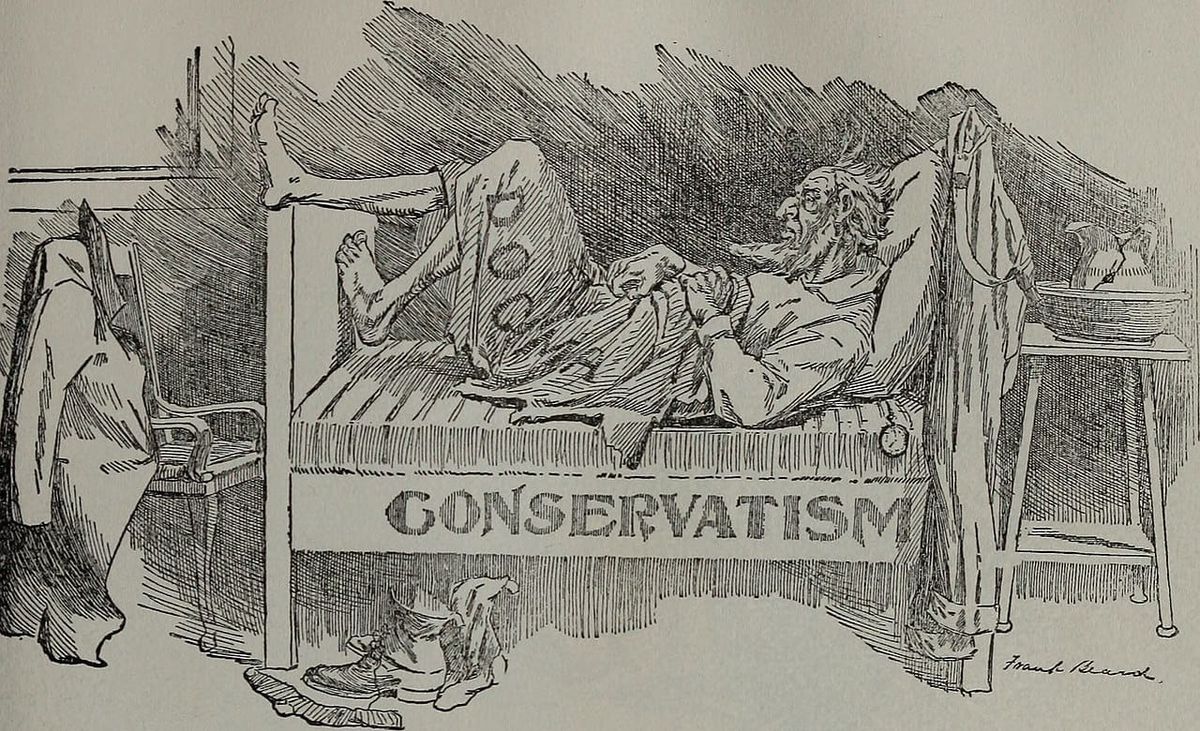
Opinion | The Rotting of the Republican Mind (Published 2020)
When one party becomes detached from reality.

Liberalism Did Not Fail, Conservatism Did
We are moving from an ideologically multipolar world, to a bipolar one.
Reconstructing the Social Construction of Reality
ABSTRACT What is the relationship between legitimation and institutionalization? We take a fresh look at a more complex and nuanced landscape than has previously been documented. Our approach is to view legitimation and institutionalization as separate, though related, processes. We engage in theory building to develop a typology suggesting four different ways in which the social construction of reality can be achieved: instantiating (mutual causal emergence, coming into being), realizing (legitimating toward institutionalization), aspiring (legitimating from institutionalization) and missing (mutual causal suppression, unrealized potential). Our typology contributes a new foundational framework for the sociology of knowledge for better explicating socially constructed reality, not only in periods of stability but also in the uncertainty of liquid times and states.

Neoliberalism – the ideology at the root of all our problems
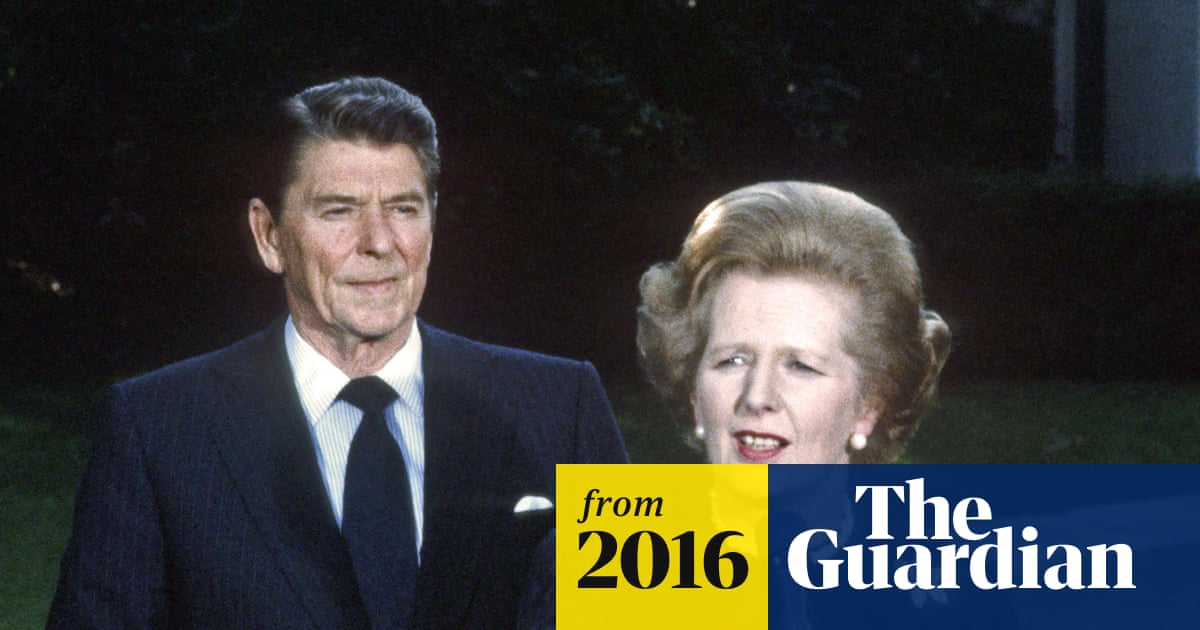
Financial meltdown, environmental disaster and even the rise of Donald Trump – neoliberalism has played its part in them all. Why has the left failed to come up with an alternative?
Neoliberalism – the ideology at the root of all our problems
Financial meltdown, environmental disaster and even the rise of Donald Trump – neoliberalism has played its part in them all. Why has the left failed to come up with an alternative?
What Happened to Liberal Democracy?: Remaking a Politics of Shared Prosperity - FROM THE WINNER OF THE NOBEL PRIZE IN ECONOMICS
'Timely ... an important call to arms' FINANCIAL TIMES'A must-read' THOMAS PIKETTY, author of Capital in the Twenty-First Century'A thoughtful solution to the most important question of modern democracy' JARED DIAMOND, author of Guns, Germs, and Steel'Brilliant and insightful a tour de force' STEVEN LEVITT, author of FreakonomicsFrom its inception, liberalism offered a glittering promise of shared prosperity, equality, democratic values and the free pursuit of knowledge. At first, it flourished. And then it faltered. Once a tantalising beacon of hope, it began to erode and decay at the hands of elitism, intolerance and rising autocracy. One could say that liberalism is broken. So what comes next? Nobel prize-winning co-author of Why Nations Fail Daron Acemoglu charts the rise and fall of liberal democracy, and offers hope for a way forward: a new theory that lays the groundwork for how we can - and must - remake liberalism before it's too late.