


Curious to know what drink has the most caffeine? We're taking a close look at the 45 most caffeinated beverages in the world to find out!

Caffeine dosing strategies to optimize alertness during sleep loss
Summary Sleep loss, which affects about one‐third of the US population, can severely impair physical and neurobehavioural performance. Although caffeine, the most widely used stimulant in the world, can mitigate these effects, currently there are no tools to guide the timing and amount of caffeine consumption to optimize its benefits. In this work, we provide an optimization algorithm, suited for mobile computing platforms, to determine when and how much caffeine to consume, so as to safely maximize neurobehavioural performance at the desired time of the day, under any sleep‐loss condition. The algorithm is based on our previously validated Unified Model of Performance, which predicts the effect of caffeine consumption on a psychomotor vigilance task. We assessed the algorithm by comparing the caffeine‐dosing strategies (timing and amount) it identified with the dosing strategies used in four experimental studies, involving total and partial sleep loss. Through computer simulations, we showed that the algorithm yielded caffeine‐dosing strategies that enhanced performance of the predicted psychomotor vigilance task by up to 64% while using the same total amount of caffeine as in the original studies. In addition, the algorithm identified strategies that resulted in equivalent performance to that in the experimental studies while reducing caffeine consumption by up to 65%. Our work provides the first quantitative caffeine optimization tool for designing effective strategies to maximize neurobehavioural performance and to avoid excessive caffeine consumption during any arbitrary sleep‐loss condition.

Common questions and misconceptions about caffeine supplementation: what does the scientific evidence really show?
Caffeine is a popular ergogenic aid that has a plethora of evidence highlighting its positive effects. A Google Scholar search using the keywords “caffeine” and “exercise” yields over 200,000 results, emphasizing the extensive research on this topic. However, despite the vast amount of available data, it is intriguing that uncertainties persist regarding the effectiveness and safety of caffeine. These include but are not limited to: 1. Does caffeine dehydrate you at rest? 2. Does caffeine dehydrate you during exercise? 3. Does caffeine promote the loss of body fat? 4. Does habitual caffeine consumption influence the performance response to acute caffeine supplementation? 5. Does caffeine affect upper vs. lower body performance/strength differently? 6. Is there a relationship between caffeine and depression? 7. Can too much caffeine kill you? 8. Are there sex differences regarding caffeine’s effects? 9. Does caffeine work for everyone? 10. Does caffeine cause heart problems? 11. Does caffeine promote the loss of bone mineral? 12. Should pregnant women avoid caffeine? 13. Is caffeine addictive? 14. Does waiting 1.5–2.0 hours after waking to consume caffeine help you avoid the afternoon “crash?” To answer these questions, we performed an evidence-based scientific evaluation of the literature regarding caffeine supplementation.

Atlanta’s Coffee Aficionado Shares the Best Coffee Shops Around Town
The creator of Atlanta Coffee Shops gave us a highly opinionated guide to the city’s best caffeine watering holes

There's A Silent Battle Brewing Over The Future Of The Coffee Label
Walk in to any “third-wave” coffee establishment, or even a mass market chain such as Starbucks, Peets or Nespresso, and you’re bound to encounter an overwhelming assortment of coffee varieties at all quality levels and price points. There are coffees labeled Single Varietal, Single Origin, Micro Lot, Small Batch and even Grand Cru.
Acute Effects of Coffee Consumption on Health among Ambulatory Adults
Coffee is one of the most commonly consumed beverages in the world, but the acute health effects of coffee consumption remain uncertain. We conducted a prospective, randomized, case-crossover trial...

Nicolas Mattia – Keep your Mac awake with caffeinate
This explains how to keep a Mac from going to sleep using a simple command
The truth about coffee and tea: Which is really better for your health?
The age-old question is finally answered

Coffee consumption and risk of incident gout in women: the Nurses’ Health Study123
Background: Coffee is one of the most widely consumed beverages in the world and may affect the risk of gout via various mechanisms, but prospective data on the relation between coffee intake and the risk of incident gout are limited. Design: Over a 26-y period, we prospectively examined the relation between coffee intake and risk of incident gout in 89,433 female participants in the Nurses’ Health Study. We assessed the consumption of coffee, decaffeinated coffee, tea, and total caffeine in participants every 2–4 y through validated questionnaires. We used a supplementary questionnaire to ascertain whether participants met the survey criteria of the American College of Rheumatology for gout. Results: During the 26 y of follow-up, we documented 896 confirmed incident cases of gout. There was an inverse association between higher coffee intake and the risk of gout. The multivariate relative risks (RRs) for incident gout according to coffee-consumption categories [ie, 0, 1–237, 238–947, and ≥948 mL coffee/d (237 mL = one 8-ounce cup)] were 1.00, 0.97, 0.78 (95% CI: 0.64, 0.95), and 0.43 (95% CI: 0.30, 0.61; P for trend < 0.0001), respectively. For decaffeinated coffee, the multivariate RRs according to consumption categories (0, 1–237, and ≥237 mL decaffeinated coffee/d) were 1.00, 1.02, and 0.77 (95% CI: 0.63, 0.95; P for trend = 0.02), respectively. There was an inverse association between total caffeine from all sources and the risk of gout; the multivariate RR of the highest quintile compared with the lowest quintile was 0.52 (95% CI: 0.41, 0.68; P for trend
Coffee, tea, and caffeine consumption and serum uric acid level: The third national health and nutrition examination survey
Eliya-G/coffee-o-clock
A clock that let's you understand if you should have another cup of coffee. It calculates the half-life your caffeine level as you metabolise it.
History, Sugar and Sex: Why Mixed Drinks Were Terrible for 30 Years
Imagine you are overworked, sleep-deprived and keen to begin your weekend with...
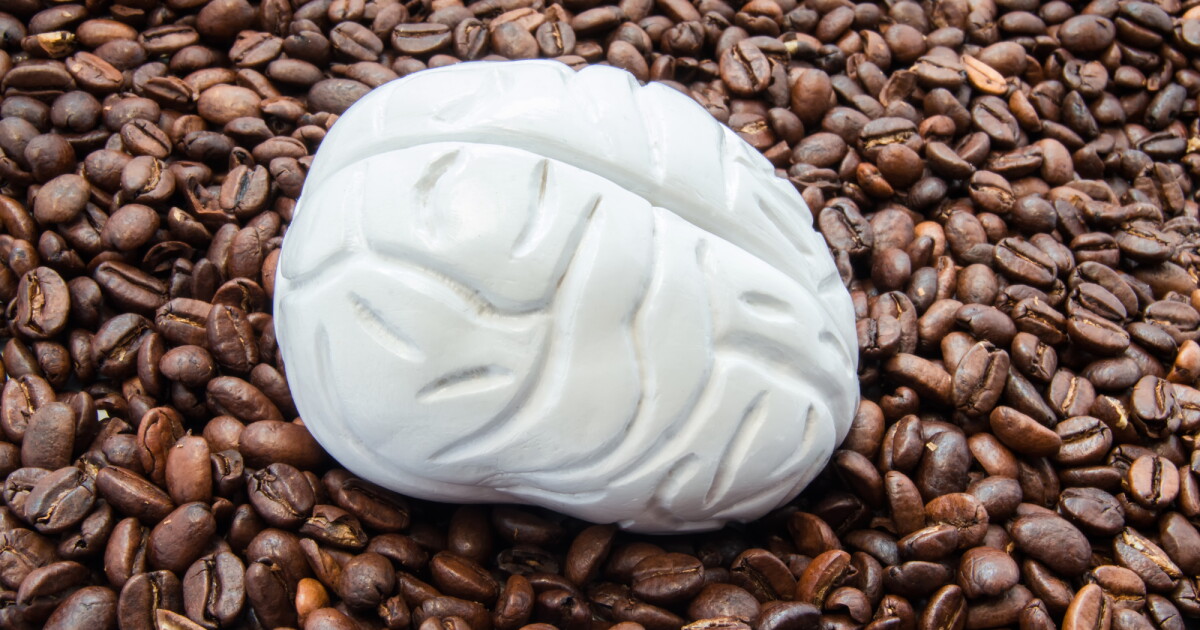
How your morning coffee is changing the structure of your brain
A novel placebo-controlled study has found daily caffeine consumption can significantly reduce the volume of gray matter in the human brain. These findings do not immediately suggest caffeine negatively impacts the brain but instead points to how the drug may induce a temporary neural plasticity that researchers think warrants further investigation.
Coffee linked to lower risk of death

Coffee Drinkers Are More Likely To Live Longer. Decaf May Do The Trick, Too
The latest study to link coffee and longevity adds to a growing body of evidence that, far from a vice, the brew can be protective of good health.

A Little Soulver Coffee Calculator — Sympolymathesy, by Chris Krycho
One of the many ways I use a great app in day-to-day life!
