When developing in a particular environment, say Android or Cocoa, we are subconsciously aware that the APIs are essentially fixed and beyond our control. There is no effective mechanism to go and tell Apple that some method is poorly named, or tell the Android team how much you wish the Audio APIs were nicer to use. The web, however, is built by many different companies and individuals, giving consumers of the platform (web developers) a unique chance to also become contributors to its evolution. Rather than griping about how broken something on the web is, remember that you can play a part in fixing it!
What does it look like for the web to lose?
There is always some degree of tension between “native apps” and “the web” as platforms. If you’re going to write a native app for Android devices, well, I’ll qu…

Listen Up! Web Audio API now in Firefox - Completes Web as a Platform for Gaming | The Mozilla Blog
The Web has been evolving at a fantastic rate over the last few years with the help of Mozilla pioneered technologies such as WebGL, asm.js and Emscripten.

Hypermedia APIs
Stuart Memo
A collection of demos, tutorials and various things related to the Web Audio API.
The Web Can't Survive a Monoculture
Many developers work on the “web platform” because they believe in the model of competing and interoperable implementations (i.e. browsers). These folks (of which I am one) believe that competing and interoperable implementations is what makes the web fundamentally stronger than other platforms. Unlike Windows, iOS, or Android (for example), the web’s users have choice about how they participate. If they disagree with how their chosen browser is being managed, they can switch to another.

Developing The Language We Need To Communicate Throughout The API Lifecycle
We are still in the infancy of the API economy, and now with barely 14 years of evolving web API design, we are only just now developing the languages we wil...

Hypermedia In The Wild: Amazon AppStream API
With the growing number of hypermedia API deployments, hypermedia haters© are going to lose a major argument, that hypermedia is just an academic exercise an...
Introduction
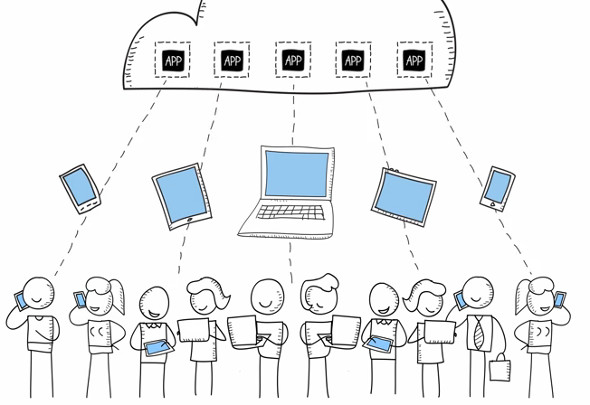
Web Applets is an SDK, protocol and set of standards for building software that both humans and AI can understand and use together. It's built to be a light-weight layer over the existing web, that makes web apps legible to external systems, which can in turn send actions to them and receive data.

Introduction
Web Applets is an SDK, protocol and set of standards for building software that both humans and AI can understand and use together. It's built to be a light-weight layer over the existing web, that makes web apps legible to external systems, which can in turn send actions to them and receive data.
Jordan Santell: Signal Processing with the Web Audio API [JSConf2014]
Why did the web take over desktop and not mobile?
TLDR: “make the web do apps” is not a disruptive strategy. It's like surviving The Great Oxidation Event, then saying “make anaerobes do photosynthesis”. Ok, but the blue-green algae got there first, so photosynthesis is no longer asymmetric. It is symmetric competition.

The Web Is For User Agency
We take the Web for granted as that thing that's there and we talk of things being good or bad for the Web, but we don't ever sit down and really say what the Web is for. I take a look at this question with an eye towards understanding what it is we need to do to build a Web that's actually better.

The Website vs. Web App Dichotomy Doesn't Exist | jakelazaroff.com
A one-dimensional spectrum can't sufficiently capture the tradeoffs involved in web development.
Almost everyone is doing the API economy wrong | TechCrunch
It’s time to hold companies to a higher standard when it comes to APIs. As software "eats the world," it seems like it’s not enough for a business to just serve its customers and hopefully make a profit, they also have to be “platforms” -- and, as any developer would respond, these days you just can’t be a platform without an API.

The Web Is More Than Enough, by Paul Ford
Web browsers enable incredibly rich app development—and that’s radically easier than it used to be.