

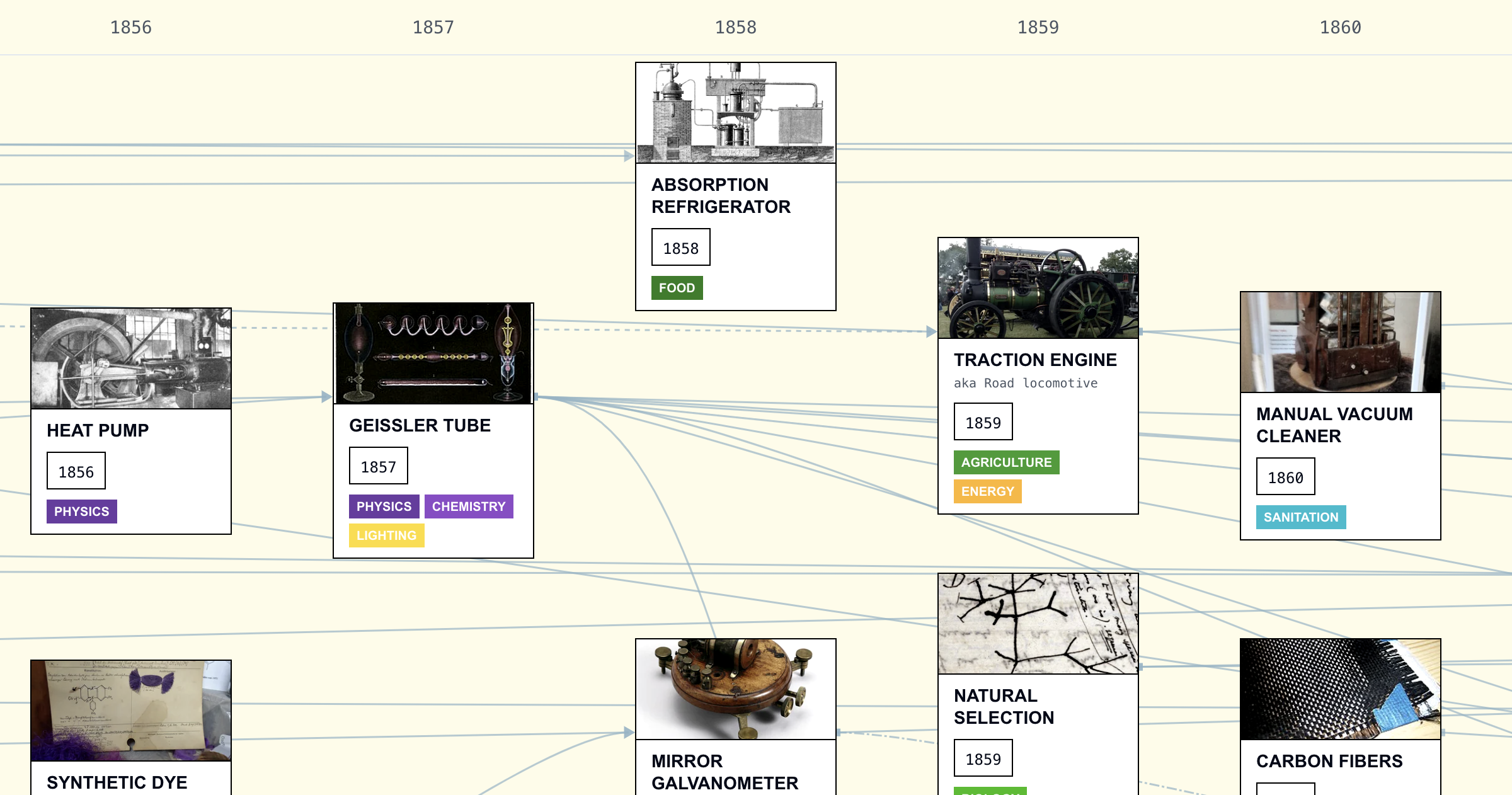
Last month, after a long hiatus, I showed invention.cards to a friend in SF and came away unsatisfied. Indeed, the work was not yet done . Three things drove this revision: It felt incomplete. The experience was built around T-shaped navigation, focusing on a specific card and showing only their ancestors and descendants. It was hard to see where you were in time, hard to feel the shape of history, and ultimately was far removed from the way a tech tree should feel . The connections matter more than the nodes. What's most interesting to me was not
Invention & Discovery Cards
A Civilization-inspired tech tree but for the real life history of science and discovery. Inventions and discoveries presented in illustrated Magic-style cards.
A People’s History of Tech
A collective storytelling project to build a more representative history that reflects the human impacts of technology.

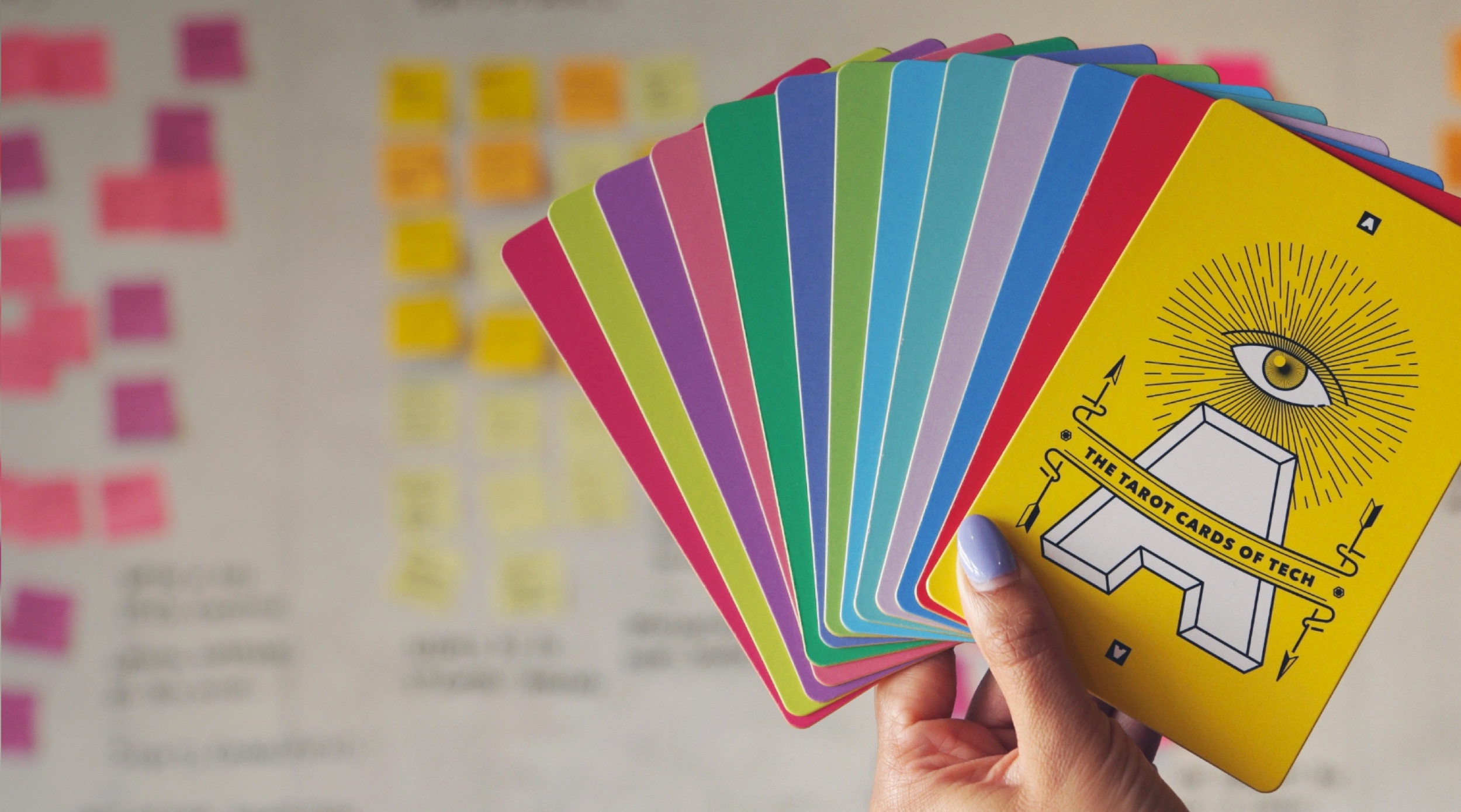
The Tarot Cards of Tech | The power of predicting impact | Artefact
The Tarot Cards of Tech are a creative tool to help designers and technologists think about the outcomes of their products and services.
The Crooked Timber of AI
The philosophical perils of conflating discoveries and inventions, and how to overcome them

Pitfalls of Card UIs
I’m currently in the process of rolling out yet another Card UI. Since Pinterest, the end-state of every list view with decent imagery is to become a Card UI. But thar be dragons! I’m here to share some of the pitfalls Paravel have encountered building Card UIs over the years.
Telepath: building a new kind of computer
So, we made a thing: Let’s back up: for as long as I can remember, I’ve been obsessed with computers, fascinated not just by what they can do but what they could become. Like many, I took my early inspiration from science fiction. I dreamed of someday having something like the Enterprise’s computer. And why not? Science fiction has always driven scientists, engineers, and inventors to create real things that change the world.
Technology without Industry
A home for poorly researched ideas that I find myself repeating a lot anyway
About — Every Object an Archive
We interview people about their experiences with technological objects that were once everywhere, but are now being replaced or redesigned. We are interested in the physical experience of living with these objects, their handfeel and relationships to our bodies. We are also interested in how they shaped our habits, relationships, and ways of being. Technologies are more than physical objects: whole worlds of infrastructure, process, policy and culture are built around them.

Pinterest is Dead. I Built an Alternative
Let’s invent new interfaces, not new products
Posted on Thursday 25 Feb 2021. 507 words, 2 links. By Matt Webb.

Care at the Edge of Automation – Topos Institute
Technologies don’t just solve problems, they change us. We invent technologies, and they invent us in turn, shaping our lives and worlds. This is the phenomenon that Terry Winograd and Fernando Flores, in Understanding Computers and Cognition (1986), called “ontological design.” It matters now more than ever—along with a second lesson they saw clearly. Technological research is always guided (and sometimes misguided) by deep ontological assumptions about, e.g., the nature of cognition, agency, and communication. If we are to create technologies that truly serve human flourishing and care, we must bring these hidden assumptions into the open and question them at their roots.
Discontinued AT projects

Collection to move cards I saved from discontinued, shut-down atproto projects. To help indirectly inform people.
Lessons from Tech History

Learning from those who built before us
Bitchsky

ATProto PDS Network Map
Bluesky Analytics

PDSList - A database of Bluesky PDSes
plc.zio.blue
infoenon.com
Burnout in Open Source (by Erlend Sogge Heggen) — Semble

Linux distributions worldwide targeted by the Copy Fail exploit
GitHub Alternatives (by Kai Jellinghaus) — Semble
Death of GitHub? (by Kai Jellinghaus) — Semble
Before GitHub
Cohere + Aleph Alpha — sovereign AI's first $20B deal (by Sensemaker) — Semble