

The snapshot archive is a wayback machine that allows access to old packages based on dates and version numbers. It consists of all past and current packages the Debian archive provides.
Exa on Twitter / X
We built a time machine for the web.Introducing Exa Snapshot: an index of 400 billion historical snapshots of webpages that lets you search as if it's the past.Snapshot is already being used for backtesting prediction models, RL at labs, exploring the pre-AI web, and more. pic.twitter.com/UHeknyUbeF— Exa (@ExaAILabs) September 17, 2026
archive.today is directing a DDOS attack against my blog
Around January 11, 2026, archive.today (aka archive.is, archive.md, etc) started using its users as proxies to conduct a distributed denial of service (DDOS) attack against Gyrovague, my personal b…

The Restroom Archive
The Restroom Archive is an ongoing repository of publicly accessible restrooms.

Internet Archive
We saw the www.lostlandscapes.org show which was put on to benefit the Internet Archive which suffered from a fire recently. The show featured footage of SF from the 1920s to 1980s. The soundtrack is the crowd, as they yell out recognized locations and ask questions, etc. The Internet Archive (which has the Wayback Machine) is located in a former church. The grand hall is where the show was held, and you can see that the church pews are still in tact. In the alcoves at the back are two server racks which store the master copy of the archives. On the edges are little statues. Those are representations of people who dedicated many hours volunteering for the archive. The one I happened to photograph is Aaron Swartz.

Debezium
Debezium is an open source distributed platform for change data capture. Start it up, point it at your databases, and your apps can start responding to all of the inserts, updates, and deletes that other apps commit to your databases. Debezium is durable and fast, so your apps can respond quickly and never miss an event, even when things go wrong.

The Comprehensive Digital Preservation Platform
Create, curate, and collaborate on living archives. Start with a FREE GB.

Rethinking Digital Storage for Community-Based Archives
Over the last few decades, the standard procedure for storing and backing up data has been ‘put it in the cloud.’ Many of us use cloud…

Archiving web sites
I recently took a deep dive into web site archival for friends who were worried about losing co [...]
Webrecorder: Web Archiving for All
Webrecorder provides open source solutions for everyone to archive the complex, interactive Web.

The Vintage Technology Digital Archive
Solutions for Link Rot on the Modern Web
Web links are fundamental to the web, enabling navigation between pages and citations in research articles. However, web links suffer from "link rot", a phenomenon in which links are likely to become inaccessible over time. This can occur if a link’s site disappears, making it impossible to resolve the hostname or establish a server connection, or the linked page has been deleted, resulting in an HTTP 404 "Not Found" error. Today, a common solution to tackle link rot is to rely on web archives, which capture snapshots of web pages for future reference. However, the modern web has evolved significantly since web archives were first introduced, leading to several limitations in their effectiveness. First, the scale of the web has grown tremendously, making it infeasible to crawl every page whenever it changes. As a result, many broken links either have no archived copies, or the archived copies have stale content. Second, modern web pages rely heavily on increasingly complex and diverse JavaScript. This shift has made it more challenging for preserving fidelity in archived copies, significantly increasing both the computational cost of operating browser-based crawlers and engineering effort required to maintain accurate replay systems. This thesis presents a set of solutions to cope with link rot on the modern web. My work aims to mitigate the various limitations of web archives. First, for broken links without any archived copy, or if the archived copy includes stale content or unavailable functionalities, I built Fable. Fable revives the dead link with the new URL to the same page whenever available. Compared to prior approaches, Fable revives 4.6K broken links—a 50% increase—with much higher accuracy. Second, for pages that require dynamic crawling, I show how web archives can achieve a better tradeoff between efficiency and fidelity. By carefully choosing 8.9% of pages to crawl dynamically and strategically reusing resources from those crawls, an archive can serve 99% of the remaining statically crawled pages without any fidelity loss. Third, for fidelity violations in archived copies that are caused by incorrect edits to crawled scripts, I built FidEx. FidEx reliably detects when an archived page differs from its original version and pinpoints the root cause. After fixing the most common errors pinpointed by FidEx, I reduced the fraction of pages for which FidEx reports a violation of fidelity from 15% to 9%.
Solutions for Link Rot on the Modern Web
Web links are fundamental to the web, enabling navigation between pages and citations in research articles. However, web links suffer from "link rot", a phenomenon in which links are likely to become inaccessible over time. This can occur if a link’s site disappears, making it impossible to resolve the hostname or establish a server connection, or the linked page has been deleted, resulting in an HTTP 404 "Not Found" error. Today, a common solution to tackle link rot is to rely on web archives, which capture snapshots of web pages for future reference. However, the modern web has evolved significantly since web archives were first introduced, leading to several limitations in their effectiveness. First, the scale of the web has grown tremendously, making it infeasible to crawl every page whenever it changes. As a result, many broken links either have no archived copies, or the archived copies have stale content. Second, modern web pages rely heavily on increasingly complex and diverse JavaScript. This shift has made it more challenging for preserving fidelity in archived copies, significantly increasing both the computational cost of operating browser-based crawlers and engineering effort required to maintain accurate replay systems. This thesis presents a set of solutions to cope with link rot on the modern web. My work aims to mitigate the various limitations of web archives. First, for broken links without any archived copy, or if the archived copy includes stale content or unavailable functionalities, I built Fable. Fable revives the dead link with the new URL to the same page whenever available. Compared to prior approaches, Fable revives 4.6K broken links—a 50% increase—with much higher accuracy. Second, for pages that require dynamic crawling, I show how web archives can achieve a better tradeoff between efficiency and fidelity. By carefully choosing 8.9% of pages to crawl dynamically and strategically reusing resources from those crawls, an archive can serve 99% of the remaining statically crawled pages without any fidelity loss. Third, for fidelity violations in archived copies that are caused by incorrect edits to crawled scripts, I built FidEx. FidEx reliably detects when an archived page differs from its original version and pinpoints the root cause. After fixing the most common errors pinpointed by FidEx, I reduced the fraction of pages for which FidEx reports a violation of fidelity from 15% to 9%.
Xcode - But... Where are our archives?
I've submitted three versions of my app onto the App Store using the Build and Archive commands. But... Where are those archives? I've just learnt that I just need them to be able to read crashl...

Debian Packaging by Example
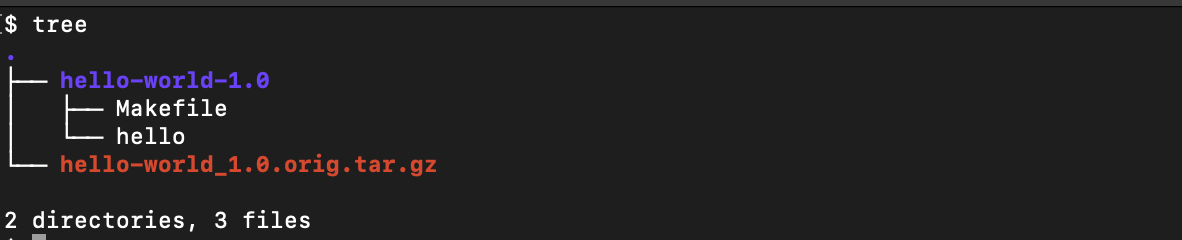
It seems odd to be writing an article about Debian packaging in 2024 when it dates back to 1993; some 30 years ago. But… I tried to follow…
Snapshot | A/PI ICE Tracker
ArchiveBox - Open-source self-hosted web archiving
Preserve websites, media, bookmarks, feeds, source code, evidence, and research material in durable files you control.