

Having your own website is not going to fix democracy, or topple the online pillars of capitalism - but it's making a political statement nonetheless. It says "I want to carve my own space on the web, away from the corporations". I think this is a radical act. It was when I originally said this in 2022, and I mean it even more today. https://localghost.dev/blog/this-page-is-under-construction/
Let the community work it out: A throwback to early internet days could fix social media’s crisis of legitimacy
"We believe it is time to consider not just how online spaces can be governed efficiently and in service to corporate bottom lines, but how they can be governed fairly and legitimately."

Long Live the Web: A Call for Continued Open Standards and Neutrality
The Web is critical not merely to the digital revolution but to our continued prosperity—and even our liberty. Like democracy itself, it needs defending

I’m Building an Algorithm That Doesn’t Rot Your Brain

The Anti-Capitalist Web
I’m not sure if any idea has stuck in my head over the last year more than this tweet by Miriam Suzanne : Large companies find HTML & CSS frustrating “at…
Internet for the People: The Fight for Our Digital Future
"For all the informational convenience the internet offers, it is deeply flawed. How can it be improved? Writer Ben Tarnoff proposes one possibility in this intriguing book, which urges the development of 'a public lane on the information superhighway.' It's worth checking out for yourself." – Seth MacFarlane Why is the internet so broken, and what could ever possibly fix it? In Internet for the People, leading tech writer Ben Tarnoff offers an answer. The internet is broken, he argues, because it is owned by private firms and run for profit. Google annihilates your privacy and Facebook amplifies right-wing propaganda because it is profitable to do so. But the internet wasn't always like this—it had to be remade for the purposes of profit maximization, through a years-long process of privatization that turned a small research network into a powerhouse of global capitalism. Tarnoff tells the story of the privatization that made the modern internet, and which set in motion the crises that consume it today. The solution to those crises is straightforward: deprivatize the internet. Deprivatization aims at creating an internet where people, and not profit, rule. It calls for shrinking the space of the market and diminishing the power of the profit motive. It calls for abolishing the walled gardens of Google, Facebook, and the other giants that dominate our digital lives and developing publicly and cooperatively owned alternatives that encode real democratic control. To build a better internet, we need to change how it is owned and organized. Not with an eye towards making markets work better, but towards making them less dominant. Not in order to create a more competitive or more rule-bound version of privatization, but to overturn it. Otherwise, a small number of executives and investors will continue to make choices on everyone’s behalf, and these choices will remain tightly bound by the demands of the market. It's time to demand an internet by, and for, the people now.
It's time to rebuild the web
The web was never supposed to be a few walled gardens of concentrated content owned by a few major publishers; it was supposed to be a cacophony of different sites and voices.

Whose Global Village — Ramesh Srinivasan
In the digital age, technology has shrunk the physical world into a “global village,” where we all seem to be connected as an online community as information travels to the farthest reaches of the planet with the click of a mouse. Yet from the US election, to the growth of the alt-right movement, to the Dakota pipeline to the question of ISIS, we also have begun to recognize how incredibly disconnected we are at the same time, occupying various bubbles and self-selected communities.While we think of platforms such as Twitter and Facebook as open and accessible to all, in reality, these are commercial entities developed primarily by and for the Western world. Considering how new technologies increasingly shape labor, economics, and politics, these tools often reinforce the inequalities of globalization, rarely reflecting the perspectives of those at the bottom of the digital divide.
Please Let the Internet Die
Online spaces are captured by oligarchs and saturated with slop—and they’re exacerbating humanity’s worst impulses. It’s time to start over.

The web was always about redistribution of power. Let's bring that back.
It's time to rekindle the movement.

Do social media threaten democracy?
Facebook, Google and Twitter were supposed to save politics as good information drove out prejudice and falsehood. Something has gone very wrong

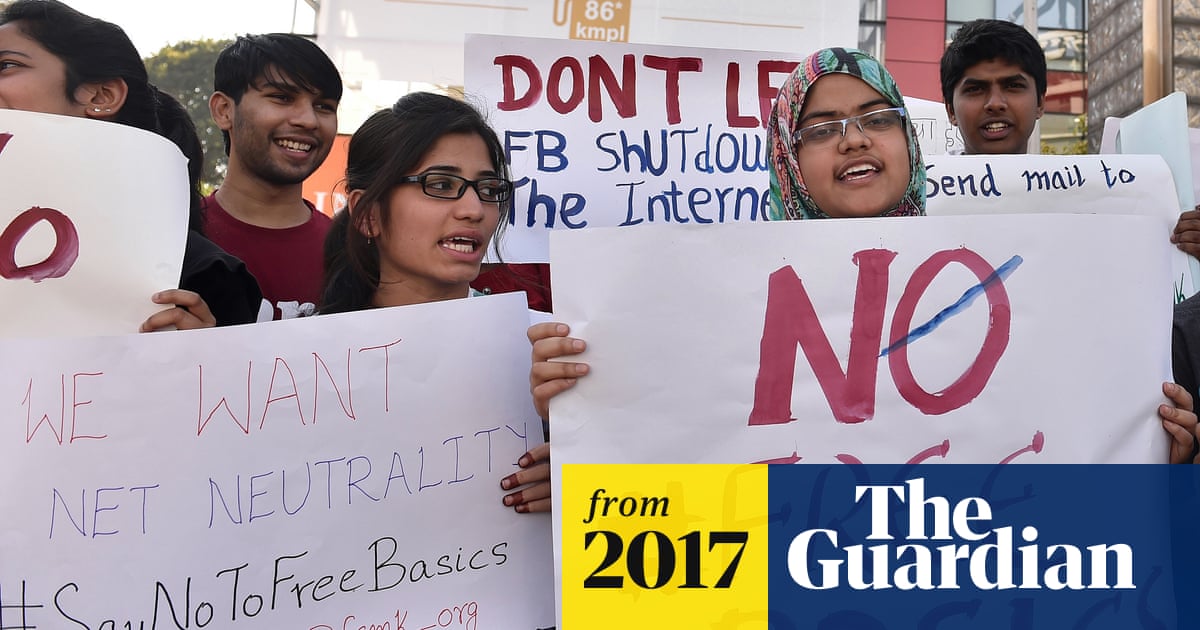
'It's digital colonialism': how Facebook's free internet service has failed its users
Free Basics, built for developing markets, focuses on ‘western corporate content’ and violates net neutrality principles, researchers say
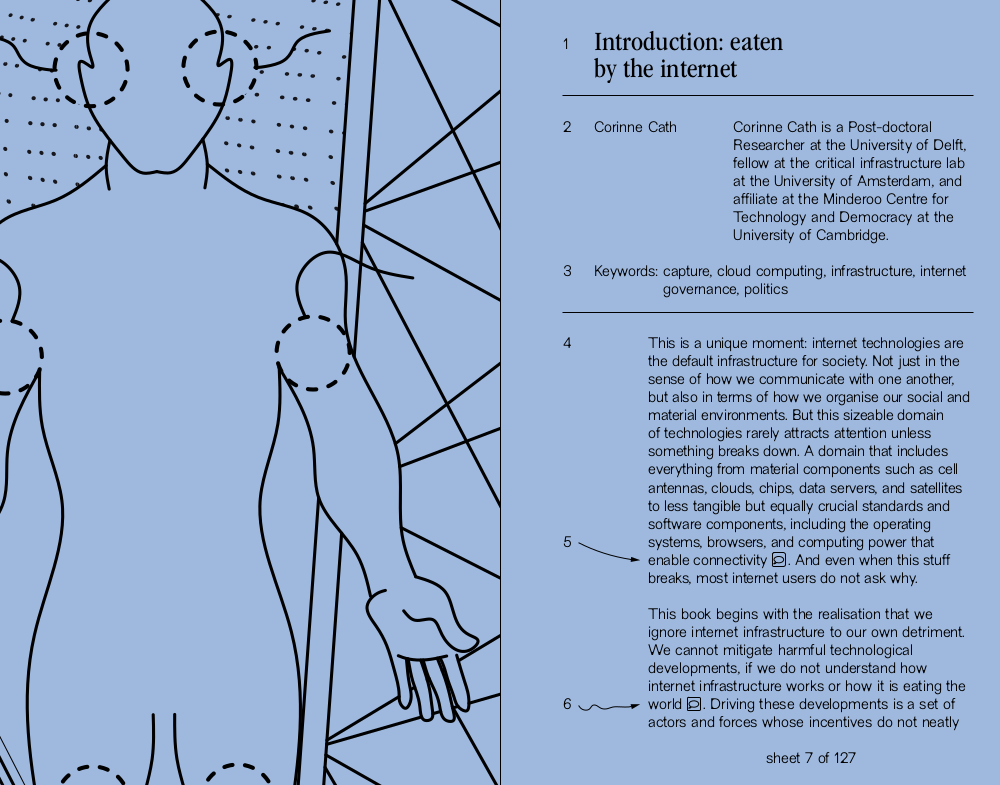
Eaten by the Internet
This book makes internet infrastructure visible as a force of political power, which is transforming the social world, from the bottom up—through fifteen chapters contributed by a global set of researchers, activists, and techies. We are living a unique moment: internet technologies are the default infrastructure for society, not just how we communicate but also how we organise our social life, politics, and economy, all the way down to our material environments, like cities. Our world is eaten by the internet. This means that those who control the internet control the bounds of public speech, economic production, social cohesion, and politics, making its infrastructure a core political terrain in the networked age. The book’s chapters cover a wide set of topics, spanning from the global politics of content moderation by internet infrastructure to the colonialism inherent in the race to plug the moon, from the harms wrought by blockchain companies in rural America to the particularities of online censorship across Asia. The chapters take on thorny topics, discussing power consolidation in the advertisement and cloud industry, the role of internet infrastructure in the war in Ukraine, and tech’s environmental impact—amongst others. In doing so, this book roots contemporary technology debates in the politics of internet infrastructure and urges us to ask how can we ensure our infrastructures sustain us, rather than consume us?
The state has lost control: tech firms now run western politics
Democracy is under threat from rising inequality and terrorism. Google and Facebook have taken over

Fix the internet, save democracy

The internet has evolved into a state that is actively hostile towards global democracy. A thesis is emerging that to save global democracy, you must fix the internet.
The IndieWeb Is Punk Manifesto
The Retweeting Class

Funding The Web: From Cartel to Covenant

Protocols, Not Platforms: A Technological Approach to Free Speech

The architecture of the internet creates risks for democracy