
The changes in daily life induced by the COVID-19 pandemic brought renewed attention to longstanding concerns about social isolation in the United States. Despite the links between the physical setting for individuals' daily lives and their connections with family, friends, and the various institutions of collective life, trends in where American adults spend their time have been largely overlooked as researchers have focused on how and with whom they spend their time. This article analyzes data from the American Time Use Survey over a timeframe spanning nineteen years and argues that the changes in Americans' daily routines induced by the COVID era should be seen as an acceleration of a longer-term trend: the rise of time spent at home. Results show that from 2003 to 2022, average time spent at home among American adults has risen by one hour and 39 minutes in a typical day. Time at home has risen for every subset of the population and for virtually all activities. Preliminary analysis indicates that time at home is associated with lower levels of happiness and less meaning, suggesting the need for enhanced empirical attention to this major shift in the setting of American life.
Homebound: The Long-Term Rise in Time Spent at Home Among U.S. Adults
The changes in daily life induced by the COVID-19 pandemic brought renewed attention to longstanding concerns about social isolation in the United States. Despite the links between the physical setting for individuals' daily lives and their connections with family, friends, and the various institutions of collective life, trends in where American adults spend their time have been largely overlooked as researchers have focused on how and with whom they spend their time. This article analyzes data from the American Time Use Survey over a timeframe spanning nineteen years and argues that the changes in Americans' daily routines induced by the COVID era should be seen as an acceleration of a longer-term trend: the rise of time spent at home. Results show that from 2003 to 2022, average time spent at home among American adults has risen by one hour and 39 minutes in a typical day. Time at home has risen for every subset of the population and for virtually all activities. Preliminary analysis indicates that time at home is associated with lower levels of happiness and less meaning, suggesting the need for enhanced empirical attention to this major shift in the setting of American life.
The Anti-Social Century
Americans are now spending more time alone than ever. It’s changing our personalities, our politics, and even our relationship to reality.

Impact of the COVID-19 pandemic on social media
Social media became an important platform for interaction during the COVID-19 pandemic, coinciding with the onset of social distancing. According to a study conducted by Facebook's analytics department, messaging rates rose by over 50% during this period. Individuals confined to their homes utilized social media not only to maintain social connections but also as a source of entertainment to alleviate boredom. Concerns arose regarding the overreliance on social media for primary social interactions, particularly given the constraints imposed by the pandemic.

Digital inequality in communication during a time of physical distancing: The case of COVID-19
In times of physical distancing, such as during the COVID-19 pandemic, people are likely to turn to digital communication to replace in-person interactions. Yet, persisting digital inequality suggests that not everyone will be equally able or disposed to increasing digital communication during a public health crisis. Using survey data from a national sample of U.S. participants (N = 2,925) that we collected during the early months of the pandemic, we analyzed how sociodemographics, living arrangements, and Internet experiences and skills relate to increases and decreases in various digital communication methods. We find that people privileged in their socioeconomic status, their Internet skills and online experiences are more likely to increase and less likely to decrease digital communication during the pandemic. The findings illustrate how digital inequalities can put already disadvantaged groups at greater risk of diminished social contact during a public health crisis. We discuss the theoretical implications of our findings for digital inequality research, the practical implications for inclusive crisis responses, and directions for future research.

Americans’ Social Activity Has Steeply Declined in the Past 30 Years
Our survey finds significant, double-digit declines in Americans’ participation in key social activities from 1995 to 2026.

Does Using Social Media Jeopardize Well-Being? The Importance of Separating Within- From Between-Person Effects
Social networking sites (SNS) are frequently criticized as a driving force behind rising depression rates. Yet empirical studies exploring the associations between SNS use and well-being have been predominantly cross-sectional, while the few existing longitudinal studies provided mixed results. We examined prospective associations between SNS use and multiple indicators of well-being in a nationally representative sample of Dutch adults ( N ∼ 10,000), comprising six waves of annual measures of SNS use and well-being. We used an analytic method that estimated prospective effects of SNS use and well-being while also estimating time-invariant between-person associations between these variables. Between individuals, SNS use was associated with lower well-being. However, within individuals, year-to-year changes in SNS use were not prospectively associated with changes in well-being (or vice versa). Overall, our analyses suggest that the conclusions about the causal impact of social media on rising mental health problems in the population might be premature.

Home is where the bits flow
We aren’t purely physical beings. Most of our day exists outside our body. Our minds slip out through our eyes, out into our screens. We become a different kind of organism, living in a weird symbiosis with reddit and whatsapp and gmail. When was the last time you noticed
Loneliness in the United States: A 2018 National Panel Survey of Demographic, Structural, Cognitive, and Behavioral Characteristics
Purpose: To inform health behavior intervention design, we sought to quantify loneliness and its correlates, including social media use, among adults in the United States. Design: Cross-sectional research panel questionnaire. Setting: Responses were gathered from individuals in all 50 states surveyed via Internet from February 2018 to March 2018. Participants: A total of 20 096 US panel respondents aged 18+. Measures: The University of California at Los Angeles (UCLA) Loneliness Scale (theoretical score range = 20-80) was administered along with demographic, structural, cognitive, and behavioral items. Analysis: After calibrating the sample to population norms, we conducted multivariable linear regression analysis. Results: The overall mean survey-weighted loneliness score was 44.03 (standard error = 0.09). Social support (standardized β [sβ] = −0.19) and meaningful daily interactions (sβ = −0.14) had the strongest associations with lower loneliness, along with reporting good relationships, family life, physical and mental health, friendships, greater age, being in a couple, and balancing one’s daily time. Social anxiety was most strongly associated with greater loneliness (sβ = +0.20), followed by self-reported social media overuse (sβ = +0.05) and daily use of text-based social media (sβ = +0.03). Conclusion: Our findings confirm that loneliness decreases with age, and that being in a relationship as well as everyday behavioral factors in people’s control are most strongly related to loneliness. Population health promotion efforts to reduce loneliness should focus on improving social support, decreasing social anxiety, and promoting healthy daily behaviors.
Why Do Americans Have Shorter Life Expectancy and Worse Health Than Do People in Other High-Income Countries?
Americans lead shorter and less healthy lives than do people in other high-income countries. We review the evidence and explanations for these variations in longevity and health. Our overview suggests that the US health disadvantage applies to multiple mortality and morbidity outcomes. The American health disadvantage begins at birth and extends across the life course, and it is particularly marked for American women and for regions in the US South and Midwest. Proposed explanations include differences in health care, individual behaviors, socioeconomic inequalities, and the built physical environment. Although these factors may contribute to poorer health in America, a focus on proximal causes fails to adequately account for the ubiquity of the US health disadvantage across the life course. We discuss the role of specific public policies and conclude that while multiple causes are implicated, crucial differences in social policy might underlie an important part of the US health disadvantage.

How do social media use, gaming frequency, and internalizing symptoms predict each other over time in early-to-middle adolescence?
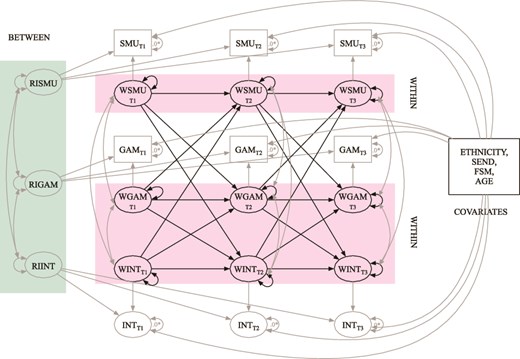
Abstract Background The effects of adolescent digital technology use (e.g. social media, gaming) on their mental health are a major public health concern, but existing evidence is of mixed quality and findings have been inconclusive. Methods Separating within-person effects from between-person effects, a random-intercept cross-lagged panel model was applied to three annual waves of data (T1, T2, T3) on social media use, gaming, and internalizing symptoms among N = 25 629 adolescents (51% girls, average age 12 years, 7 months (SD = 3.58 months) at baseline) in Greater Manchester, England. Results Longitudinal relationships varied by gender, such that more frequent gaming at T2 predicted less time spent on social media use at T3 in girls (but not boys), and more frequent internalizing symptoms at T2 predicted reductions in gaming frequency at T3 in boys (but not girls). There was no evidence that time spent on social media or gaming frequency predicted later internalizing symptoms among girls or boys. Sensitivity analyses that distinguished active versus passive social media use replicated these findings. Conclusions The findings of this study do not support the widely held view that adolescent technology use is a major causal factor in their mental health difficulties.
Abolishing Daylight Saving Time is easy, setting a permanent time is not
Daylight Saving Time – the biannual ritual of adjusting clocks forwards and backwards – has long been debated. Advocates argue it saves energy and promotes outdoor activities, while critics highlight its disruptive effects on health, productivity, and social routines. This column examines the health impacts, societal costs, and the outdated rationale behind the implementation of Daylight Saving Time, and argues that there is good reason to abolish it. This would imply trade-offs, however. While adopting Standard Time permanently would be better from a health perspective, ‘summer time’ is preferred in many countries.

What is Causing Our Epidemic of Loneliness and How Can We Fix It?
Researchers share what Americans have to say about social disconnection and potential solutions

Two tests of social displacement through social media use
The present manuscript presents two tests of the hypothesis that social media use decreases social interaction, leading to decreased well-being. Study 1 used the Longitudinal Study of American Yout...

Smartphone interactions and mental well-being in young adults: A longitudinal study based on objective high-resolution smartphone data
Aims: To investigate the effects of objectively measured smartphone interactions on indicators of mental well-being among men and women in a population of young adults. Methods: A total of 816 young adults (mean±SD age 21.6±2.6 years; 77% men) from the Copenhagen Network Study were followed with objective recordings of smartphone interactions from calls, texts and social media. Participants self-reported on loneliness, depressive symptoms and disturbed sleep at baseline and in a four-month (interquartile range 75–163 days) follow-up survey. Multiple linear regression was used to analyse the association between smartphone interactions and mental well-being separately for men and women. Results: A higher number of smartphone interactions was associated with lower levels of loneliness at baseline and the same pattern appeared for depressive symptoms, although this was less pronounced. A high level of smartphone interaction was associated with lower levels of disturbed sleep for men, but not for women. In follow-up analyses, a high versus low level of smartphone interaction was associated with an increase in loneliness and depressive symptoms over time for women, but not for men. Conclusions: Smartphone interactions are related to better mental well-being, which may be attributed to the beneficial effects of an underlying social network. Over time, accommodating a large network via smartphone communication might, however, have negative effects on mental well-being for women.
Why working fewer hours would make us more productive
A shorter working week could improve our mental and physical health and even mitigate climate change, research shows